Are You Training to Drill or Training to Fight? The Question Brown Belts Need to Ask
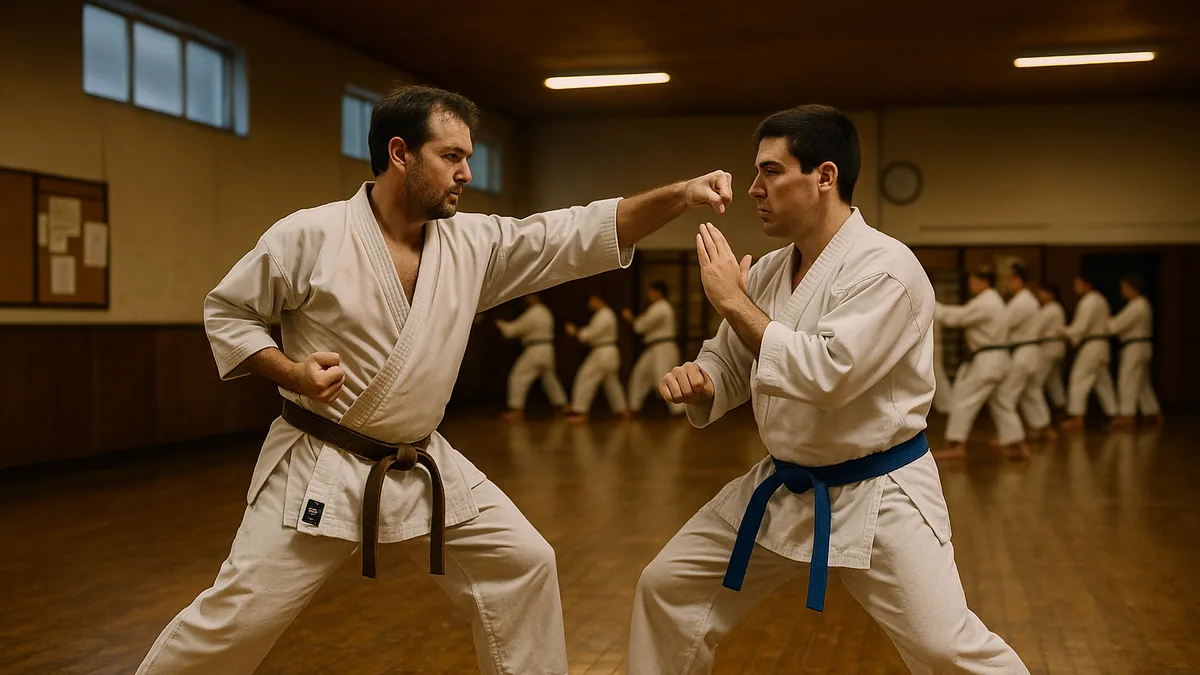
If your technique looks clean in the dojo but vanishes the moment someone starts moving and fighting back, you are not alone - and it is not a mystery. There is a structural reason it happens, and once you see it clearly, you can actually do something about it.
The short version: drilling a skill and testing a skill are two completely different activities. Most recreational practitioners, even experienced ones, treat them as the same thing. That confusion is where progress quietly dies.
Building the Pattern vs Breaking It
Acquisition work - the slow, correctable, low-pressure repetition that builds a motor pattern - is where technique is formed. That kind of practice needs to feel manageable. The feedback loop has to be tight enough that errors can be identified and adjusted. Nothing about that process is meant to be threatening, and that is precisely the point.
The problem is that the nervous system learns the movement in exactly the conditions you practise it. Drill a technique in calm, structured repetition and it becomes reliable in calm, structured repetition. Walk into kumite and that same technique meets resistance, unpredictability and consequence - none of which it has encountered before. It is not that the skill is gone. It is that it has never actually been tested.
Testing means putting a skill into a situation where it might fail. That distinction matters. If you already know it will work, you are confirming it, not testing it.
Why Constrained Sparring Reveals So Much
Full jiyu-kumite is a test, but it is not the only one - and for many practitioners, jumping straight from drilling to open sparring skips too many steps. The gap in between is where most of the real skill transfer happens.
Constrained sparring is one of the most underused tools available. Limit two practitioners to jodan techniques only for three minutes and you will find out very quickly which jodan skills are genuinely owned and which ones only worked when nobody was fighting back. The discomfort that comes from discovering a technique you have drilled for years still falls apart under moderate pressure is real - but it is also useful. It tells you exactly where the acquisition work needs to go next.
"Testing tells you what's broken. Acquisition is where you fix it."
Timing is particularly revealing here. You can drill the mechanics of a counter until they are automatic, but the when of it - reading a hesitation, catching a weight shift - only gets calibrated through live testing. That information simply does not exist in a solo drill. It only exists when someone is in front of you and trying to score.
The Grading Trap
Gradings are worth mentioning because a lot of practitioners use grading preparation as their primary training focus - and there is a real cost to that. A grading is largely a structured performance. The format is predictable, the consequences of a slightly imprecise movement are limited, and there is no opponent adapting to what you are doing. That is not a criticism of gradings; it is just an accurate description of what they test.
The issue is when practitioners optimise their training for that context and then expect it to transfer to kumite. The timing is different. The pressure is different. The feedback is immediate in sparring and almost entirely absent in a grading sequence. Training primarily for grading produces practitioners who can demonstrate technique. Training with deliberate acquisition-and-testing cycles produces practitioners who can use it.
A Checklist for Your Next Class
- Before you spar, ask yourself whether the technique you want to use has been tested against resistance or only drilled in controlled conditions.
- After sparring, identify one specific gap - a technique that did not show up, a timing problem, a telegraphed movement - and take it back into acquisition work.
- Try constrained sparring - pick one technique or range and commit to it for a timed round. Notice what survives and what collapses.
- Do not mistake a smooth drill for ownership. The drill builds the pattern. Testing is what tells you whether you actually have it.
- If you spar hard every session, check whether your technique is still developing or whether you are in permanent survival mode. Hard sparring without acquisition work stops the technique from evolving.
- Timing is a testing problem. If your timing in kumite is off, more solo drilling will not fix it. You need live repetitions against someone who is actually moving.
For the complete version, with every drill explained, read Skill Acquisition vs Skill Testing on Karate Lifestyle.
Join the conversation: Instagram · X · Pinterest · Threads · Bluesky · YouTube
More from Karate Lifestyle


Comments
Post a Comment