Are You Recovering From Karate Training, or Just Surviving It?
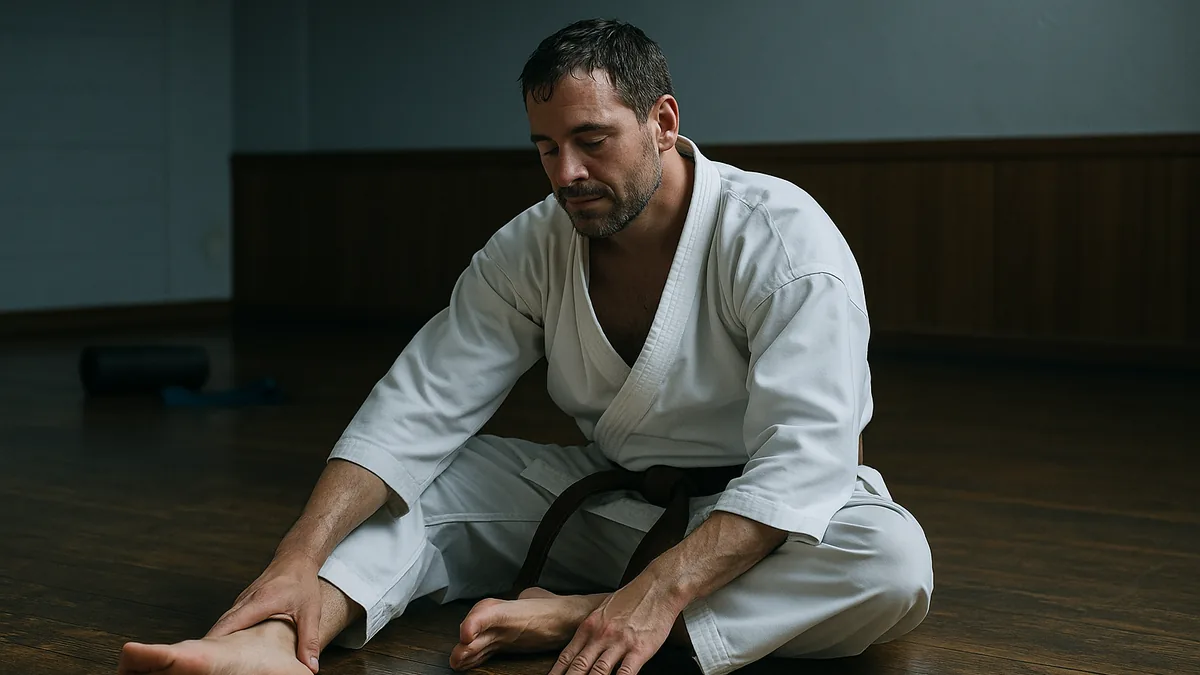
Most karate practitioners have a training problem they don't recognise as one. They're not skipping sessions. They're not slacking on technique. They're simply not recovering - and it's quietly undermining everything else they do.
The body doesn't get stronger during training. It gets stronger between sessions, when it has the time and resources to repair and adapt. Ignore that window, and you're essentially digging a hole and never filling it in.
Here's a practical guide to getting recovery right, from the things that matter most to the mistakes that quietly hold you back.
Why Karate Is Hard on the Body
Karate isn't a single-movement sport. Every session asks your body to do a lot of different things, and each one places specific demands on particular joints and muscle groups. Repeated kicking loads the hip flexors and hamstrings. Punching puts stress through the shoulders and wrists. Holding deep stances challenges the knees and ankles over time.
None of that is a reason to train less. It is, however, a reason to take what happens after training seriously. The body can handle a great deal - but only if it's given what it needs to recover.
The Strategies That Actually Work
Sleep first, everything else second. It's not glamorous advice, but it's the most important thing on this list.
"Sleep is the single most important recovery tool."
Aiming for seven to nine hours a night isn't just general health guidance - it's specific to how the body repairs itself. Growth hormone release peaks during deep sleep and plays a direct role in muscle repair and adaptation. Cutting sleep short to fit in an extra training session is, bluntly, a poor trade.
Eat to support your training. Post-training nutrition doesn't need to be complicated, but it does need to cover the basics. Protein helps repair muscle tissue. Carbohydrates replenish the energy stores the session drew down. And hydration - replacing the fluid lost through sweat - is often the one people forget until they feel off the next day.
Use rest days properly. A rest day doesn't have to mean lying still. Light activity - a walk, some gentle stretching, targeted mobility work - keeps blood moving to recovering muscles without piling on more training stress. Hip rotation, shoulder mobility and ankle flexibility are worth particular attention given what karate asks of those areas regularly.
The Mistakes Worth Avoiding
Most recovery errors aren't dramatic. They're small, repeated decisions that accumulate into bigger problems.
- Training through pain instead of addressing it
- Treating rest days as wasted days and training through them anyway
- Sacrificing sleep to fit in extra sessions
- Eating poorly and expecting the body to adapt regardless
The last one is easy to underestimate. You can train consistently and sleep well, but if nutrition is poor, the raw materials for repair simply aren't there.
A Checklist for Your Next Session
Take this into the week ahead:
- After training: eat something with protein and carbohydrates within a reasonable window
- Every night: aim for seven to nine hours of sleep - not as a luxury, as a training requirement
- Rest days: include some light movement rather than going completely sedentary
- Mobility: work on hip rotation, shoulder mobility and ankle flexibility regularly, not just when something feels tight
- Pain: distinguish between normal post-training soreness and something that needs attention - train around the latter, not through it
- Nutrition: stay hydrated, and don't let poor eating quietly undermine what you're building in the dojo
Recovery isn't the interesting part of karate training. It won't feel like progress in the moment. But it's the part that determines whether everything else you're doing actually sticks.
For the complete version, with every drill explained, read Recovery For Karate Practitioners on Karate Lifestyle.
Join the conversation: Facebook · X · Pinterest · Threads · Bluesky · YouTube · TikTok
More from Karate Lifestyle


Comments
Post a Comment