Getting Your Gi Size Right Before You Buy
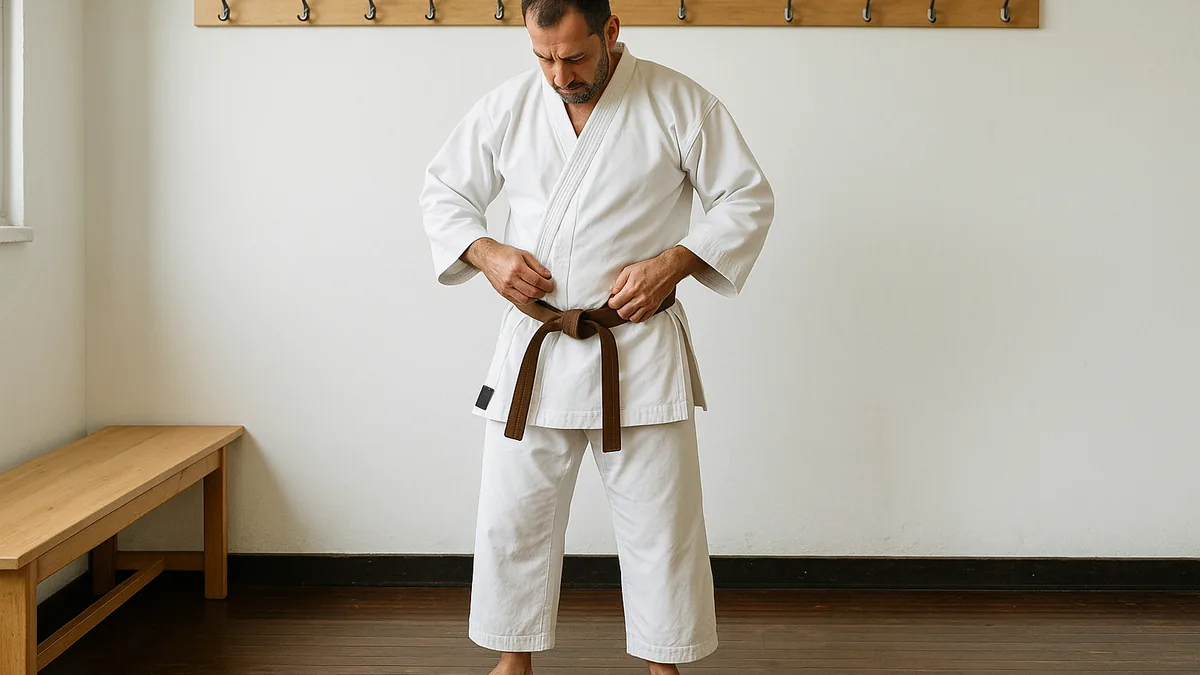
Buying a gi without understanding how the sizing works is a reliable way to end up with something that either flaps around you or refuses to sit properly after the first wash. Whether you're buying your first gi or switching to a different brand or weight, the same principles apply - and they're straightforward once you know them.
How the Numbers Actually Work
Most manufacturers base their sizing on height in centimetres. A size 170 is built around a practitioner who stands roughly 170cm tall. That sounds simple enough, but it's only the starting point. Height gets you in the right ballpark; your chest and waist measurements determine whether the jacket and trousers actually fit comfortably once you're moving.
For fit benchmarks, the standard is practical: sleeves should come down to the wrist bone, and trouser hems should reach the ankle bone. If you're trying something on and it falls noticeably short of either mark, it's too small regardless of what the label says.
"A gi that is too large restricts movement and looks untidy."
A gi that's too small isn't the answer either - it'll ride up and become a distraction during training. The goal is a fit that stays where it should without excess fabric getting in the way.
Shrinkage Is Not a Minor Detail
Cotton gi shrink. It's not a question of whether it happens, but how much - typically somewhere between 2cm and 5cm in length after washing. For a lot of practitioners, that's enough to shift a decent fit into a frustrating one.
The practical response is to buy slightly longer than your measured size suggests, then check the manufacturer's guidance on shrinkage before you commit. Some brands account for this in their sizing; others don't. Assuming they all behave the same way is a mistake worth avoiding.
Lightweight and Heavyweight Gi Fit Differently
The weight of the fabric changes how a gi feels on your body, and that affects sizing decisions too. Lighter gi, typically in the 8oz to 10oz range, tend to have a looser, more relaxed fit and move easily from the start. Heavier gi, in the 12oz to 14oz range, are stiffer when new and may feel more restrictive initially - but they soften with washing and regular training.
This matters for sizing because a heavyweight gi that feels tight when you first put it on may well ease off once it's been through a few sessions. Sizing up unnecessarily to compensate for initial stiffness can leave you with too much fabric once the gi has broken in. Check the specific manufacturer's size chart for each weight you're considering - sizing isn't consistent across brands or across different fabric weights from the same brand.
Checklist for Your Next Purchase
- Measure your height, chest and waist before looking at any size chart
- Check the manufacturer's own chart - don't assume sizes are consistent between brands
- Use the fit benchmarks: sleeves to the wrist bone, trousers to the ankle bone
- Factor in 2-5cm of shrinkage for cotton gi and consider sizing slightly longer
- If choosing a heavyweight gi, allow for the fact that stiffness eases with use before sizing up
- Repeat this process whenever you switch brands or gi weight - previous sizing won't necessarily carry over
For the complete version, with every drill explained, read Karate Gi Size Guide on Karate Lifestyle.
More from Karate Lifestyle
Comments
Post a Comment