Timing in Kumite: What to Work On Before Your Next Sparring Session
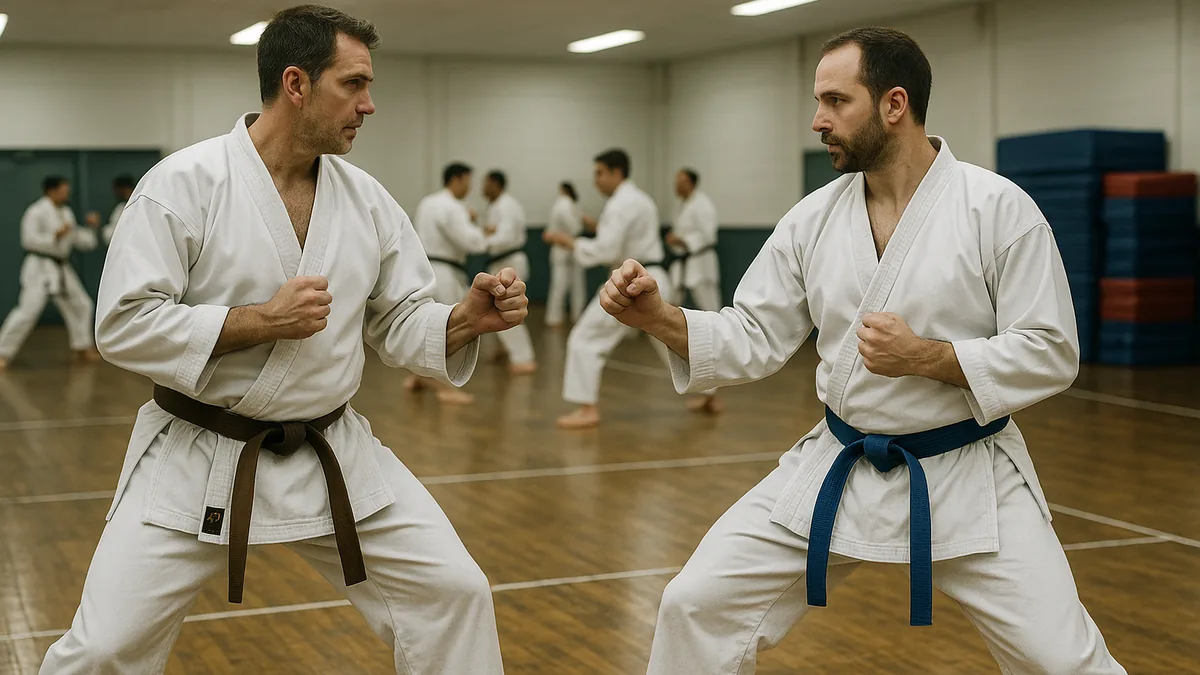
Most karateka, when they want to improve their sparring, reach for more speed or more power. It's an understandable instinct. But if your techniques aren't landing cleanly, the problem is more likely timing than either of those things.
Timing is the ability to execute at precisely the right moment. Get it right, and even a moderate-speed technique will land before your opponent can do anything about it. Get it wrong, and the fastest kick in the dojo won't save you.
Why Timing Is the Skill Worth Prioritising
The reason timing matters so much comes down to how people move in sparring. Your opponent is never static. They're attacking, recovering, shifting their weight, or reorganising their thoughts after a flurry. Each of those moments creates a window.
"Timing exploits the gaps in your opponent's movement - the moments when they are transitioning, attacking, or mentally resetting."
A fast technique launched when your opponent is balanced, alert and ready gives them every chance to react. The same technique - even slower - thrown into one of those transitional gaps lands cleanly because the reaction simply cannot happen in time. That's the argument for prioritising timing over raw speed, and it's a convincing one.
Counter-attacking is where this pays off most. A well-timed counter is the most efficient way to score in kumite, because you're working with your opponent's movement rather than against it.
Drills That Actually Develop It
Timing isn't something you absorb through general sparring. It needs deliberate practice with a specific focus.
The Counter Drill is a good place to start. One partner attacks with a single, agreed technique - nothing unpredictable. The other partner's only job is to time the counter correctly. No guessing, no rushing ahead, no reacting late. Start at a pace where you can feel the moment, then gradually increase speed as it becomes reliable. The constraint of a predetermined attack lets you concentrate entirely on when rather than what.
Rhythm breaking is the other key drill. Spar at a consistent pace, then deliberately disrupt it. Change tempo, pause unexpectedly, vary your combinations. The point is that a steady rhythm lets your opponent settle into a pattern. Breaking it forces them to reset mentally, and that reset is a timing opportunity.
Distance management ties both of these together. You cannot time a technique you cannot reach, and you cannot exploit a gap if you're standing too far away to act on it. Controlling the space between you and your partner is a prerequisite for everything else.
What Gets in the Way
Even when karateka understand timing intellectually, a few habits tend to undermine it in practice.
- Committing to an attack before reading what the opponent is actually doing
- Hesitating until the window has already closed
- Defaulting to speed as a substitute for reading the situation
- Neglecting feints and footwork, which are what create the conditions for good timing in the first place
The last point is worth sitting with. Timing isn't just reactive. You can manufacture timing opportunities by setting things up - drawing a response, disrupting rhythm, controlling distance. That's a more advanced way of thinking about it, but it's the direction to move towards.
Take This to Your Next Class
- Before sparring: remind yourself that the goal is to find the moment, not just move faster
- Counter Drill: agree a single attack with a partner and focus entirely on timing your response - start slow
- Rhythm breaking: deliberately vary your pace in sparring and notice when your partner has to reset
- Distance: practise recognising when you're in range and when your opponent steps into yours
- After sparring: reflect on which techniques landed cleanly and ask yourself whether it was timing or speed that made the difference
- Footwork first: if your timing feels off, check your distance before anything else
For the complete version, with every drill explained, read How To Improve Kumite Timing on Karate Lifestyle.
More from Karate Lifestyle
Comments
Post a Comment