Solo Bunkai: How to Build Real Understanding Between Partner Sessions
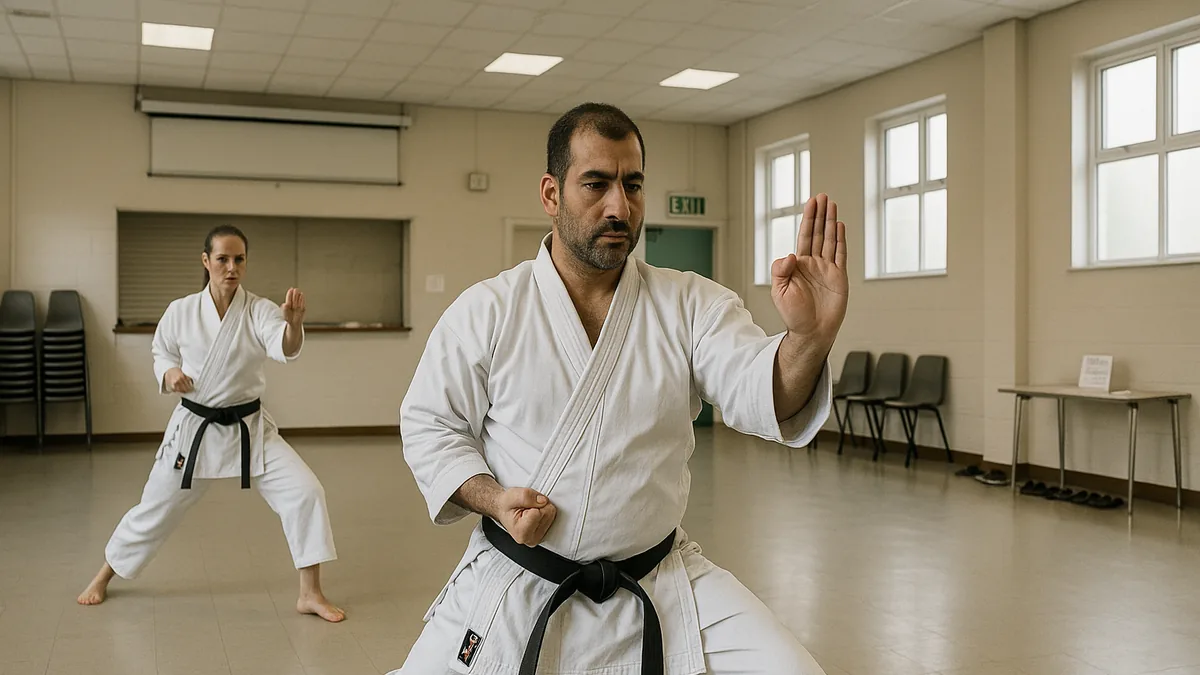
Most of us have more solo training time than partner training time. That ratio is just the reality of adult karate practice. The question is whether you use that time to run kata on autopilot, or whether you use it to actually think about what the movements mean.
This is a companion guide to a longer piece on solo bunkai drills that build genuine mechanical understanding. The full article goes deep on method and mindset. Here, the focus is on what you can take to your next session and put to work straight away.
Why Running the Full Kata Isn't Enough
There is a comfort in running a full kata from beginning to end. It feels productive. You hit every position, you finish on the right spot, and it looks like training. The problem is that familiarity with a sequence is not the same as understanding it.
Solo bunkai work forces you to slow down and interrogate specific movements rather than coast through them. The key insight is that picking three to five movements and working through them until you can narrate a self-defence scenario out loud will teach you more than covering an entire kata in a single session. Depth matters more than coverage.
When a position feels unstable or mechanically awkward during slow solo work, that is not a sign to move on. It is information. Either the mechanics are off, or the interpretation of the technique is wrong - and both possibilities are worth investigating before you carry on.
Three Drills Worth Practising on Your Own
Slow dissection is the foundation. Take three to five consecutive movements from your kata and perform them at a fraction of normal speed. Stop completely at each transition and hold the position. Ask yourself where the weight is, what both hands are doing, and where an opponent would need to be for the position to make sense. Then run the sequence again and narrate out loud what is happening. If you cannot put it into words, you are not there yet.
Shadow bunkai takes that interpretation and tests it in motion. Set a simple starting scenario - a lapel grab, a haymaker, a wrist grab - and begin moving. Use kata movements as your vocabulary, but do not feel bound to follow the kata's sequence exactly. Keep moving for thirty to sixty seconds. Afterwards, ask yourself which movements felt connected to a real outcome and which ones felt empty. The discomfort of making decisions without a partner to confirm them is part of what makes this drill useful.
Positional mirroring is the one that tends to surprise people. Perform your kata on the non-dominant side. The positions that feel suddenly unstable or weak are the ones where you have been compensating with strength or habit rather than genuine structure. Go back to the standard version and look at those same positions carefully.
"One sequence understood deeply is worth more than ten sequences run through quickly."
Using Video Without Getting Lost in It
Watching interpretations of your kata is a legitimate research tool, but only if you use it actively. Find two or three different interpretations of the same sequence, ideally across styles. You are not looking for the one correct answer to copy. You are looking for the mechanical principle that all versions share - the angle, the weight shift, the control point that appears regardless of which style is demonstrating it. That common thread tells you something structural about the kata itself.
The step most people skip is standing up and trying to feel what they have just watched. Not replicate it - feel it. Move through the sequence and ask where the logic lives in your own body.
A Checklist for Your Next Solo Session
- Pick one sequence of three to five movements, not a full kata
- Perform it at slow speed and stop completely at each transition
- Hold each position and ask: where is the weight, what are both hands doing, where is the opponent?
- Narrate the self-defence scenario out loud - if you cannot, keep working
- Run a shadow bunkai scenario using that interpretation for thirty to sixty seconds
- Mirror the same sequence on your non-dominant side and note what breaks down
- If you use video, look across two or three interpretations for the shared mechanical principle
- Commit fully - half-effort during solo practice gives you nothing useful to work with
For the complete version, with every drill explained, read How to Practise Kata Applications Alone When You Have No Partner: Solo Bunkai Drills That Actually Build Understanding on Karate Lifestyle.
More from Karate Lifestyle


Comments
Post a Comment