Your First Karate Competition: What to Focus On When the Pressure Hits
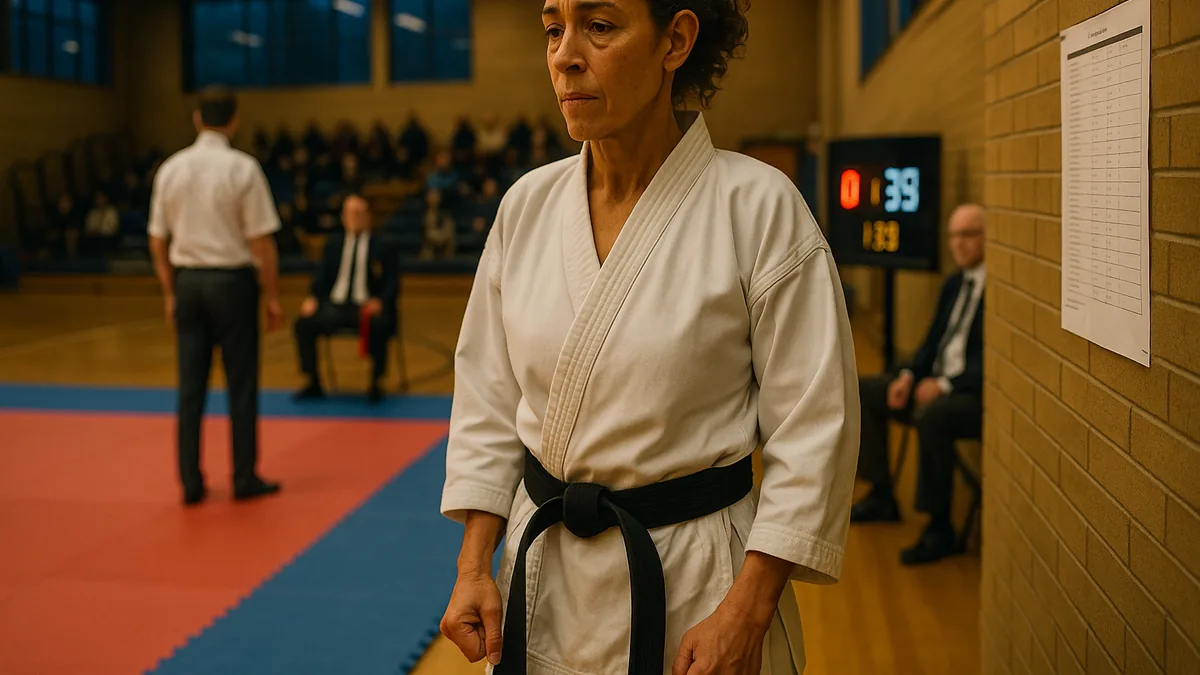
Walking into your first karate competition, you'll probably expect nerves. What catches most beginners off guard is how those nerves actually feel in the moment - not excitement, but a strange disconnect between what you know you can do and what your body will actually produce. This guide pulls out the practical essentials so you can step onto that floor with a clearer head.
Why Your Technique Feels Like It's Gone
There's a physiological reason your combinations feel foreign the moment a bout starts. Competition stress triggers your sympathetic nervous system, and that response directly affects the part of the brain responsible for accessing trained skills under pressure. In short, your training is still there - it's just temporarily harder to reach.
"Your training doesn't disappear under competition pressure - it just becomes harder to access."
Trying to think your way through this - reminding yourself you're prepared, telling yourself to calm down - tends to make things worse rather than better. What actually works is giving your brain something small and physical to concentrate on: your guard, your breathing, your stance. These act as anchors that pull your nervous system back to something manageable.
The same principle applies to how you prepare mentally beforehand. Picturing yourself lifting a trophy is less useful than running through the physical sequence of what you're about to do - stepping onto the floor, bowing, setting your guard, moving through an exchange. Sports psychology supports pairing that kind of process rehearsal with outcome imagery, rather than relying on the winning moment alone.
Know the Rules Before You Arrive
This sounds obvious. Almost nobody does it. Rulesets vary significantly between associations - WKF rules are not the same as KUGB rules, and neither may match what your regional association runs at a local tournament. Scoring structures, point values, and what constitutes a penalty can all differ. If you don't know the specific rules for the competition you've entered, you're making decisions on the floor without the information you need.
Etiquette sits alongside this. Bow when you enter and exit the competition area. Bow to your opponent before and after the bout. When the referee calls yame, stop immediately - continuing a technique after that call can result in a penalty regardless of whether the technique was good. Keep one ear on the referee throughout, even mid-exchange. Missing a call is one of the most common and entirely avoidable mistakes first-timers make.
The Errors That Cost Beginners Most
Beyond ruleset knowledge, a few tactical habits trip up first-time competitors repeatedly.
Trying to do everything. Under pressure, you revert to what's most deeply ingrained. If you haven't identified what that is, you'll scramble. Before you compete, know your two or three most reliable techniques - the ones you land consistently in sparring. Those are your tools for the day. Leave the rest for when you've got more competition experience.
Expecting dojo rhythms. Dojo kumite and competition kumite feel different. In training, you can reset, exchanges flow back and forth, and the stakes are low. Competition is more explosive and more decisive. Students who sparred well in class sometimes freeze because they're waiting for a rhythm that isn't coming.
Measuring the day against a win or loss. Your first competition is data collection, not a verdict. You're there to find out what competition pressure feels like for you personally, where your technique holds and where it breaks down, and how you respond when someone counters you. None of that is available in the dojo. A first-competition loss means you haven't competed before - nothing more than that.
Your Pre-Competition Checklist
Take this to your next class and go through it with your coach before the day arrives.
- Read the actual ruleset for your specific association and division - not a general overview, the real document
- Identify your two or three go-to techniques and make sure you're drilling them in sparring
- Practise your pre-bout routine - breath, guard check, stance - until it feels automatic
- Run process visualisation as well as outcome imagery in the lead-up to the event
- Bring food, water, and patience - tournament schedules slip, and waiting is part of the day
- Know the etiquette basics: bow in, bow out, bow to your opponent, stop on yame, don't argue calls
- Watch other divisions while you wait - senior competitors will show you more than most dojo conversations about competition
- Go in expecting to learn something, not to perform perfectly - that's the right frame for a first competition
For the complete version, with every drill explained, read Competing in Karate for the First Time: What Nobody Tells You on Karate Lifestyle.
Join the conversation: X · LinkedIn · Pinterest · Bluesky
More from Karate Lifestyle


Comments
Post a Comment