Wraps vs Guards: What Every Karateka Needs to Know Before Training
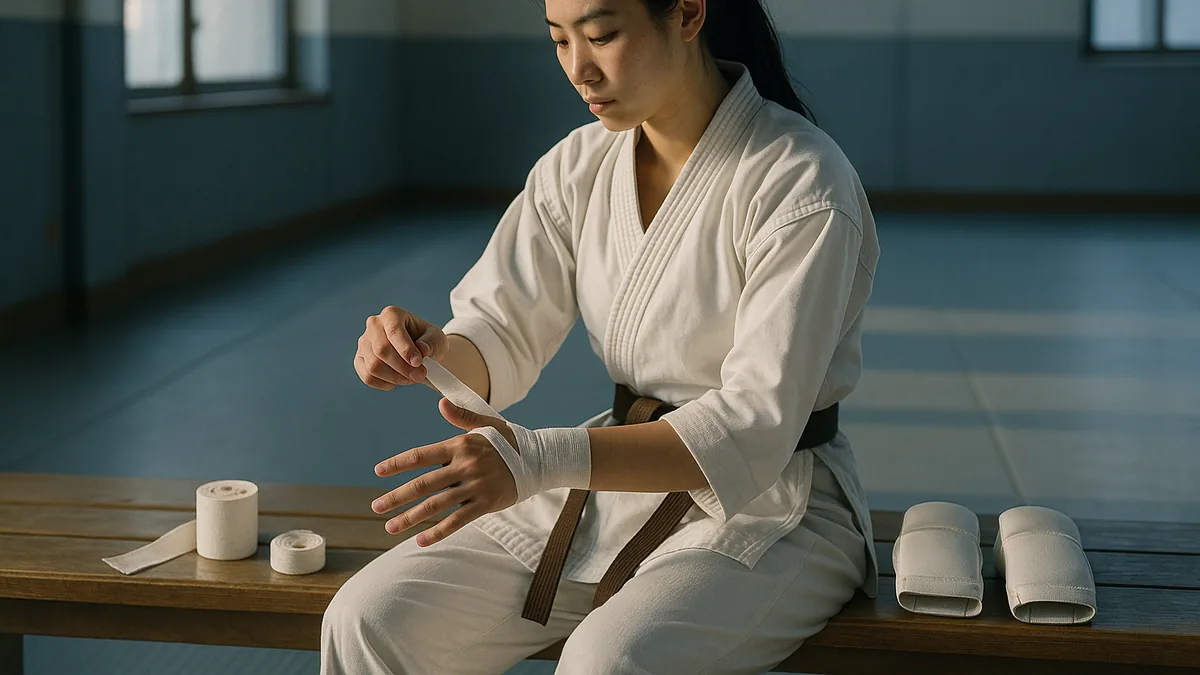
Most karateka put real thought into their gi and their belt, then grab whatever foam guards are nearby and consider the job done. It's a gap worth closing, because how you protect your hands directly affects how your technique performs - in training and on competition day.
This guide breaks down the practical essentials so you can make deliberate choices rather than default ones.
Wraps: What They Do and How to Apply Them for Karate
The purpose of a wrap is to create a stable platform for your wrist joint when it's under load. Committed bag work, pad work, and makiwara training all place repeated stress on that joint. At low intensity, your ligaments and tendons manage it. At higher volume or force, that stress accumulates. Wraps help manage that load - though it's worth being clear that they complement good technique rather than substitute for it.
Karate wrapping differs from boxing wrapping in one important respect: your hands need more freedom to move because you're not wearing a full glove over the top. So wrap for wrist stability first, knuckle protection second. A simple sequence that works:
- Two or three firm passes around the wrist joint
- Across the back of the hand and around the base of the thumb
- One or two snug passes across the knuckles
- Back to the wrist to secure
Keep the wrist passes firm and the knuckle passes comfortable. A common mistake is wrapping too far up the forearm - it feels like more support but actually restricts natural wrist movement and changes how the technique lands.
A correctly wrapped hand feels secure but not rigid. You should be able to make a full fist, feel your thumb tucked safely, and sense compression at the wrist. If your fingers are going numb or the wrap is shifting during movement, something needs adjusting.
Guards: Fit, Function, and Competition Requirements
Guards protect your training partner as much as they protect you. Beyond that, in competition they serve a standardising function - consistent contact surface, consistent conditions between bouts.
For WKF-style competition, this isn't optional. Under WKF Kumite Competition Rules, approved mitts in red or blue are compulsory, and all protective equipment must meet WKF homologation standards. Turning up with non-compliant guards risks disqualification before you've thrown a single technique.
When selecting guards, fit matters more than size. An oversized guard shifts during movement, quietly alters your hand alignment, and gives a false sense of security. What to check:
- WKF homologation marking on the product itself, not just the packaging
- Even foam density across the striking surface - press it in several spots to check
- Wrist strap that stays put during combinations
- Thumb protection that doesn't compromise your hand position in kamae
Many instructors favour open-finger designs for general sparring because the fingertip feedback matters - for sensing distance, redirecting, and awareness of your opponent's movement. WKF competition mitts are themselves open-finger, which is worth knowing when you're shopping.
Training With Both: Why Familiarity Is the Point
"The equipment should serve your training, not define it."
The broad principle is wraps for training, guards for competition sparring. But it's more nuanced than that in practice.
If you train exclusively without guards and then put them on for competition, you're introducing an unfamiliar variable at exactly the wrong moment. The weight, the slight shift in hand position, the way the foam changes feedback on contact - your nervous system needs time to adapt to all of it. Spending at least four weeks doing a portion of your sparring in your actual competition guards (not borrowed ones, not training guards - the specific pair you'll wear) is the practical standard worth aiming for.
The reverse applies too. Training bare-handed or wrapped develops sensitivity and control that guards can mask. The best approach is to move between both, understanding what each one is for.
There is genuine disagreement in the karate community here. Traditional practitioners often argue that bare-hand training builds the control and precision that matter most, and dojos operating on that principle frequently show high technical standards in free sparring. Sport karate competitors use guards regularly because their training environment demands it. Both positions are coherent - the disagreement is usually more about training philosophy than about the equipment itself.
Checklist for Your Next Class
- Wraps on before any bag, pad, or makiwara work - not optional, not a sign of weakness
- Check wrap tension: firm at the wrist, snug at the knuckles, no numbness in the fingers
- Keep the wrap focused on the wrist joint - don't run it high up the forearm
- If competing, train in your actual competition guards for several weeks beforehand
- Check your guards for WKF homologation marking if you're entering a WKF-affiliated event
- Press the foam in multiple spots - uneven density means unpredictable force distribution
- Make sure the wrist strap holds the guard in place through a full combination
- Remember: wraps and guards do different jobs - neither replaces the other
For the complete version, with every drill explained, read Hand and Wrist Protection for Karate: Wraps, Guards, and When to Use Them on Karate Lifestyle.
Join the conversation: X · LinkedIn · Pinterest · Bluesky
More from Karate Lifestyle


Comments
Post a Comment