Why Shotokan Looks the Way It Does: Context Every Practitioner Should Know
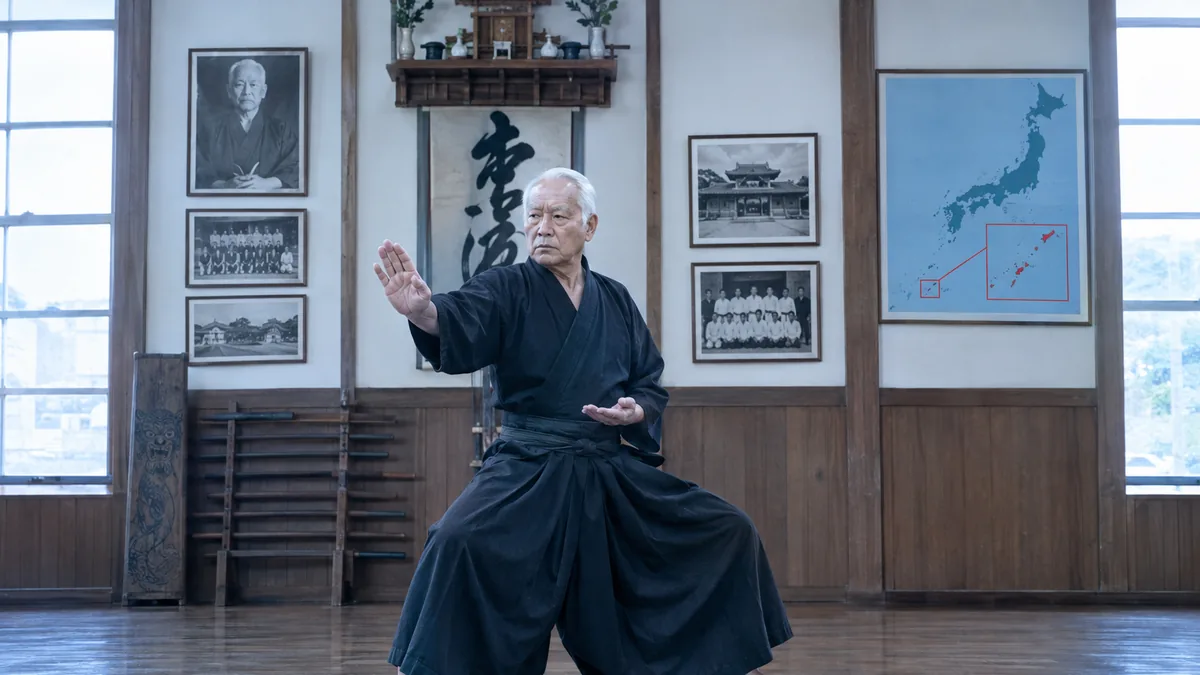
If you have trained Shotokan for any length of time, you have probably accepted certain things without questioning them too hard - the depth of the stances, the kata names, the precepts on the dojo wall. That acceptance is not a problem in itself. But at some point, knowing why those things are the way they are makes you a better practitioner. It changes how you train, not just what you know.
The full article on KarateLifestyle.uk goes into considerable depth on all of this. This companion piece pulls out the points most directly useful to take back into your training.
Two Teachers, One Tension
Funakoshi trained under two senior Okinawan figures whose approaches to teaching were almost opposite. One emphasised a broad syllabus, structured for transmission to larger groups. The other focused on a smaller number of kata studied with much greater depth and intensity.
That contrast did not disappear when Funakoshi brought the art to Japan. It is still present in Shotokan today. Kyu grades often experience it as a tension between covering the required syllabus and genuinely understanding what they already know. Senior practitioners tend to resolve it by recognising that breadth and depth are not competing priorities - they operate on different timescales. You accumulate the syllabus first; you spend the rest of your training life going back into it.
What the Adaptations Actually Mean
When Funakoshi introduced karate to a Japanese audience, he made deliberate changes. He altered the written character for kara so the art read as "empty hand" rather than "Chinese hand." He renamed a number of kata to make them sound less foreign to Japanese practitioners - sequences that had Okinawan or Chinese names became the names Shotokan practitioners now use as a matter of course.
These were not cosmetic adjustments. They shaped how generations of students understood what they were training and where it came from. Knowing this does not undermine the style. It does mean that Shotokan is an adapted transmission rather than a perfectly preserved original - and that is worth holding in mind whenever someone claims their version of a kata or technique is the authentic one.
Funakoshi's twenty precepts, the Niju Kun, are another thing that gets misread through the lens of later presentation. Displayed as individual slogans, they look like motivational material. Read as a complete document, they describe a coherent position on what karate is for: the practitioner's relationship to training, to other people, and to daily conduct. The difference matters practically. A slogan on a wall asks nothing of you. A philosophical framework shapes how you approach every session.
The Stances Are Not the Point - They Are the Tool
The deep stances of Shotokan - zenkutsu-dachi, kiba-dachi and the rest - are probably the feature that most distinguishes the style visually. They are also the feature most often misunderstood at kyu grades.
They are training tools. Their function is to develop structural load through the legs, stability through the hips, and the body integration that makes technique something other than an arm movement. When the stance is properly loaded, a punch or block has a mechanical basis. When it is not, the technique sits on top of nothing.
The mistake is treating the depth as the goal. It is not. As the article puts it:
"A white belt learns where to put their feet. A brown belt starts to feel why the feet go there - what the stance actually loads, what the hip position enables, what the timing of the technique requires."
The strength and awareness built in deep stances is what eventually allows faster, more adaptive movement. The stance teaches the body what it needs to do; application means doing it at a different scale.
Shotokan Was Shaped by More Than One Person
Gichin Funakoshi is the name attached to the style, but the technical character of modern Shotokan reflects contributions from others - most significantly his son Yoshitaka, whose influence on the syllabus included longer, lower stances and kicking techniques that are now standard. That contribution is often underacknowledged. The postwar development of the style through the Japan Karate Association added another layer, producing some of the most rigorous technical documentation in karate's history while also building a competitive culture that Funakoshi's own philosophy had not anticipated.
Understanding this helps explain why different Shotokan associations can look and feel quite different from one another. They share a lineage, but the lineage has more than one branch.
Checklist for Your Next Class
- In your next kihon session: check whether you are treating stance depth as an achievement or as a training environment. What is the stance actually loading?
- In kata: pick one sequence and ask what principle it is teaching, not just what the movements are.
- If your dojo displays the Niju Kun: read them as a connected argument rather than individual statements. What is the overall position they describe?
- When kata names come up: remind yourself that some names were changed deliberately for a specific audience. It does not change the training, but it changes the context.
- When you next train with someone from a different Shotokan association: notice the differences and consider which part of the lineage they reflect.
For the complete version, with every drill explained, read Who Was Gichin Funakoshi? The Founder of Shotokan and How His Okinawan Background Shaped Modern Karate on Karate Lifestyle.
Join the conversation: Facebook · Instagram · X · LinkedIn · Pinterest · Threads · Bluesky
More from Karate Lifestyle


Comments
Post a Comment