What Junior Instructors Get Wrong Before the Grading Even Starts
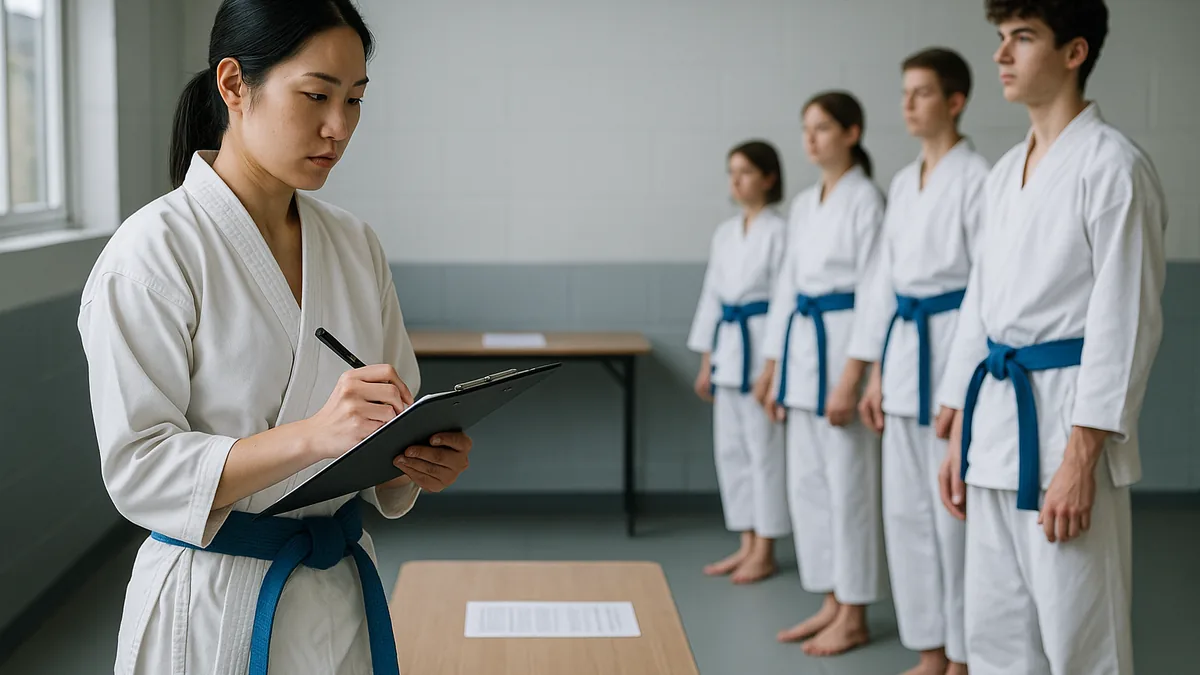
Most junior instructors put their energy into the grading day itself - the format, the commands, the running order. That preparation matters, but it is the weeks beforehand that determine whether a grading is genuinely fair. If candidates struggle on the day, the question worth asking is not "why did they underperform?" but "what did I fail to make clear to them?"
This guide is a practical companion to the full article on running karate gradings for junior instructors. It pulls out the points most likely to save you from the mistakes that undermine student performance and erode the meaning of the grade itself.
A Syllabus and a Grading Standard Are Not the Same Thing
This is the distinction that catches most junior instructors out. A syllabus lists what students should practise. A grading standard describes what "ready to pass" actually looks like. If you have only given students the first, you have not given them enough.
Students can spend months drilling the correct techniques and still fail because nobody told them that stances needed a particular depth, or that a kiai needed genuine intent rather than just volume. They trained the right things - they just did not know the bar they were being measured against.
Before you finalise your grading format, write down - physically write it down - what a pass looks like for each grade you are assessing. Not a checklist of moves. A description of the standard. For kyu grades, three areas cover most of what matters: whether the mechanics are correct, whether there is genuine intent behind the technique, and whether the student can hold themselves together when they are nervous and being watched.
That third area is worth taking seriously. Performing worse under evaluation than in practice is a documented phenomenon, driven by pressure-induced overthinking. Grading for composure is not adding padding to your assessment - it is testing something real.
"A student who fails because they were not properly prepared for what was expected has not been failed by the grading. They have been failed by the preparation."
Run Mock Tests That Feel Harder Than the Real Thing
A mock test is not about softening the experience. It is about removing the unknown so that on grading day, students can concentrate on performing rather than on figuring out what comes next.
Run the mock in the same format as the real grading. Use the same commands. Have students bow in properly and stand in line. If the actual grading involves a panel, replicate that as closely as you can. The first time a student stands in front of examiners should not be the grading itself.
Run at least two sessions before grading day. The first one exposes the gaps. The second one shows students they can close them - and that second session is where confidence actually builds. Make both feel demanding. If the mock feels easier than the real grading, you have not prepared them for what they are walking into.
One of the most common things to address in mock tests is where students direct their gaze. Under pressure, many beginners drop their eyes to the floor. It reads as uncertainty to any examiner, and it tends to make students feel less settled too. A simple cue - pick a fixed point on the wall at eye level and hold it - makes a noticeable difference to how a candidate carries themselves.
What to Watch for on the Day Itself
Once the grading is running, your job as the examiner shifts. You are there to observe, not to teach.
Do not correct students mid-grading. However well-intentioned it is, stepping in during a performance disrupts the student's focus and signals to everyone in the room that something has gone wrong. Corrections belong in the feedback session afterwards.
Watch your own body language. Students are reading you throughout. A frown during a kata, a glance at your clipboard, a sharp exhale - they will interpret all of it. Stay neutral. You can be thorough and honest in feedback without giving anything away during the grading itself.
Sequence the grading so there is an early success. Open with something every candidate can do well - a basic technique they have repeated hundreds of times. A student who has felt something go right early carries themselves differently through the harder material.
Acknowledge the nerves before you start. Telling students directly that feeling nervous is normal, and that it signals they care, is not motivational filler. Students who know their nerves are expected stop fighting them.
Checklist for Your Next Grading
- Before anything else: write down what a pass looks like for each grade - criteria before format
- Run at least two mock tests; make them feel harder than the real grading
- Check that students know the standard, not just the syllabus
- Brief any observers before an open grading - no commentary, no visible reactions, no sideline coaching
- Sequence the grading to give candidates an early success
- Keep corrections for the feedback session; stay neutral during the grading itself
- If a student fails, give specific and actionable feedback - "not quite ready yet" is not feedback
- Do not push a student through because the calendar demands it; the conversation before is easier than the one after
For the complete version, with every drill explained, read How to Run a Karate Grading: A Guide for Junior Instructors on Karate Lifestyle.
Join the conversation: X · LinkedIn · Pinterest · Bluesky
More from Karate Lifestyle


Comments
Post a Comment