Two Styles, Two Different Questions: Uechi-Ryu and Wado-Ryu Compared
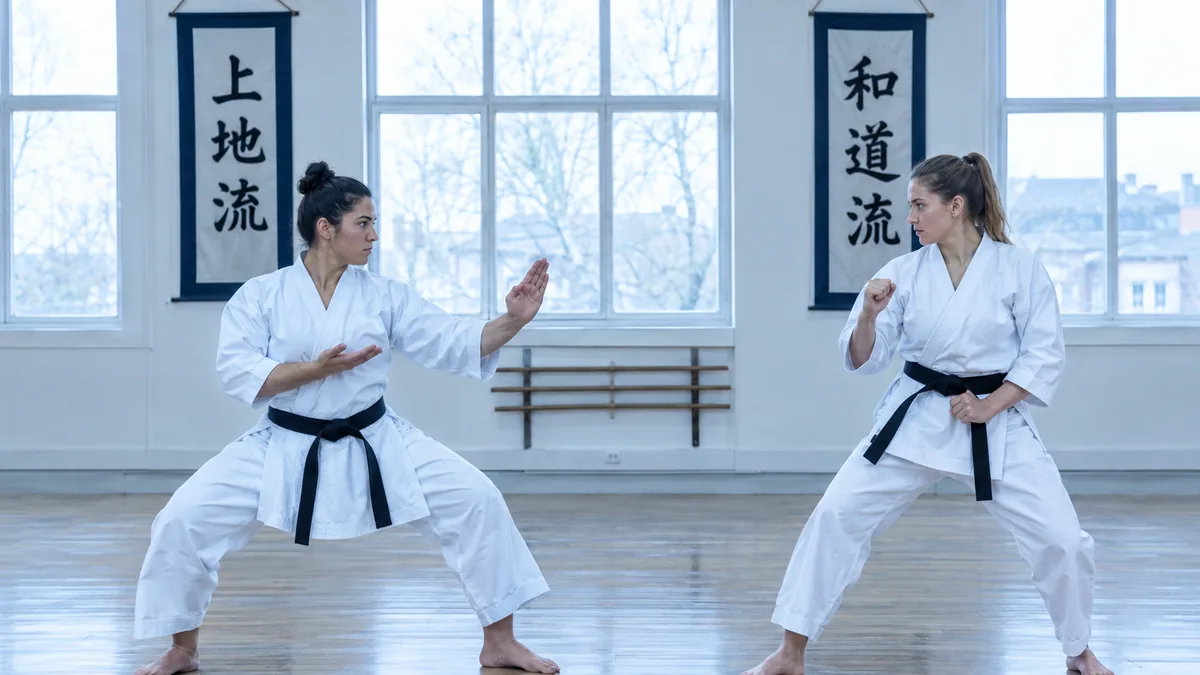
If you've ever watched Uechi-Ryu and Wado-Ryu practitioners spar and wondered how both can be called karate, you're asking exactly the right question. The surface differences - upright posture versus angled evasion, conditioned forearms versus fluid redirection - point to something much deeper. These two styles are built on genuinely opposing philosophies about what the body should do when violence happens.
The full article on KarateLifestyle.uk goes into the technical and historical detail. This companion guide pulls out the practical points worth taking to your next session.
The Core Disagreement
It helps to state the contrast plainly before getting into technique:
"Uechi-Ryu says: condition the body to take and deliver damage at close range. Wado-Ryu says: avoid the damage in the first place by being somewhere else when it arrives."
Neither position is wrong. But they are genuinely different destinations, not different roads to the same one. Uechi-Ryu's Chinese roots - specifically the Crane, Dragon and Tiger traditions behind the style - produced a system where the body is simultaneously the primary weapon and the primary shield. Wado-Ryu's jujutsu heritage, explicit enough that it was originally registered as Shinshu Wado-Ryu Karate-Jujutsu, produced a system where making an attacker's force irrelevant through movement and timing is the whole point.
Once you see that, you stop asking which style is better and start asking which question you want to spend the next ten years answering.
What Each Style Is Actually Asking You to Develop
In Uechi-Ryu, the foundational work is Sanchin kata - not as a warm-up, but as the technical core of everything else. The quality of how a school teaches and tests Sanchin tells you most of what you need to know about the school. The circular movements in Uechi-Ryu technique are commonly misread as soft or gentle, particularly by practitioners coming from other styles. They are not. The circle is the delivery path; the power arrives at the end of it. Training those movements as though they are deflections produces weak, ineffective technique.
The conditioning work - forearms, body structure, the ability to receive force without collapsing - is not supplementary training bolted onto the style. It is the foundation the close-range model depends on. You cannot shortcut years of cumulative conditioning in a seminar weekend.
In Wado-Ryu, the critical skill is timing the evasion correctly. The technique works when you move at the moment the attacker commits, not at the moment impact would arrive. That distinction sounds small; in practice, moving late means moving into the strike rather than away from it, which turns a deflection into a collision. Most beginners feel the principle working for the first time somewhere around brown belt level, once enough partner work has built genuine early reading of attacks.
The kata carry considerably more content than most students realise. Throws, joint locks and balance-breaking entries are embedded throughout - not as extras, but as the jujutsu dimension Otsuka considered essential. If your bunkai work does not include those elements, you are training roughly half the system.
Choosing Between Them
For self-defence application specifically, Wado-Ryu's evasion model travels reasonably well across different body types and ages because it does not depend on physical conditioning to function. A well-timed tai sabaki works regardless of whether you weigh eleven stone or fifteen.
Uechi-Ryu's close-range model is more forgiving of timing errors - if your body is conditioned and you are already inside the attack, the margin you need to make the technique work is smaller. But that forgiveness is only available once the conditioning has actually been built, which takes consistent years of work.
If you are drawn to the idea of the body as something to be forged and made reliable under pressure, Uechi-Ryu's framework will resonate with you. If you are drawn to the idea of skill as economy of motion - making an attacker's force simply irrelevant - Wado-Ryu is the more natural fit. Neither answer is more correct. They are different questions.
Checklist for Your Next Class
- Uechi-Ryu practitioners: Check whether you are treating circular movements as soft. Think of the circle as a path to the strike, not the strike itself.
- Wado-Ryu practitioners: Notice when you are moving. If you are reacting to impact rather than to commitment, your timing is late.
- Either style: Pull out your foundational kata and ask what the bunkai actually contains. Are you training the full system or just the striking layer?
- Cross-training or style evaluation: Watch how a school teaches its foundational kata - Sanchin for Uechi-Ryu, the Pinan series for Wado-Ryu. The depth of that teaching tells you most of what you need to know.
- Thinking about style selection: Ask which question appeals to you more - building a body that can absorb and deliver damage at close range, or developing the timing to make damage irrelevant. Your honest answer points you toward the right tradition.
For the complete version, with every drill explained, read Uechi-Ryu vs Wado-Ryu: Why a Chinese-Rooted Okinawan Style and a Jujutsu-Influenced Japanese Style Represent Two Completely Different Theories of What Karate Is For on Karate Lifestyle.
Join the conversation: Facebook · X · LinkedIn · Pinterest · Threads · Bluesky
More from Karate Lifestyle


Comments
Post a Comment