Training Through Injury: How to Come Back Better, Not Just Recovered
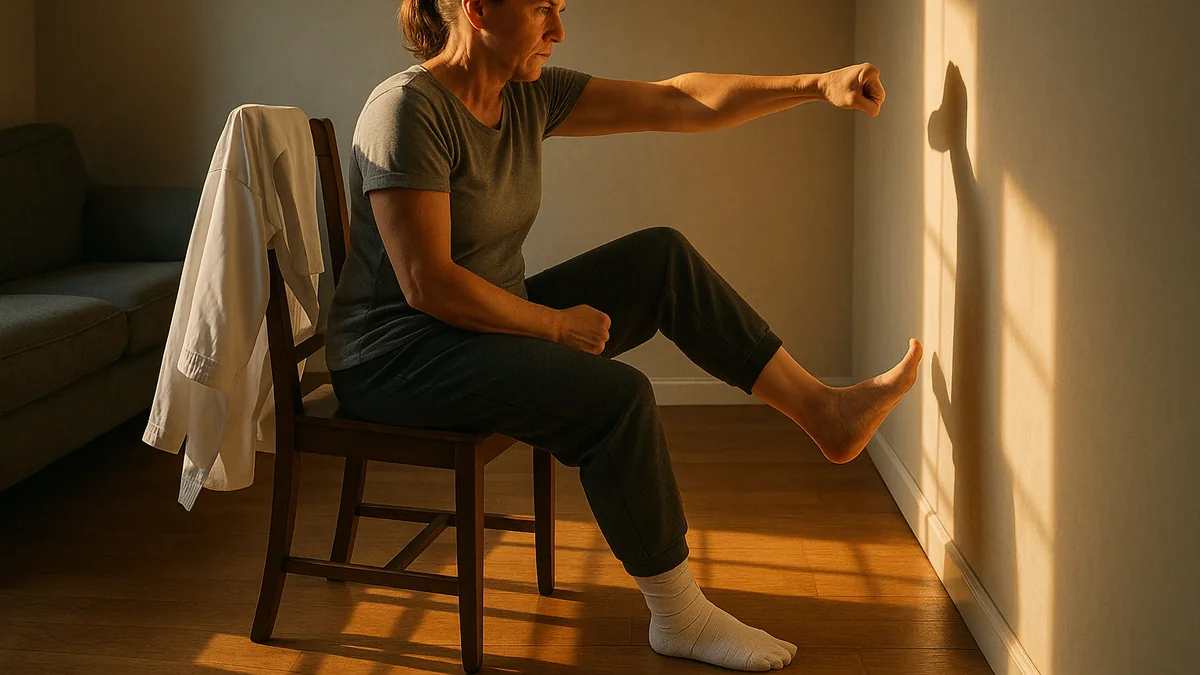
Being sidelined is frustrating. But the practitioners who come back strongest are not the ones who rested most completely - they are the ones who trained most intelligently around what they could not do. This guide pulls together the practical essentials so you can take something useful to your next session, even if that session is in your living room.
"The injury defines the boundary. What you do inside that boundary is still your choice."
What Decays Fastest - and Why It Matters
Most of us assume muscle size is the first thing to go during a layoff. The reality is more nuanced. Neuromuscular function - your body's ability to fire techniques with timing and precision - drops off faster than muscle volume in the early stages of immobilisation. Strength loss also outpaces size loss. That means when you return to the dojo feeling sluggish and disconnected, it is not purely a fitness problem. Your nervous system has gone quiet.
This matters because it changes what you should prioritise. Chasing cardiovascular work at the expense of neuromuscular and strength-focused training is a common mistake. If your injury allows low-impact cardio, fine - but do not sacrifice focused upper body or mental work just to keep your heart rate up.
Upper Body Work That Actually Transfers
For lower-body injuries especially, the uninjured half of your body should not be idle. Two tools stand out here.
Isometric punching drills against a wall are underused and genuinely effective. Place your fist against a wall at mid-extension, three-quarter extension, and full extension in turn. At each position, push into the wall with moderate effort and hold for 8 to 10 seconds - not to move anything, but to feel the tension chain from your fist through your forearm, shoulder, lat, and into your core. Isometrics strengthen muscle without joint movement, which makes them particularly useful when movement is restricted. The sensation you are training - lat engagement connecting through into the punch - is exactly what separates beginner punching mechanics from senior ones. Three sets of five holds per position, per arm.
Band pull-aparts and face pulls address the shoulder and upper back stiffness that quietly accumulates during any layoff, even when your injury has nothing to do with your shoulders. Simply stopping your usual training is enough to cause tightness. Two doorframe stretches a day - forearm vertical against the frame, then slid higher to roughly 45 degrees above horizontal - takes three minutes and keeps the mobility you will need when you return.
For band work, slow down considerably. If you cannot feel the target muscles working, you are moving too fast. The contraction at the end of each rep is the point - hold it, feel it, then return.
Visualisation Done Properly
Most practitioners either skip this entirely or do it so vaguely it has little effect. Motor imagery - running techniques or kata mentally in real time - has solid evidence behind it for maintaining and even developing motor skill. The key distinction is how you do it.
First-person, kinesthetic imagery - feeling yourself inside the technique, sensing the muscle tension and weight shifts as they happen - is more effective for motor skill work than watching yourself from an external viewpoint. Sit somewhere quiet, place yourself specifically in your dojo (the floor, the smell, the sounds), and run a kata at real speed. Feel the kime. Feel the stance transitions. If you lose the image or rush, stop and go back.
Pair this with slow, deliberate kata practice from the waist up - seated if your injury requires it. Running through the arm movements of a kata in a chair sounds like a poor substitute, but it keeps motor patterns alive in a way that pure mental rehearsal does not fully replicate, because of the physical feedback you get from actually moving your limbs through the positions.
Start with five minutes daily and build to 15 to 20 minutes. Take it seriously and it will pay off.
Checklist for Your Next Session (or Home Practice)
- Get clearance first. Nothing here replaces a conversation with a physiotherapist or sports medicine professional about your specific injury.
- Map what you can do, not just what you cannot. Upper body, lower body, and mental work are largely independent.
- Isometric punching drill - three extension points, three sets of five holds per arm, daily.
- Band pull-aparts and face pulls - three sets of 15 to 20 reps, done slowly enough to feel the target muscle.
- Doorframe shoulder stretch - two positions each side, twice a day, without fail.
- Visualisation - first-person, felt-experience, real-time kata run-through, minimum five minutes daily.
- Waist-up kata practice - seated or standing as your injury allows, slow and deliberate.
- Set one goal: identify one area you intend to return to training better at, not just recovered to where you were.
For the complete version, with every drill explained, read How to Maintain Karate Fitness During Injury Layoffs Without Making Things Worse on Karate Lifestyle.
Join the conversation: X · LinkedIn · Pinterest · Bluesky
More from Karate Lifestyle


Comments
Post a Comment