Three Recovery Tools, One Clear Winner: What Karateka Should Actually Be Doing
If you train multiple times a week, recovery isn't optional - it's the thing that determines whether your next session is any good. The challenge is cutting through the noise. Three tools come up repeatedly among active practitioners: Epsom salt baths, contrast showers, and compression gear. All three can earn a place in your routine. None of them will do much if you use them wrong or only reach for them when something hurts.
Here's how to think about each one.
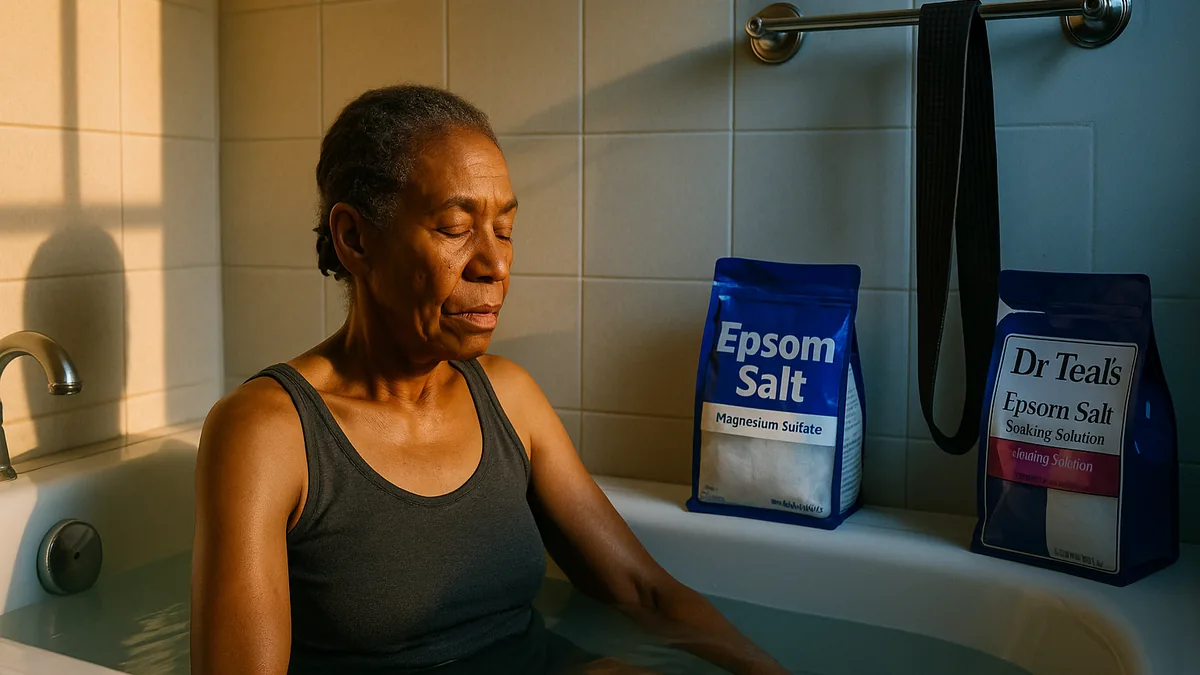
Epsom Salt Baths: The Thermal Benefit Is Real, the Magnesium Claim Isn't
The popular idea is that soaking in Epsom salts allows magnesium to absorb through the skin and aid muscle recovery. The honest position is that this specific claim is not well supported by peer-reviewed evidence - the studies behind it are small, uncontrolled, and not published in reputable journals.
What is well evidenced is the warm bath itself. Water at the right temperature, taken one to two hours before bed, has been shown across multiple controlled trials to improve sleep onset by accelerating the natural drop in core body temperature that tells your body it's time to sleep. For a karateka training several times a week, that sleep-quality benefit is genuinely worth having.
The practical rules are simple:
- Water needs to be comfortably warm - not lukewarm, not scalding
- Stay in for at least 20 minutes; five minutes achieves very little
- Use it in the evening, after training is done for the day
- Do not use it as a pre-competition warm-up ritual - that's backwards
The magnesium may not be doing what the marketing says. The warmth, the stillness, and the effect on your sleep absolutely can.
Contrast Showers: The One to Prioritise
If you only take one thing from this, make it contrast showers. They cost nothing, take three to four minutes, and the evidence base for their benefit over doing nothing is the most consistent of the three tools covered here. A meta-analysis of 18 controlled trials found significantly greater reductions in muscle soreness and significantly less strength loss compared to passive rest, across follow-up periods up to 96 hours.
"If an Epsom salt soak helps you get back on the mat two days after a hard session instead of three, you've gained a training session."
The same logic applies here, but with even stronger supporting evidence. The protocol that appears in the research:
- Two to three minutes hot, followed by 30 to 45 seconds cold
- Repeat three times
- Finish on cold
The cold phase needs to be genuinely cold - not cool, cold. That's where most people fall short. The contrast between phases is the point. Lukewarm-to-slightly-cool produces very little.
Use this after every training session, including lighter ones. Sparring sessions in particular load the legs, shoulders, and forearms significantly, and addressing that the same evening pays off the following morning.
Compression: Convenient, but Timing Matters
Compression is the most convenient of the three and the least impactful, but it earns its place when used correctly. The mistake most practitioners make is wearing it during training and expecting recovery benefits. The evidence points clearly to post-training use as where compression does its best work.
Research including a 2025 systematic review found that compression garments had their most pronounced effects on strength and power recovery in trained individuals during the first 24 to 48 hours after exercise. For a karateka training multiple sessions a week, protecting output in that window matters.
Where compression is genuinely useful:
- Worn after training, especially if you're sitting or travelling in the hours that follow
- During the 24 to 48 hour recovery window after a hard session
- As a practical adjunct when you can't do much else
What compression won't do is fix chronic tightness. If your quads or hip flexors are perpetually sore from heavy kihon drilling, compression manages symptoms - it doesn't address the cause. That requires direct tissue work and mobility training.
Checklist for Your Next Class
Take this to your next training session and apply it that evening:
- After training: contrast shower - three cycles, hot then cold, finish cold, cold phase genuinely cold
- If it's an evening session: Epsom salt bath one to two hours before bed, water comfortably warm, minimum 20 minutes
- If you're travelling or sitting post-training: put compression tights or sleeves on before you sit down
- Don't skip the basics: none of this replaces adequate sleep or rest between sessions
- Be consistent: one Epsom salt bath after a grading does very little; regular use across weeks is where the benefit accumulates
- Priority order if you're short on time: contrast shower first, every time
For the complete version, with every drill explained, read Epsom Salts, Contrast Showers, and Compression: Which Recovery Tools Are Actually Worth It for Karateka? on Karate Lifestyle.
Join the conversation: X · LinkedIn · Pinterest · Bluesky
More from Karate Lifestyle


Comments
Post a Comment