Shitō-ryū and Wado-ryū: What Each Style Actually Demands of You
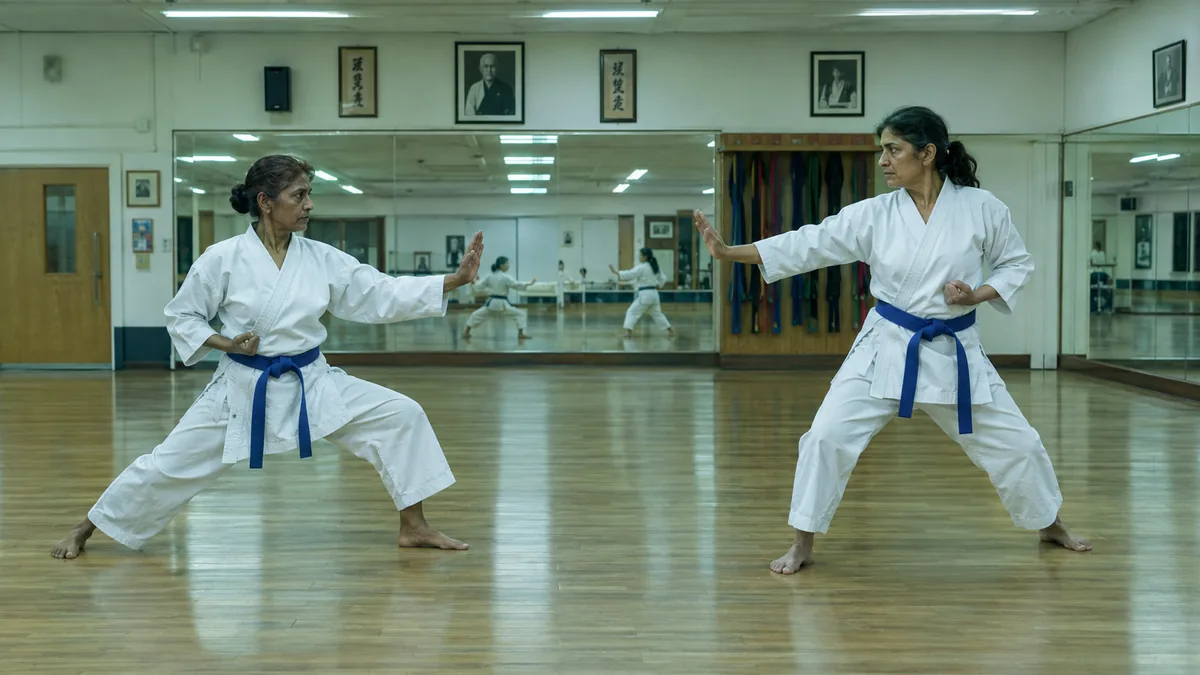
If you train or compete in Shitō-ryū or Wado-ryū, you have probably heard the broad comparison: one has a larger syllabus, the other has a jujutsu influence. Neither observation tells you much about what you actually need to do differently on the floor. This guide pulls out the practical points so you can take them straight into training.
Shitō-ryū Kata: The Character Shift Is the Whole Point
The defining demand of Shitō-ryū kata is not technical in the narrow sense. It is not primarily about hand position or how deep you sit in your stances. It is about genuinely changing the physical character of your movement depending on which lineage a given form comes from.
The style was built by bringing together two distinct Okinawan traditions - Shuri-te and Naha-te - and it has never smoothed those differences out. That is deliberate. A form rooted in Naha-te should feel heavy and rooted. A form from the Shuri-te tradition should feel sharper and more linear. If your Naha-te kata looks and feels like a rearranged version of your Shuri-te kata, you have identified the first problem to fix.
This is also where the multi-lineage syllabus becomes a genuine competitive asset under WKF formats. When different forms are performed across rounds, the ability to shift convincingly between two distinct physical characters is directly useful. Most instructors in the style will cue performers to find the feel of each kata's source tradition, not just the correct sequence of movements.
Wado-ryū Kata: Train the Transitions, Not Just the Techniques
Wado-ryū works from a smaller set of kata, and the style's identity does not live in the individual techniques. It lives in the movement between them.
The hip action in Wado-ryū is more continuously rotational than the sharp, driving rotation you find in other styles. When it is working, the kata feels like one connected impulse rather than a sequence of separate events. The most common mistake is treating each technique as a stopping point - completing a movement, pausing to reset, then starting the next one. That produces kata that looks mechanical and loses the defining quality of the style entirely.
The correction is to think of the entire sequence as a single long movement with changes of direction and emphasis. The transitions carry momentum; they are not neutral space between the techniques that actually matter.
Wado-ryū Kumite: Evasion Without a Counter Is Just Retreating
This is where the philosophical difference between the two styles becomes something you feel under pressure rather than understand intellectually.
Wado-ryū kumite is built around tai sabaki and nagasu - the idea that evasion and counter should arrive as one movement, not as block-then-counter. The counter should land before the opponent's attack has fully extended. Moving offline is not the goal in itself; it is the platform for an immediate offensive response.
The problem is that tai sabaki without committed offensive intent becomes passive retreating. A practitioner who has trained the evasion without equally hard training on the counter will move offline, watch the attack miss, and then hesitate. In competition, that hesitation costs the point.
"The confidence to do that under pressure takes time to build, and many practitioners understand the concept long before they can execute it when someone is actually trying to hit them."
The correction that works is to train the counter first and build the evasion around it. Know exactly what you are going to do offensively, then work backward to the position you need to be in to do it. This is the opposite of how evasion is usually introduced, but it produces practitioners who move to attack rather than practitioners who move to avoid.
Taking This Into Your Next Session
A short checklist you can use straight away:
- Shitō-ryū kata - Before you perform a form, identify its lineage. Consciously shift your physical character to match it before you begin, not halfway through.
- Shitō-ryū kata - If your Naha-te and Shuri-te forms feel the same to perform, that is the correction to prioritise above anything technical.
- Wado-ryū kata - Pick one transition between two techniques and drill it as a single continuous movement. Add the surrounding techniques only once the transition feels connected.
- Wado-ryū kumite - Choose a specific counter before you drill tai sabaki. The evasion is built around the counter, not the other way around.
- Both styles - If you have access to cross-training between the two, use it. What feels foreign about the other style will usually show you something your own training has left underdeveloped.
For the complete version, with every drill explained, read Shitō-ryū vs Wado-Ryu: How the Two Most Technically Diverse Competition Styles Differ in Kata Interpretation and Kumite Strategy on Karate Lifestyle.
Join the conversation: Facebook · X · LinkedIn · Pinterest · Threads · Bluesky
More from Karate Lifestyle


Comments
Post a Comment