Point Fighting or Continuous Sparring? Train for the Format You Actually Compete In
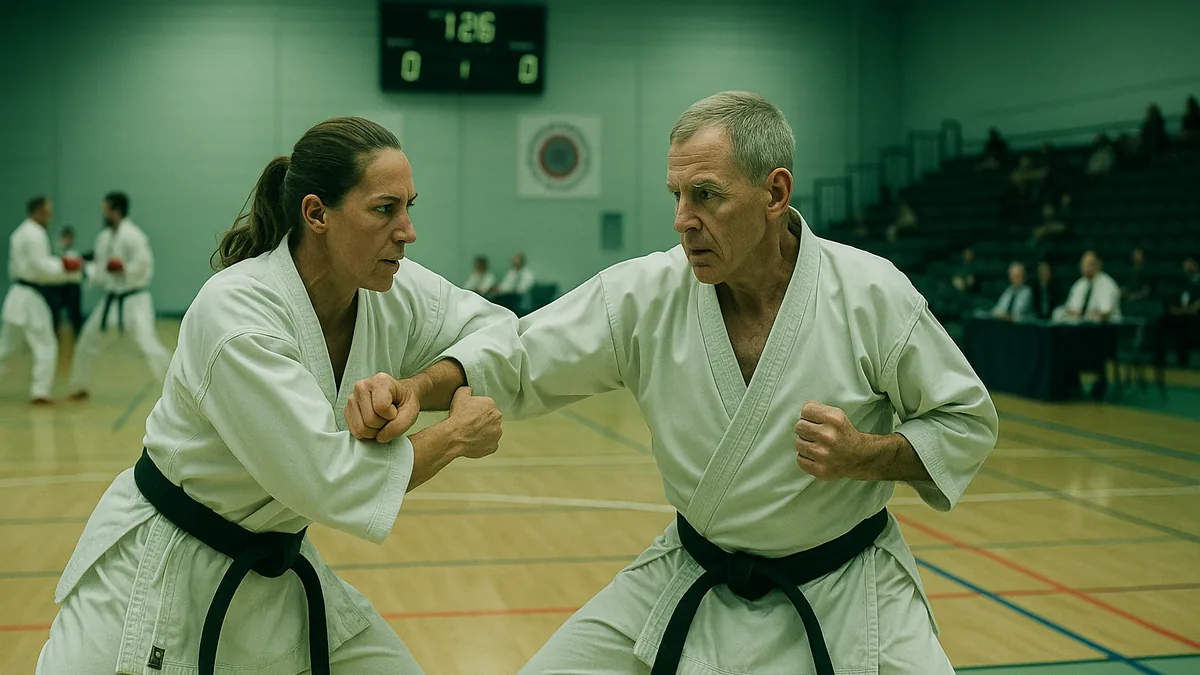
If you compete in both point fighting and continuous sparring, or you have ever switched between the two, you will have noticed that something feels off. Techniques that work in one format seem to misfire in the other. That is not a coincidence - each format builds specific physical and psychological habits, and those habits can actively undermine you if you are preparing for the wrong one.
This is a practical guide to understanding what each format actually demands, and how to make sure your training is pointed in the right direction.
What Point Fighting Is Really Testing
In WKF-style kumite, the exchange stops after every score. The referee calls it, you reset, and you go again. That constant reset shapes everything about how you need to prepare.
The format rewards explosive, precise attacks from the right distance, and the ability to read your opponent before they have fully committed. Under WKF rules, a technique must satisfy six criteria to score - good form, sporting attitude, vigorous application, zanshin, good timing, and correct distance. Speed alone is not enough. A fast but sloppy technique will regularly lose out to one that meets all six criteria, even if the sloppy one arrived a fraction earlier.
"The point is decided in the gap between their intent and their execution."
Practitioners who come from continuous sparring backgrounds often struggle here with one specific habit: they do not stop cleanly after landing. The instinct is to keep working, keep covering, keep moving - because in continuous sparring, the fight carries on. In a stop-and-restart format, that bleed-through costs you the score. The clean finishing position has to be drilled deliberately until presenting after contact feels as natural as the attack itself.
What Continuous Sparring Is Really Testing
Continuous sparring does not reset. You take a hit and keep going. You land and keep going. The situation evolves, your plan fails, and you have to adapt mid-exchange. These are demands that point fighting, by design, never places on you in the same way.
The endurance required is not simply cardiovascular - it is technical endurance. When fatigue sets in, the hips drop out of techniques first. Kicks lose their drive, punches start coming from the arm alone. Training for continuous sparring means running rounds long enough that you actually reach that state in the session, then practising keeping your structure anyway.
One genuine asset that continuous sparring develops is counter-attacking instinct. Practitioners used to ongoing exchanges are already in motion when an opponent's attack fails. That instinct transfers well into point fighting, where the counter has to be immediate - it is a skill worth keeping even if you shift your main training focus.
Choosing Where to Put Your Training Emphasis
Most karateka should be doing both formats, but the bulk of your sparring preparation needs to match the format you are competing in. That sounds straightforward, but it gets ignored regularly.
If your competition is WKF-style point fighting, you need the majority of your sparring to be stop-and-restart. Continuous rounds are physically useful, but they reinforce habits that work against you on competition day. If you are competing in a continuous format, you need sustained rounds under pressure - you need to know what it feels like to make good decisions when you are tired and hurting. Point fighting drills will not give you that.
If you compete under WAKO, check your specific discipline carefully. WAKO runs both stop-point and continuous formats, and they demand genuinely different preparation. Do not assume your training is appropriate until you know exactly which ruleset applies to your event.
Checklist for Your Next Class
- Identify your format - confirm whether your next competition is stop-and-restart or continuous before your next sparring session
- Point fighters - drill the "land and present" habit; landing without a clean finishing position will cost you scores
- Continuous sparring practitioners - run rounds long enough to reach genuine fatigue, then focus on keeping hip drive in your techniques
- Check your guard - continuous sparring can gradually make you accept contact you should be avoiding; reintroduce consequence in training
- WAKO competitors - confirm which specific WAKO discipline you are entering; Point Fighting is stop-and-restart, not continuous
- Use both formats honestly - point fighting sharpens precision, continuous sparring builds adaptability; treat them as developing different qualities, not as interchangeable
For the complete version, with every drill explained, read Point Fighting vs Continuous Sparring: Which Format Should You Be Training For? on Karate Lifestyle.
Join the conversation: X · LinkedIn · Pinterest · Bluesky
More from Karate Lifestyle


Comments
Post a Comment