Moving Dojo? What Experienced Karateka Need to Sort Out First
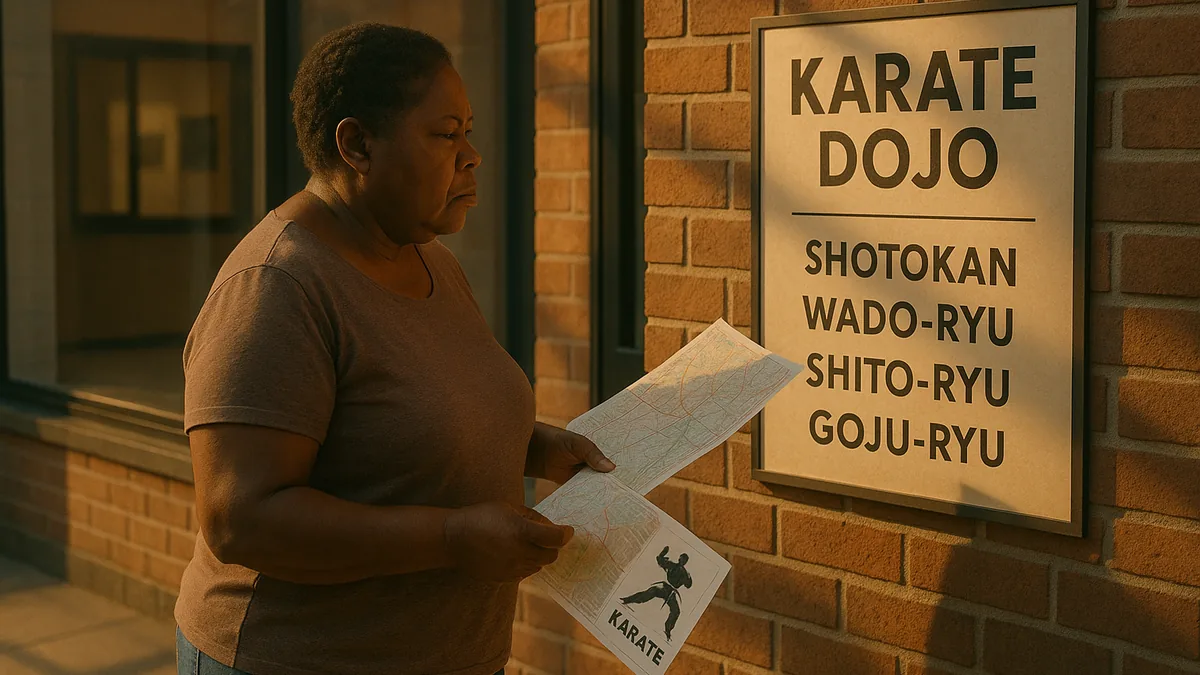
Relocating to a new city - or deciding to change style - is one of those transitions karate doesn't really prepare you for. You know your art, you know your place in the room, and then suddenly you're a stranger again. The full article on KarateLifestyle.uk goes into real depth on this. What follows is a practical companion you can use before your first visit to any new club.
Sort Out Your Goal Before You Search
The most common mistake is opening a map and searching for the nearest club. Convenience matters, but style compatibility matters more. Shotokan and Wado-Ryu, for instance, are built on fundamentally different ideas about how the body should move - one around deep stances and ground-up power, the other around upright posture and body shifting off the line of attack. Walking into the wrong one without preparation doesn't just feel awkward; it can actively work against movement habits you've spent years building.
Before you search, be clear on which of these you're actually doing:
- Continuing your current style - look for clubs affiliated with the same association; the syllabus and terminology will be far more consistent
- Cross-training deliberately - read about the style first so the differences don't blindside you
- Starting fresh - in which case, style is less urgent than finding a good instructor
These are three different searches. Knowing which one you're on saves a lot of wasted time.
How to Research Before You Visit
Club websites are almost useless for assessing quality. They'll tell you the timetable and show you a grading photo. That's about it.
What actually tells you something:
- Association affiliation - a club affiliated with a recognised body has cleared at least a basic threshold. It's not a guarantee of quality, but it removes the worst options
- Instructor lineage - who trained them, through what system, for how long? This is not snobbery; it's a reasonable filter
- Search the club name and instructor name together - community forums and social media often surface honest opinions that no official website will show you
And before you go anywhere near Google: ask your current instructor. The karate network is smaller than it looks. A personal recommendation from someone who has actually trained at a club is worth more than anything you'll find online. Seminars, competitions, and association events are where that network gets built.
What to Watch for in a Trial Class
Every decent club will offer a trial session. If they won't, that tells you something. What you do with it matters.
Don't spend the class evaluating the surface things - clean floor, polite students, confident instructor. Watch how corrections are handled. A good instructor corrects the same student more than once in a session, and each correction builds on the previous one. Vague feedback like "more power" is not a correction. Specific feedback about what the body is actually doing is.
Look at how the senior grades move. In a well-run dojo, experienced students look qualitatively different from beginners - not just more confident or more familiar with the syllabus, but genuinely better in how they carry themselves and recover. If the black belts look like white belts who've been there longer, that's worth noting.
Also watch the sparring atmosphere carefully. As the article puts it:
"A dojo where the unwritten rule is that newer students can be hit as hard as they like because they cannot hit back yet is not a training environment - it is bullying with a gi on."
The Rank Conversation
Don't avoid this. Have it early, and go in with the right mindset.
Your existing grade is not automatically transferable. A new instructor has no way of knowing what the grading standard was at your previous club - a 3rd kyu in one association might represent a very different level of training from a 3rd kyu in another. Expecting your rank to be accepted without question puts the instructor in an awkward position and usually leads to a poor outcome.
What works: be upfront about your background - style, grade, years of training - and then let your training do the talking. A good instructor will watch you for a few sessions before deciding where you fit. That process can feel like a step backwards. It rarely is.
Checklist for Your Next Club Visit
- [ ] Decided whether you're continuing, cross-training, or starting fresh
- [ ] Checked the club's association affiliation
- [ ] Looked into the instructor's training background and lineage
- [ ] Searched the club and instructor name online for community feedback
- [ ] Asked your current instructor or training network for a recommendation
- [ ] Planned to watch how the instructor corrects students during the trial class
- [ ] Planned to watch how senior grades move, not just what they know
- [ ] Ready to have an honest rank conversation early, without expecting automatic acceptance
- [ ] Committed to giving it at least two months before deciding it's not the right fit
For the complete version, with every drill explained, read How to Find a New Karate Club When You Move or Change Styles on Karate Lifestyle.
Join the conversation: X · LinkedIn · Pinterest · Bluesky
More from Karate Lifestyle


Comments
Post a Comment