Making Shadowboxing Actually Work for Your Karate
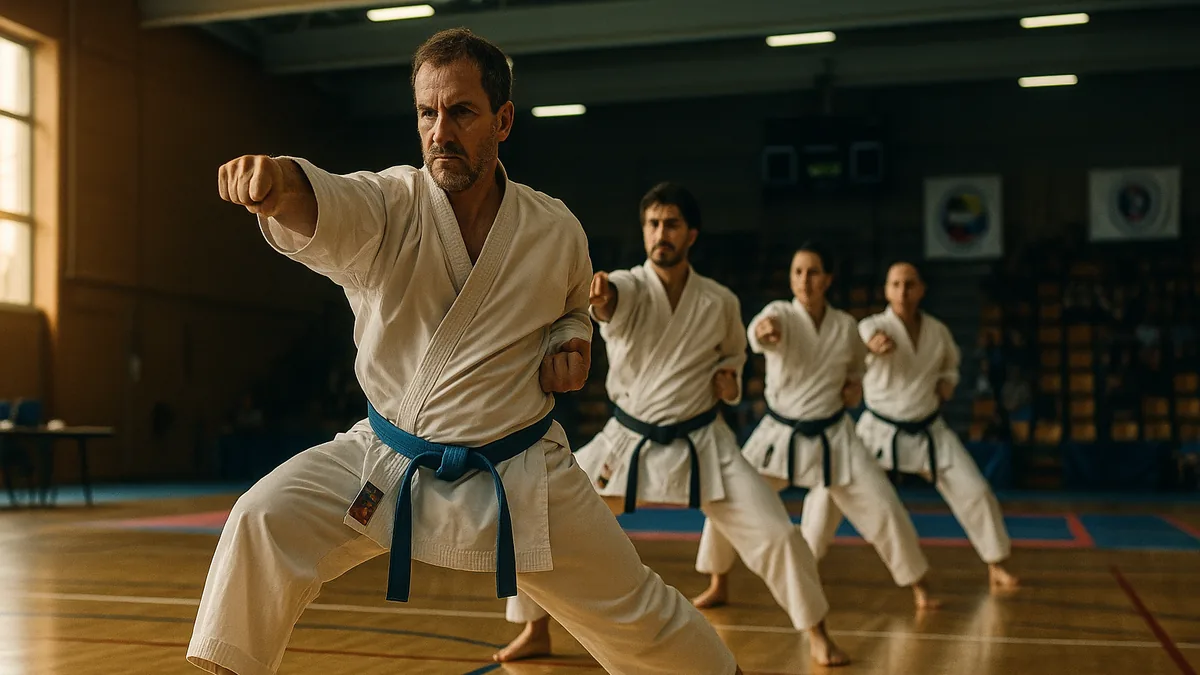
Most karateka treat shadowboxing as something to do before the real training begins. A few punches, a bit of movement, and then you get on with it. The problem is that without genuine intent behind the movement, you are not really practising anything beyond the shapes of techniques you already know. This guide pulls out the practical core of what makes shadowboxing worth doing - and gives you something concrete to take into your next session.
Why Your Shadowboxing Probably Isn't Working
The most common error is staying comfortable. When you shadowbox at a pace that feels good, throwing combinations you have already mastered, you are reinforcing existing habits rather than building new ones. It looks like training. It even feels like training. But your brain is not solving any real problem.
Motor learning research makes this uncomfortable reading: blocked practice - repeating one skill in a predictable, low-pressure way - produces faster acquisition but poorer retention and transfer than varied, challenging practice. In plain terms, polished shadowboxing rounds feel productive but the skills do not stick or transfer to kumite the way you need them to.
"The ugly, hesitant rep where you're genuinely figuring something out is worth more than clean reps on comfortable material."
If your shadowboxing looks sharp, there is a reasonable chance you are not working on your weaknesses.
The One Habit That Changes Everything
Before you throw a single technique, spend thirty seconds standing in kamae and visualising a specific opponent. Not a vague shape in front of you - an actual person whose timing you have felt, whose favourite attacks you know, whose tells you have been on the wrong end of.
See their stance. Know which hand they lead with. Watch for the weight shift that precedes their attack.
Only then do you start moving.
This changes the entire character of the round. Your footwork now has a reason. Your techniques have a target. You are responding to something rather than generating motion for its own sake. Mental imagery research supports this: the more specific and controllable the image, the greater the benefit to motor performance and learning.
The pause between techniques matters just as much. That moment of stillness is where you rebuild the visualisation. Skip it to keep the round looking smooth and you are back to shadowboxing at nothing.
What to Actually Drill
Commit fully to single techniques. Choose one technique and one specific opening - a drop in your opponent's guard, a shift in their weight - and launch it with complete intent. Not a practice rep. The real thing. Then reset and rebuild the picture before going again.
Train your reactions off the tell, not the technique. In reaction drilling, the trigger for your response should be the shoulder drop or weight shift that precedes the attack, not the attack itself. Waiting for the full technique to arrive is already too late in real sparring. This takes weeks to feel natural - that is expected.
Dedicate at least one round to footwork only. No techniques at all. Just maintain fighting distance as your imagined opponent moves, close for a commitment every twenty seconds or so, and focus entirely on your base. Footwork gets neglected in shadowboxing because there is no external pressure forcing you to move well. Without a dedicated round, you will default to standing still and punching.
Let your combinations stay open-ended. Once you have solid combinations, resist the urge to run the same scripted sequence every time. At the end of your second technique, decide in the moment how your opponent has responded - did they stay, retreat, or counter? - and let that determine what comes next. Random practice transfers to kumite far better than blocked practice, even though it feels less satisfying while you are doing it.
Checklist for Your Next Session
- Before moving, stand in kamae for thirty seconds and build a specific opponent in your mind
- Use pauses between techniques to rebuild the visualisation - do not skip them
- Choose material that feels slightly uncomfortable, not material you already do well
- Run at least one round of footwork only, no techniques
- In reaction drilling, trigger your response off the tell, not the completed attack
- After each rep, ask honestly: did I commit? Did I actually see the target?
- If the round looks polished from start to finish, you are probably in your comfort zone
For the complete version, with every drill explained, read Shadowboxing for Karateka: How to Make It a Serious Training Tool on Karate Lifestyle.
Join the conversation: X · LinkedIn · Pinterest · Bluesky
More from Karate Lifestyle


Comments
Post a Comment