Kyokushin or Shitō-ryū? Match the Style to the Question You're Asking
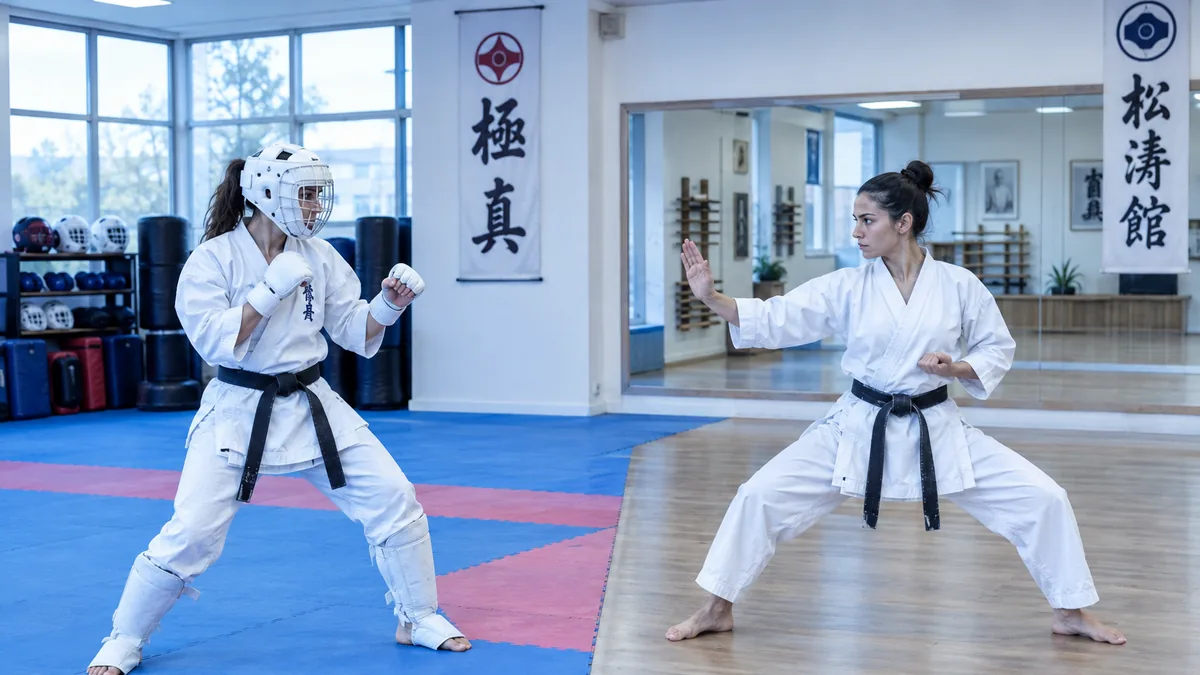
Choosing between Kyokushin and Shitō-ryū is not really about which style is better karate. It is about what kind of practitioner you want to become, and whether the training environment you are walking into will actually get you there. Both styles make genuine demands. Neither is soft. But they develop different qualities, attract different personalities, and the gap between them in day-to-day training is wider than most beginners expect.
Here is what you need to understand about each one before you commit.
What Kyokushin Is Actually Training You For
The full-contact, no-head-punch format is not a quirk of Kyokushin competition. It is the whole philosophy expressed as a ruleset. Every conditioning drill, every extended sparring round, every piece of makiwara work points toward the same outcome: can you absorb real impact and keep functioning?
"The adaptation Kyokushin training is actually producing is the ability to stay technically functional under pressure and pain - to keep your guard up, keep your footwork active, and keep generating power when your body is telling you to stop."
That is the actual curriculum. The physical hardship is not something you push through until it eases off. It is the lesson.
The limitation worth naming plainly is the no-head-punch rule. Fighters can develop the habit of dropping their guard and leaning on forward pressure, because those habits are rarely punished in knockdown format. Step into any competition where head punches are permitted and those habits become liabilities quickly. Serious Kyokushin practitioners are aware of this. Some branches of the style have introduced gloved head-punch formats to address it. But if you are training Kyokushin with any interest in cross-format competition, factor it in from the start.
What Shitō-ryū Is Actually Training You For
Shitō-ryū carries one of the largest kata syllabuses in karate, with 53 kata drawing from both Shuri-te and Naha-te lineages. That dual inheritance is the defining feature of the style. You are not specialising in one tradition. You are expected to develop genuine competence across both, and the body mechanics between them differ significantly.
Shuri-te-derived kata should feel crisp and direct, with power coming from hip snap and linear drive. Naha-te-derived kata should feel rooted and circular, with the whole body settling into each technique rather than driving through it. Getting that distinction right in your body - not just understanding it as a concept - takes years of careful attention.
In WKF-format kumite, techniques are assessed against six criteria: good form, sporting attitude, vigorous application, zanshin, good timing, and correct distance. A technique that lands but fails any one of those criteria does not score. The premium is on technical quality under pressure, which is a real athletic demand, but a different one from what Kyokushin competition tests.
The Skill Gap Between Sparring Formats
This is where the two styles diverge most sharply, and it is worth being direct. The psychological skill Kyokushin develops - staying functional after absorbing genuine impact - is not the same as the precision-under-stress skill that controlled-contact Shitō-ryū competition develops. Neither replaces the other.
Shitō-ryū competitors who encounter full-contact sparring for the first time often over-rely on scoring instincts: pulling techniques slightly, breaking rhythm after a clean hit, looking for a referee's acknowledgement. Those habits are rational in WKF format. They are liabilities in knockdown. Kyokushin fighters moving into WKF kumite face the reverse problem: the head-punch game and the precision requirements of the scoring criteria are largely outside what their daily training has prepared them for.
Cross-training between styles is more common than either community sometimes lets on, and more experienced practitioners in both camps tend to be more honest about what their own training does not cover than beginners are. That is worth remembering whichever door you walk through first.
Checklist: Take This to Your Next Class
- Know your question. Are you training to test your limits under real pressure, or to develop technical mastery across a historically rich system? Be honest about which one actually motivates you.
- Understand the Kyokushin trade-off. Full-contact body sparring builds genuine resilience. The no-head-punch rule creates a real guard habit to monitor, especially if you plan to compete in other formats.
- Understand the Shitō-ryū trade-off. The 53-kata syllabus is a serious long-term commitment. Controlled-contact kumite develops precision under stress, not tolerance of impact. Both are valuable; neither is the same thing.
- Test your sparring assumptions. If you train Shitō-ryū, find out how your technique holds up when contact is harder than you are used to. If you train Kyokushin, find out how your guard and head-punch defence hold up in open formats.
- Listen to experienced practitioners, not beginners. In both styles, the people who have trained longest tend to be the most candid about what their system does not give them.
- Cross-training is not disloyalty. If your current training has a gap you can name, look at whether another style addresses it. Serious karateka in both communities do exactly this.
For the complete version, with every drill explained, read Kyokushin vs Shitō-ryū: Why a Full-Contact Style and a Technically Diverse Competition Style Attract Completely Different Practitioners on Karate Lifestyle.
Join the conversation: Facebook · X · LinkedIn · Pinterest · Threads · Bluesky
More from Karate Lifestyle


Comments
Post a Comment