Is Your Dojo Still Working For You? How to Know and What to Do
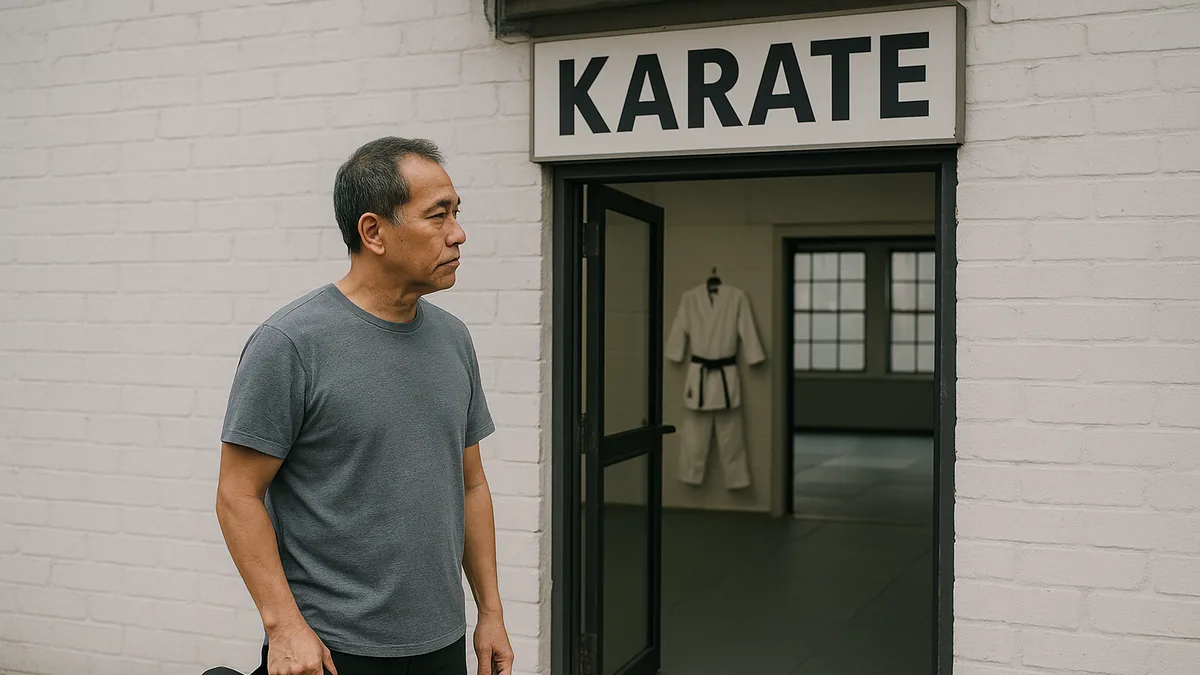
Staying too long in the wrong dojo is one of the most common mistakes in karate. Not because practitioners are weak-willed, but because loyalty is a genuine value in the art, and it can blur into something less useful - inertia dressed up as commitment. If you have been quietly wondering whether your current club is still the right place for you, this is worth thinking through carefully before you do anything.
The Question That Cuts Through the Noise
Frustration is normal. Bad patches happen in every dojo. The question is not whether training feels hard or flat right now - it is whether you can say, specifically, what you are working on.
A practitioner who is developing but frustrated can answer that question. They know what their instructor pulled them up on recently, what they are drilling, what is not clicking yet. A practitioner who is genuinely stuck cannot give you a specific answer. If you sit with that question honestly and come up empty, that is not a mood - it is a pattern, and it is worth taking seriously.
Ask yourself: in the last three months, has your instructor corrected something that actually pushed your understanding forward? Have you felt that uncomfortable sense of realising how much you still do not know? If the answer is consistently no, the environment around you may have reached its ceiling.
How to Read a Dojo's Ceiling
The most reliable way to assess how far a dojo will take you is to watch the senior grades - the shodan and nidan students who have been there long enough to show what the place actually produces. Are they sharp? Are they still being corrected and challenged? Or do they look like long-serving beginners who have simply accumulated time?
That is your preview. If the seniors have plateaued, you will too.
Not every culture problem is obvious. Some things that feel uncomfortable are productive - a demanding instructor, high standards, sparse praise. That discomfort is often the point. What actually warrants leaving is different: instruction driven more by the instructor's ego than your progress; a training environment where injuries happen and nobody addresses them; grading that reflects who you know rather than what you can do; or a culture where keeping you enrolled matters more than pushing you forward.
"A reasonable position is this: your loyalty should be to your development as a practitioner, and to the martial art itself."
Before You Decide, Have the Conversation
Before you make any decision, talk to your instructor directly. Go to them and say, plainly, that you feel your training has plateaued and ask what you should be focusing on. A good instructor will take that seriously, even if they do not have an immediate answer.
If they dismiss it, get defensive, or tell you that your experience of your own training is wrong - you have learned something important. The response itself is the test.
This matters for practical reasons too. Karate communities are small. The way you handle this conversation, and the way you eventually leave if you do, will follow you. Do it in person. Keep it brief. Thank your instructor for something specific and genuine, even if the overall experience was disappointing. Do not recruit other students on your way out, and do not take your grievances onto social media. Whatever you feel is justified in the moment, it will reflect on you more than it reflects on the dojo.
A Checklist for Your Next Class
Bring this to your next session and answer honestly:
- Can I name one specific thing I am actively working on right now? Not a general area - something concrete my instructor has recently corrected or assigned.
- In the last three months, has something in my training genuinely challenged my understanding?
- When I watch the senior grades, do I see practitioners who are still developing?
- Is the training culture here demanding, or is it just comfortable?
- If I raised a concern with my instructor, would I expect to be heard?
- Am I staying because I am growing, or because leaving feels like giving up?
If most of your answers point in one direction, that is information. Sit with it, have the conversation, and then decide. Leaving a club is not quitting karate - but it is a decision worth making deliberately, not reactively.
For the complete version, with every drill explained, read When to Quit Your Karate Club: Signs It's Time to Leave and How to Do It Without Burning Bridges on Karate Lifestyle.
Join the conversation: X · LinkedIn · Pinterest · Bluesky
More from Karate Lifestyle


Comments
Post a Comment