Ice or Heat for Karate Injuries: Making the Right Call Every Time
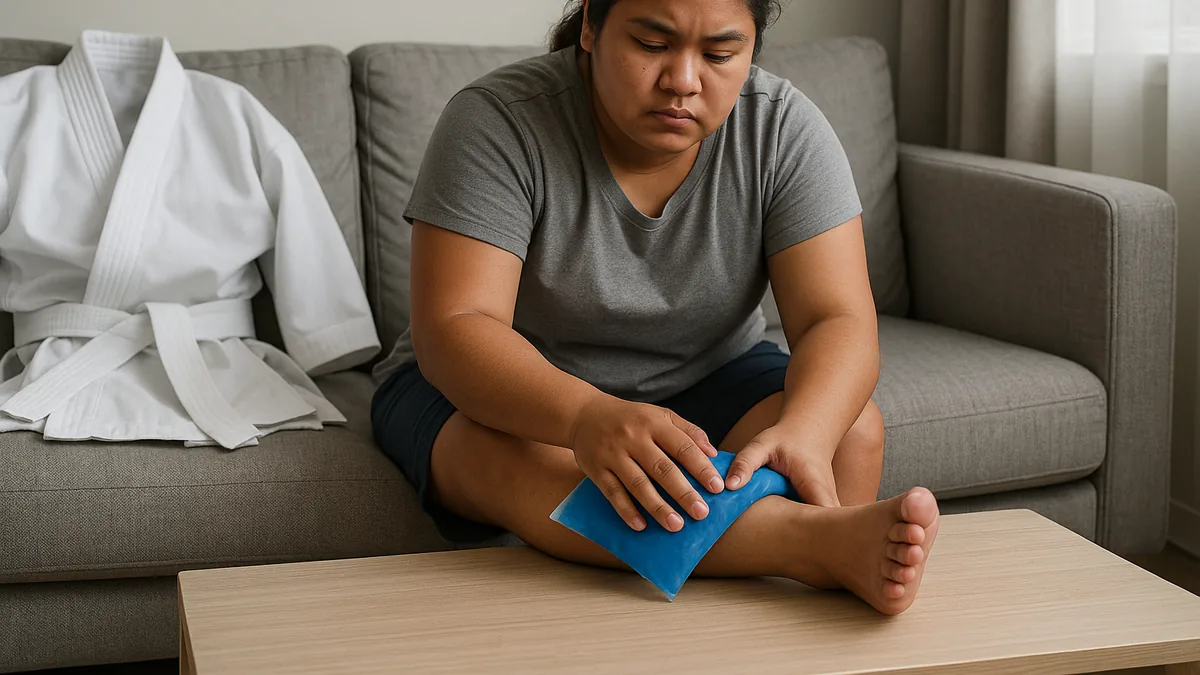
Most karateka have heard the basic rule: ice for new injuries, heat for old ones. Most karateka also ignore it when they are in pain, because heat feels better. That gap between knowing and doing is where recoveries go wrong - sometimes seriously wrong. Here is a clear-headed guide to making the right call, whatever stage your injury is at.
Why the Distinction Actually Matters
When you pick up a fresh injury - something that happened today or yesterday, something that is swollen or hot to the touch - your body is already running an inflammatory response. That process is not the enemy. It is the first stage of repair: fluid moves in, cellular cleanup begins, the groundwork for healing is laid. What you do not want to do is pour fuel on that fire.
Heat increases blood flow and encourages further fluid accumulation in the tissue. Applied to a fresh injury, it works directly against what your body is trying to manage. Ice does the opposite: it constricts blood vessels, limits swelling, and keeps the acute phase from escalating while repair gets under way.
For chronic issues - stiff hips that never quite loosen, a shoulder that has been grumbling for weeks, lower back tightness from years of high kicks - the situation is reversed. Warm tissue is more pliable and responds better to movement. Heat before training on stubborn chronic tightness is genuinely useful. The problem is that people apply this logic to fresh injuries too, because reaching for the heat pack has become habit.
The Risk Nobody Talks About Enough
Getting this wrong is not just a matter of slowing things down. With certain injuries, it carries a real clinical risk.
A thigh contusion from a hard kick during kumite is a common karate injury. It is also one of the most mismanaged. The correct acute response is rest, cooling, compression, and elevation. Applying heat or massage in the early stages - which many people do because the muscle is sore and stiff - is an identified risk factor for myositis ossificans: a serious complication in which abnormal bone tissue forms within the healing haematoma. This is not a remote theoretical concern. Post-traumatic myositis ossificans occurs in roughly 20% of cases involving a large muscle haematoma.
"Ignoring an acute injury and training through it is not toughness - it is how you turn a two-week problem into a three-month one."
Dojo culture sometimes pushes karateka to minimise injuries and train through discomfort. That mindset has value in the right context, but it is genuinely dangerous when it leads someone to dismiss a significant contusion, skip the icing, and sit in a hot bath that evening.
How to Apply Each Correctly
For acute injuries, the guidance is straightforward. Apply an ice pack - or a bag of frozen vegetables - wrapped in a cloth for up to 20 minutes every two to three hours. Never put ice directly against bare skin; it can cause ice burn. You are looking for that deep, uncomfortable cold that eventually settles into numbness. Keep this up for as long as the tissue still feels hot and swollen.
For chronic issues, moist heat penetrates deep tissue faster than dry heat and tends to produce better results for deep muscle soreness, though a dry heat pad still works if you apply it for longer. A warm damp towel or a moisture-retaining heat pack is a practical choice for tight hips or a stiff lower back before training. Fifteen to twenty minutes before you start moving is a reasonable approach.
One important caution: if you are reaching for the heat pack every session because something chronically aches, that is a signal to investigate the cause, not just a reason to keep applying warmth. Heat can mask a problem that needs addressing.
Navigating the Grey Zone
The trickiest situation is an injury that is a few days old. The common dojo shorthand - ice for 48 hours, then switch - is too blunt to be reliable. The transition from acute to sub-acute is not a fixed point on the calendar; it depends on how the tissue is actually responding.
The practical test: if the area still feels hot to the touch and remains visibly swollen, keep icing. If the swelling has noticeably reduced and the tissue temperature feels closer to normal, you can begin introducing short, gentle heat sessions and observe how the tissue responds. A mild ankle sprain might be ready for that transition at day three. A more significant knee sprain might still need ice at day five. Use the tissue as your guide, not the date.
Pre-Class Checklist
- Fresh injury today or yesterday? Ice it - up to 20 minutes on, every two to three hours, cloth between ice and skin
- Swelling or heat still present? Keep icing regardless of how many days have passed
- Chronic tightness before training? Apply moist heat for 15 to 20 minutes before you start moving
- Muscle contusion from contact? Rest, cool, compress, elevate - no heat, no massage in the early stages
- Transition from ice to heat? Check swelling and tissue temperature, not just the calendar
- Chronic pain that keeps returning? Use heat for relief if appropriate, but find and address the underlying cause
For the complete version, with every drill explained, read Heat vs Ice for Karate Injuries: Which One You Should Actually Be Reaching For on Karate Lifestyle.
Join the conversation: X · LinkedIn · Pinterest · Bluesky
More from Karate Lifestyle


Comments
Post a Comment