How You Treat Your Belt Says More Than the Colour Does
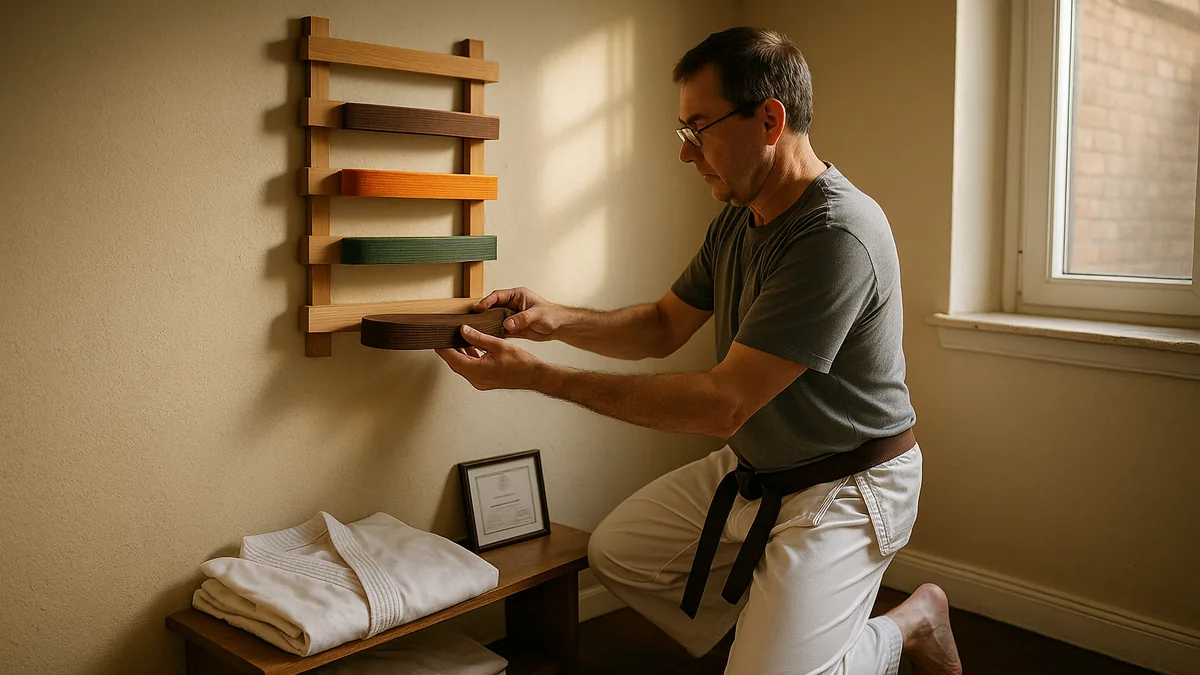
Most karate practitioners spend years earning each new belt and about thirty seconds deciding where to leave it after class. That gap is worth closing. The way you handle your obi between sessions is a small but telling reflection of how seriously you take what it represents.
This guide covers the practical habits that make a real difference - storage, display, and washing - so you can take something concrete to your next class.
Storing Your Belt Without Wrecking It
The most common mistake is also the most casual one: rolling the belt up loosely or pushing it into the bottom of your bag. It feels harmless. Over time, the fabric creases in ways it does not recover from, and any embroidery starts to fray at the stress points.
Two approaches work well:
- Fold it flat. Fold the belt into thirds lengthwise, then fold that in half, then in half again. You get a neat rectangle with no tight bends across embroidered sections. Works well in a drawer or on a shelf.
- Hang it. A smooth wooden dowel or a dedicated belt rack keeps the belt at full length with no pressure points. As the article puts it:
"A belt that has been hung stays cooperative when you tie it. A belt that has been crammed into a bag fights you every time."
One thing to avoid: sealed plastic boxes for belts you are still using. A recently worn belt in an airtight container creates exactly the warm, damp, poorly ventilated conditions that allow mould to develop in cotton fabric - even before anything visible appears. A drawer or shelf with reasonable airflow is far better.
Also keep your belt well away from sparring gear. Velcro, hard plastic guards, and damp gloves do real damage to belt fabric in a short time.
Displaying Your Belt with Some Intention
A belt rack in your training space - not a hallway where it becomes wallpaper - keeps your practice present in daily life. Many practitioners find that looking at their belts before a home session helps focus the mind before they start.
If you have the room, displaying your full progression rather than just your current belt has a specific value. Seeing the white belt alongside the rest of the journey tends to produce a more honest relationship with where you are. Practitioners who do this tend to be less concerned with rank as a status marker and more aware of how much road there has been.
For significant milestones - shodan in particular - some practitioners frame their belt alongside their grading certificate. If you do this, pay attention to the glazing. Standard clear glass blocks only around 40% of UV light, which is not nearly enough to protect a black cotton belt from fading. Conservation-grade glazing blocks 97% or more. That difference matters if the frame is anywhere near a light source. Even on an open rack, keep belts out of direct sunlight - UV exposure begins degrading cotton colour and strength faster than most people expect.
Washing: When, How, and Why the Debate Exists
The tradition of never washing your belt is real and held seriously in many dojos. It is worth understanding on its own terms: the belt changes physically through training, darkening and stiffening, and that change is considered meaningful. This is a philosophical position, not a hygiene recommendation - and it is worth noting that Japanese culture, in which the ranking system has its roots, has always placed a high value on cleanliness.
The practical position: wash your belt when it genuinely needs it, not on a schedule, and not never.
When you do wash it:
- Hand wash only, in cool water with a mild detergent
- Machine washing damages the fabric structure and is particularly hard on embroidery
- Rinse thoroughly, reshape while the belt is still damp, and lay it flat to dry away from direct heat
- Do not tumble dry - shrinkage is unpredictable and the original stiffness does not return
- Do not wring it out to speed up drying - the twisting stresses the fibres in a way they do not recover from easily. Lay it flat and allow at least 24 hours before folding or hanging
- If the belt has embroidery or a printed name, turn it inside out before washing
Checklist for Your Next Class
- [ ] After class, fold your belt flat in thirds or hang it on a smooth rack - not coiled, not in your bag
- [ ] Store it separately from sparring kit and away from velcro or hard plastic
- [ ] If you have a home training space, put your belt display there rather than in a high-traffic area where you stop seeing it
- [ ] If you are framing a belt, check whether your glazing is conservation-grade - standard glass is not adequate
- [ ] Keep any displayed or stored belt away from direct sunlight
- [ ] Wash your belt when it needs it, by hand, in cool water, and lay it flat to dry
- [ ] Tie your belt properly before every session - the knot flat, both ends equal, the belt firm at the waist
For the complete version, with every drill explained, read Karate Belt Display and Storage: How to Respect Your Rank on Karate Lifestyle.
Join the conversation: X · LinkedIn · Bluesky
More from Karate Lifestyle


Comments
Post a Comment