How to Actually Use Your Recovery Days as a Karateka
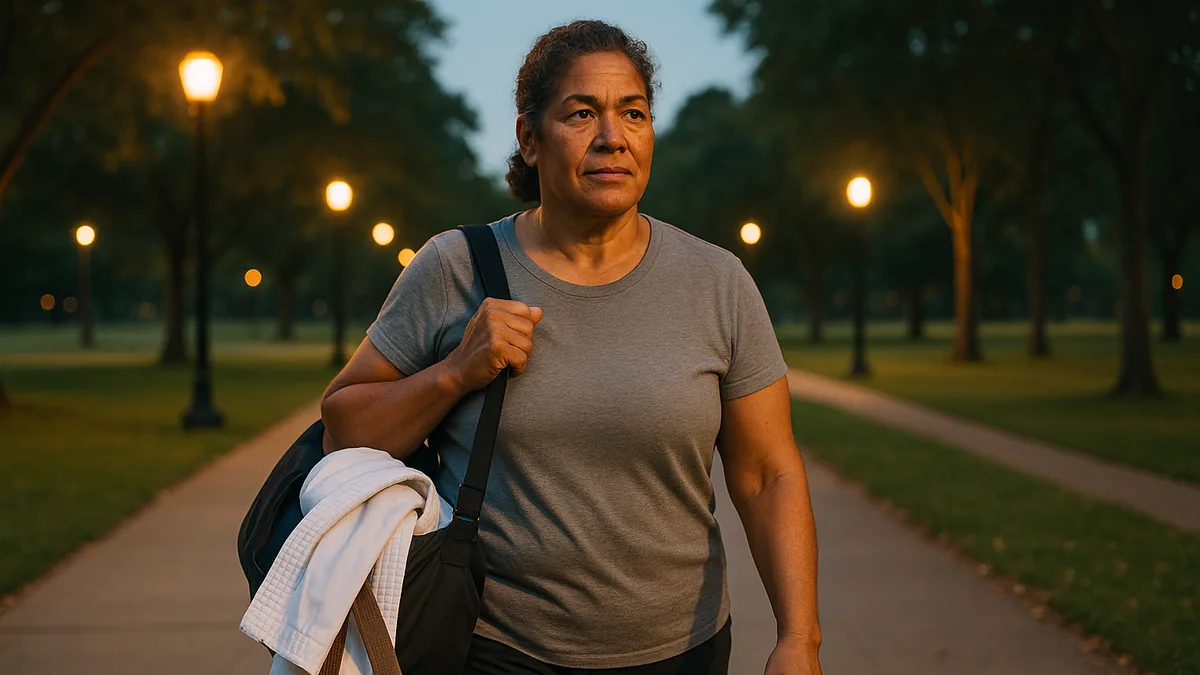
Most karateka fall into one of two traps on recovery days: doing nothing and feeling guilty about it, or doing something that quietly tips over into actual training. Neither serves you well. If you arrive at your next session feeling flat and stiff, the recovery day probably had something to do with it.
This guide is a practical companion to the full article on active recovery for karateka. It pulls out the key ideas and gives you something you can act on straight away.
"Active recovery is not a light training session. That distinction matters more than most people realise."
What You Are Actually Trying to Do
The goal on a recovery day is not fitness. It is not technique refinement. It is circulation - moving blood through muscles that are still dealing with the residual effects of hard training, so they arrive at the next session in better condition.
That framing matters because it changes what counts as appropriate. The moment you are working hard enough to feel it as genuine effort, you have already crossed the line. A good recovery session should feel almost unremarkably easy.
The evidence on whether active recovery outperforms complete rest is genuinely mixed, and it depends heavily on how much you are training overall. If you are doing two sessions a week, a full rest day is probably fine. If you are doing four or five hard sessions, gentle movement between them tends to make a real difference in how you feel.
The Movement That Actually Works
Walking is the most reliable tool available. Twenty to thirty minutes at a pace where you could hold a relaxed conversation without any effort - not power walking, not hills, just walking. If you are breathing noticeably harder, you are already working too hard. After about ten minutes you will feel your hips begin to free up and the tightness from the previous session start to ease. That is exactly what you are after.
Easy cycling works on the same principle - low resistance, moderate pace, no burning in the quads.
What to skip: swimming and skipping rope both tend to creep into real intensity without you noticing. Unless you are a very relaxed swimmer who can genuinely hold back, leave both for training days.
Stretching and Mobility - Where Recovery Days Earn Their Value
Hard sessions do not leave much room for proper stretching. Recovery days do. Spend at least 20 to 25 minutes here.
Hip flexors are one of the most neglected areas for karateka. Kicking, stancing, and pivoting load the hips constantly, and tightness accumulates without most practitioners noticing. Tight hip flexors have been linked to lower back pain, reduced trunk strength, and compromised balance - all of which affect your technique in ways that are easy to misattribute. A low lunge with the back knee on the floor, held for at least 30 seconds and repeated two to four times per side, is the place to start. Let gravity do the work rather than forcing the position.
The correction that makes the biggest difference here is time, not effort. The ACSM recommends each stretch held for 15 to 30 seconds and repeated two to four times. Most people hold for 15 seconds, move on, and wonder why nothing changes.
Thoracic rotation is worth attention too. Years of guard position and punching can leave the mid-back stiff in ways that do not always announce themselves as pain - instead they show up as compensatory movement elsewhere, disrupting how force transfers through the body on both oi-zuki and gyaku-zuki. Lying on your side with knees stacked at 90 degrees and slowly rotating the top arm back toward the floor behind you, ten reps per side, costs very little time and addresses something most karateka carry unnecessarily.
Ankles are almost universally neglected. Pivoting puts constant stress through them, and tight calves affect stance mechanics more than most people account for. Two minutes of slow ankle circles and a brief calf stretch is a small investment with real long-term returns.
Take This to Your Next Class
A short checklist for your next recovery day:
- Walk for 20 to 30 minutes at genuine conversation pace - if you are breathing hard, slow down
- Keep any cardio completely easy - no skipping, no intense swimming, no bag work
- Spend 20 to 25 minutes on the floor - do not rush through stretching to tick a box
- Hip flexors: low lunge, 30 seconds minimum, two to four times each side
- Thoracic rotation: side-lying, knees stacked, ten slow reps per side
- Ankles: slow circles and a wall calf stretch, two minutes each
- Hold each stretch for 15 to 30 seconds and repeat it - single short holds are not enough
- If something feels worse as you move, stop - soreness that eases is fine; pain that builds is a signal
For the complete version, with every drill explained, read Active Recovery Days: What Karateka Should Actually Do Between Hard Sessions on Karate Lifestyle.
Join the conversation: X · LinkedIn · Pinterest · Bluesky
More from Karate Lifestyle


Comments
Post a Comment