Getting Scored From the Same Side? Here's What's Actually Going Wrong
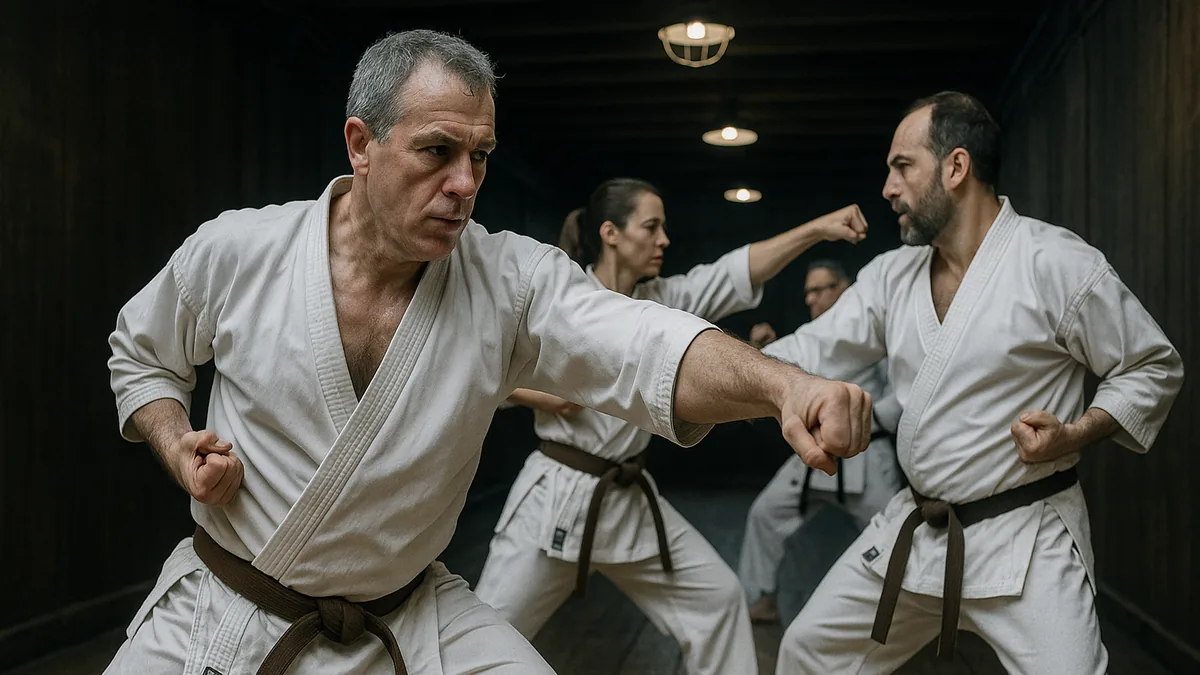
If you spar regularly and notice the same side getting hit again and again, the instinct is usually to try harder - widen your focus, stay more alert, watch that side more carefully. It rarely helps. That's because the problem almost never lives in your attention. It lives in your structure.
Your guard, your stance, and the way you move by default create geometry that experienced opponents learn to read and exploit. They're not consciously targeting your weak side - their body has simply found the path of least resistance through repetition. The fix has to start with understanding what you're actually giving away.
What the Video Will Show You
Before you change anything, record a few rounds of free sparring and watch them back with a single, specific question: what is your body doing in the two seconds before a score lands?
Not the technique that scored - that part doesn't contain the useful information. The opening does. You're looking for the moment your structure broke down and created the invitation.
Three patterns account for the majority of one-sided blind spots:
- The lead hand dropping on the return path. After attacking, the hand comes back slightly lower than it started. It feels like a natural reset. To your opponent, it is a reliable window that opens every time you attack, and they will eventually start timing their counter to land in it.
- The rear foot angling outward during backward pivots. The pivot itself can be good footwork - the problem is a lazy rear foot that exposes the rear-side head and ribs for a split second. In point-based kumite, that split second is all that is needed.
- The head moving in front of the hips under forward pressure. When someone pushes the pace, some practitioners lean into it without realising. This slows the rear hand, compresses your defensive options, and makes chudan attacks straightforward for anyone who notices it.
All three of these faults feel normal from the inside. That's what makes them difficult to self-diagnose without footage or honest feedback.
Ask Someone Who Sparres With You Regularly
Video analysis is valuable, but it has limits. A training partner who spars with you regularly already knows where they go when they want a score. Ask them directly: where do you always attack me, and what do you see that makes you go there?
Most partners will answer honestly if you ask plainly. The answer is usually uncomfortable and almost always more useful than anything you'll find watching yourself on a screen alone. Their instinct in sparring is built on your readable patterns - patterns you may not even know you have.
As the full article puts it:
"Deception in kumite is not primarily about faking techniques. The deeper deception is in having no readable pattern at all."
You cannot remove a pattern you don't know you're running.
Drills That Target the Specific Fault
Once you know what the problem is, general sparring practice will not fix it quickly enough. You need to isolate the fault and train against it under pressure.
Constraint sparring is the most direct method. Your partner attacks only your vulnerable side for entire rounds - no variation, no mixing it up. It feels artificial, and that's the point. You're forcing your nervous system to solve one specific structural problem repeatedly, under representative pressure. Most practitioners begin making the correction automatically within a few rounds because there's nothing else to adapt to.
Return path drilling addresses the dropped lead hand. Run combinations, then freeze in your guard position and have a partner check your hand height. Do it slowly until the correct return path is conscious, then build speed until it's automatic. Straightforward, repetitive, effective.
Pressure response drills address the forward lean. A partner applies steady, non-attacking forward pressure with open hands while you move backward. The moment your head comes in front of your hips, the drill stops. Reset. Start again. When you get it right, there's an immediate physical difference - a groundedness and mobility that replaces the tense, leaning feeling.
One thing worth checking separately: if your guard looks structurally sound but you're still getting caught from the same side, the issue may be asymmetric timing rather than posture. A training history where defensive responses have been drilled more on one side than the other produces side-specific gaps in reaction speed. That requires side-specific timing work, not more postural correction.
Checklist for Your Next Session
- Record your sparring and watch it back focusing on the two seconds before each score, not the scoring technique itself
- Ask a regular training partner directly where they always attack you and what they see that creates the opening
- Check your lead hand on the return path after combinations - does it come back to the same height it started?
- Watch your rear foot during backward pivots - is it staying in line or angling outward?
- Notice your posture under forward pressure - does your head drift in front of your hips?
- Set up constraint sparring with a partner: attacks to your vulnerable side only, full rounds, until the correction starts happening without thinking
- If the structure looks right but you're still getting caught, consider whether your defensive reaction time is slower on that side and address it with side-specific timing drills
For the complete version, with every drill explained, read Why You Keep Getting Scored On From the Same Side: Diagnosing and Fixing Kumite Blind Spots on Karate Lifestyle.
Join the conversation: X · LinkedIn · Pinterest · Bluesky
More from Karate Lifestyle


Comments
Post a Comment