Flexibility vs Mobility: Structuring Your Karate Recovery More Effectively
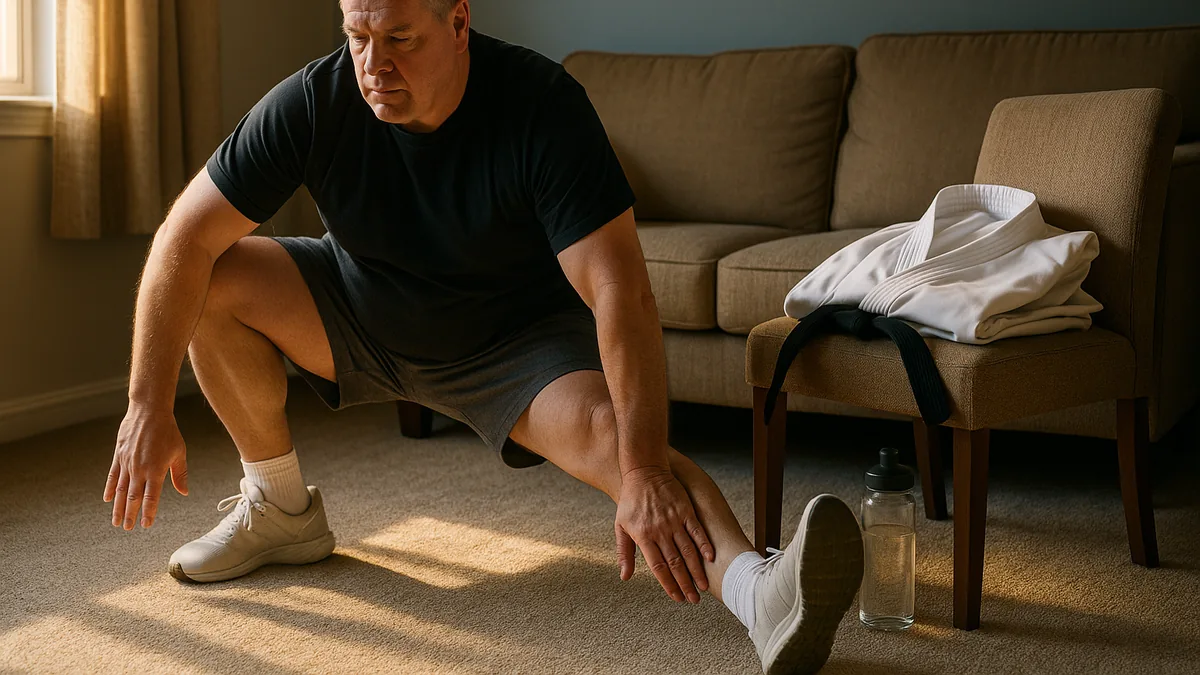
Most karate practitioners treat recovery as a single activity: stretch after class, job done. The problem is that flexibility and mobility are genuinely different physical qualities, they deteriorate under training stress in different ways, and they need different things to bounce back. Getting this wrong means you are either leaving recovery on the table or, worse, doing the wrong thing at the wrong time.
What These Terms Actually Mean
Flexibility describes how much passive range is available at a joint - essentially how far the tissue will allow movement when you are not actively controlling it. A student who can sit comfortably in a full split has good flexibility in that position.
Mobility is something else. As the article puts it:
"Mobility is the range of motion the body can organise, stabilise and use - which explains why someone can look flexible and still move poorly."
That same student with the impressive split may still struggle to throw a clean mid-section front kick, because the muscles around the hip do not have the strength or coordination to use that range actively. Mobility depends on neuromuscular control - strength, timing, coordination, and the quality of sensory feedback the nervous system is working with at any given moment.
The practical consequence: flexibility is largely a tissue quality, mobility is largely a neurological skill. They need different training inputs and different recovery conditions.
How They Break Down Differently
After a hard session - heavy kicking, sparring, bag work - your muscles become fatigued and passively stiffer. That accumulated tightness in the hips and lower back is a flexibility problem, and it responds well to static stretching done at the right moment.
Mobility presents a different challenge. Because active joint control depends on well-practised neuromuscular patterns, it tends to soften faster than tissue length when training volume drops. If you have had two or three weeks off - illness, holidays, a minor injury - your passive flexibility may be largely intact, but your ability to move through that range with control will have declined more noticeably. This is why coming back from a break and immediately pushing flexibility work is the wrong order of operations. Restore controlled active movement first, then work on reclaiming range.
The same principle applies after injury. The nervous system can restrict range of motion as a protective response even when the underlying tissue has healed. Passive stretching loads a joint that may not yet be stable; slow, controlled active movement rebuilds the neuromuscular foundation before you start pushing tissue length again.
The Recovery Week Structure That Actually Works
For someone training three to four times a week, a well-structured recovery week looks something like this:
- Day after hard training - static flexibility work targeting what felt tight: hip flexors, hamstrings, thoracic spine. Hold positions for time, breathe into them.
- Middle recovery day - a dedicated mobility session. Not more stretching, not more training. Deliberate, slow, controlled movement through karate-relevant ranges: hip circles with a pause at end range, slow single-leg work, deep squat holds where you are actively pressing the knees out rather than sitting passively. Fifteen minutes is enough.
- Day before training - dynamic mobility as pre-training preparation. Leg swings, hip rotations, slow chambered kicks at low intensity. You want the nervous system activated and the joints warm, not the muscles lengthened.
One timing point worth taking seriously: prolonged static stretching before explosive training carries a real performance cost. Clear reductions in strength and power are associated with holds of around 120 seconds per muscle group. Holds of 60 seconds or less show minimal or no impairment. Keep pre-session stretching short, or save it for afterwards.
Checklist for Your Next Class
Take this to your next session and use it as a prompt:
- [ ] Before class: keep any static stretching to short holds (60 seconds or less per position) and favour dynamic movement instead
- [ ] After class: spend time on static flexibility work for whatever worked hardest - this is when it earns its place
- [ ] On your next recovery day: include at least one short mobility session of controlled active movement, not just more stretching
- [ ] If you are returning from a break: prioritise controlled active movement before pushing for range
- [ ] If you are returning from injury: restore joint control first, flexibility second
- [ ] Before a grading: reduce intense flexibility work in the final days, maintain mobility with short movement circuits at moderate intensity
For the complete version, with every drill explained, read Mobility vs Flexibility for Karate Recovery: Why the Difference Matters on Karate Lifestyle.
Join the conversation: X · LinkedIn · Pinterest · Bluesky
More from Karate Lifestyle


Comments
Post a Comment