Fighting Smarter When You're Built Heavier: A Kumite Companion Guide
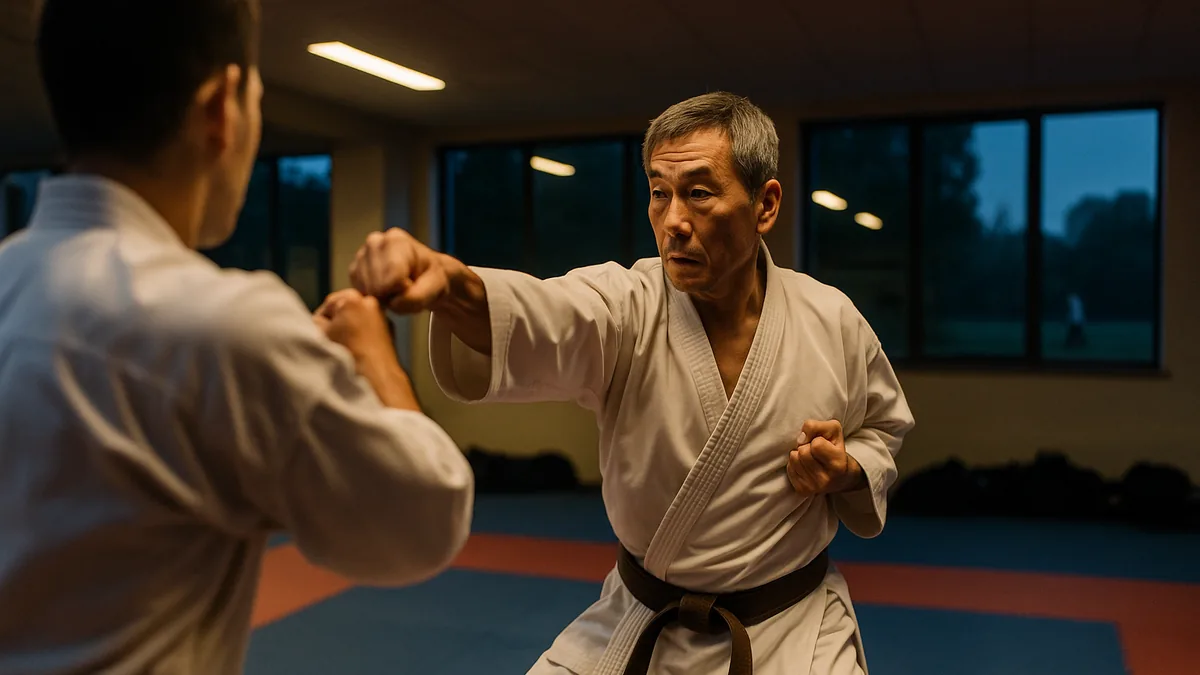
If you are shorter or heavier than most of your sparring partners, you have probably spent time trying to mimic the movement of someone built completely differently. It does not work, and it is not your fault for trying - that style tends to dominate what we see in competition footage. But there is a better way to approach kumite, and it starts with understanding what your body actually does well.
This guide pulls out the practical essentials. Read it before training, take the checklist to class, and work through the drills with a trusted partner.
Your Range Is Not Their Range
The single most costly mistake heavier or shorter practitioners make is fighting at the distance their opponent prefers. A taller fighter with longer arms wants you at the end of their reach - that is where they score cleanly and your counters fall short. Staying there is a decision, and it is the wrong one.
Your effective range is closer. Not so close that you are wrestling, but inside the point where long techniques have full structure and power. At that distance, your shorter limbs actually work in your favour - your techniques travel less distance to the target, which means the opponent has almost no time to read or react. Your reach disadvantage disappears because you are no longer at reach distance.
Getting there without being countered on the way in is a timing and footwork problem, and it is the first thing worth drilling.
Three Drills Worth Doing This Week
Pressure-step entry - Start at a distance where your partner's front hand could just reach you. Shift your weight forward onto your front foot without moving your feet at all. Just the weight transfer. Watch whether your partner reacts. Then take one controlled step and initiate your technique from there. The entry and the technique are two separate moments - not simultaneous. Most people telegraph everything by moving their feet and their arms at the same time. Separating these two moments is the whole point of the drill.
Offline counter off a high attack - When your partner throws a controlled jodan punch, step forty-five degrees to the outside rather than straight back. Use an age-uke or soto-uke to redirect - not absorb - the attack, and return immediately to chudan. Stepping offline rather than backwards puts you beside the attack rather than in its path, and it shortens your counter to almost nothing. The block and the counter should feel like one continuous movement, not two separate actions with a pause between them.
Rooted sparring - Both partners work attacks and defences but neither may move more than one small adjustment step. You are essentially fixed. This forces you to discover what your body generates from a stable base, without relying on momentum. Beginners try to stay rooted by tensing everything up. That is rigid, and rigid is easy to topple. What you are looking for is sunk weight through relaxed hips and knees - that is what genuinely planted feels like, and it is very different.
Timing, Feints and the Thing Most People Get Wrong
"Speed is about how fast your technique travels. Timing is about when you initiate it."
Those two things are not the same, and for heavier practitioners this distinction matters more than almost anything else. You are unlikely to out-speed a lighter opponent in a straight race. You do not need to. A technique that starts at the right moment - when the opponent has committed to their own movement and cannot change direction - will beat a faster technique that starts late. Every time.
Feints work on the same principle. A common error is heavier practitioners doing small, quick feints that do not match how they actually move. It looks unconvincing because it is unconvincing - the opponent is reading your weight, not just your hands. A heavy, committed-looking weight shift sells far better because it matches your movement signature. Use what your body actually does.
Checklist for Your Next Class
- Find your range early - in the first exchange, work out where you are effective and begin closing to that distance without telegraphing
- Practise the pressure-step entry - weight shifts before feet, feet move before technique; keep the entry and the attack as two distinct moments
- Step offline, not back - when defending a high attack, forty-five degrees to the outside shortens your counter and takes you out of the line of fire
- Do five minutes of rooted sparring - no big movement, just weight and structure; focus on relaxed hips and knees rather than tension
- Make your feints heavy - commit your weight to them so they look like the real thing; small quick feints from a heavier frame do not sell
- Look for the moment your opponent commits - that is when you move, not before; timing beats speed
For the complete version, with every drill explained, read Kumite for Heavier or Shorter Karateka: How to Use Your Build Instead of Fighting It on Karate Lifestyle.
Join the conversation: X · LinkedIn · Pinterest · Bluesky
More from Karate Lifestyle


Comments
Post a Comment