Commitment or Adaptability? Training Smarter in Shotokan and Shitō-ryū
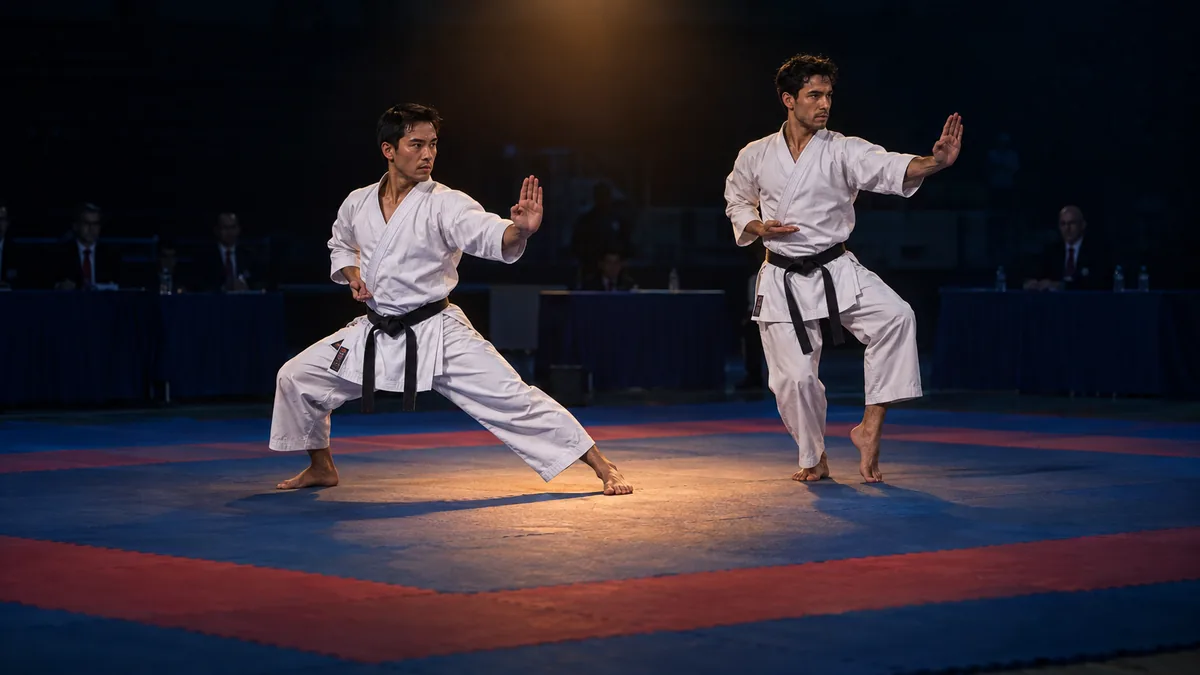
Whether you compete in kata or kumite, the style you train in is shaping how you move, how you commit to a technique, and - more often than practitioners like to admit - which specific errors you are quietly reinforcing. Shotokan and Shitō-ryū sit at the top of WKF competition, but they are not just different aesthetics. They are built on different ideas about what a technique is for. Getting clear on that distinction is genuinely useful, whatever your level.
The Real Difference Between These Two Styles
The common shorthand is power versus speed, Shotokan versus Shitō-ryū. It is not wrong exactly, but it does not get to the heart of it. The more useful framing is commitment versus adaptability.
Shotokan asks you to put everything into each technique. The deep zenkutsu-dachi, the full hip rotation, the rear leg driving into the floor - these are not stylistic preferences, they are a methodology for building the habit of total commitment. The technique either arrives with your full mass behind it, or it does not count.
Shitō-ryū asks something different. Its kata syllabus spans both Shuri-te and Naha-te lineages, which means practitioners are required to move between explosive linear power and circular, close-range sensitivity within the same training. The stances are shorter and higher, transitions are faster, and the style rewards a practitioner who can shift quality of movement fluidly without losing precision.
Neither approach is superior. But they build different athletes, and knowing which one you are developing is the starting point for training more intelligently.
What Each Style Gets Wrong (and How to Fix It)
The Shotokan problem: tension masquerading as power.
The instruction to tighten at kime is standard in Shotokan. The trouble is that many practitioners stay tense throughout the technique rather than arriving at tension at the point of impact. The result is arm-punching - the hip stops rotating early, the shoulder takes over, and what lands is a fast arm movement with no body weight behind it. It feels powerful. It is not.
The correction is straightforward but requires patience: slow the technique down until you can feel the floor pushing back through your rear leg at the exact moment the fist arrives. If that sensation is not there, the hip has not finished its rotation. No amount of speed will compensate for that.
The second Shotokan trap is treating the training stance as a fighting stance. Deep zenkutsu-dachi is a tool for building strength and rooting, not a posture you should be standing in during jiyu-kumite. Experienced Shotokan competitors fight higher and more mobile, dropping into deep stances only when committing to an attack.
The Shitō-ryū problem: fluidity becoming blurriness.
Shitō-ryū's strength is the quality of movement between techniques. The difficulty is that this can slide into rushing transitions to demonstrate speed, at which point individual techniques lose their definition. In competition, judges are not rewarding fast movement - they are rewarding clear technique within the flow.
"Flow is the connection between complete techniques, not the blurring of them."
In practice, this means each technique needs to finish - a brief, sharp arrival - before the body begins its transition. When Shitō-ryū is performed well, there is almost a rhythmic pulse to it. When it goes wrong, the performance looks busy rather than precise.
In kumite, the adaptability that makes Shitō-ryū practitioners good at reacting can also make them reluctant to fully commit. Good timing without sufficient kime does not score under WKF rules. The contact has to arrive with conviction.
A Checklist for Your Next Session
- Shotokan: slow your gyaku-zuki down and check whether you can feel the floor through your rear leg at the point of impact. If you cannot, the hip is stopping short.
- Shotokan: check your kumite posture. Are you fighting in a mobile, upright stance and dropping deep only when you commit? If you are defaulting to deep zenkutsu-dachi as your guard, your footwork will be paying for it.
- Shitō-ryū: isolate three techniques from your current kata and practise each one to a clear finish point before adding the transition. Feel the arrival before the body moves on.
- Shitō-ryū: film your kata if you can. Rushed transitions are often invisible from the inside. Watching the footage usually makes the problem obvious.
- Both styles: revisit the WKF kata criteria. Kime, correct embusen, clear technique - the destination is the same regardless of which route your style takes you there.
For the complete version, with every drill explained, read Shotokan vs Shitō-ryū: Why the Two Largest Competition Styles Produce Such Different Fighters and Kata Performers on Karate Lifestyle.
Join the conversation: Facebook · X · LinkedIn · Pinterest · Threads · Bluesky
More from Karate Lifestyle


Comments
Post a Comment