Chudan First, Jodan When It Counts: A Competition Tactics Guide
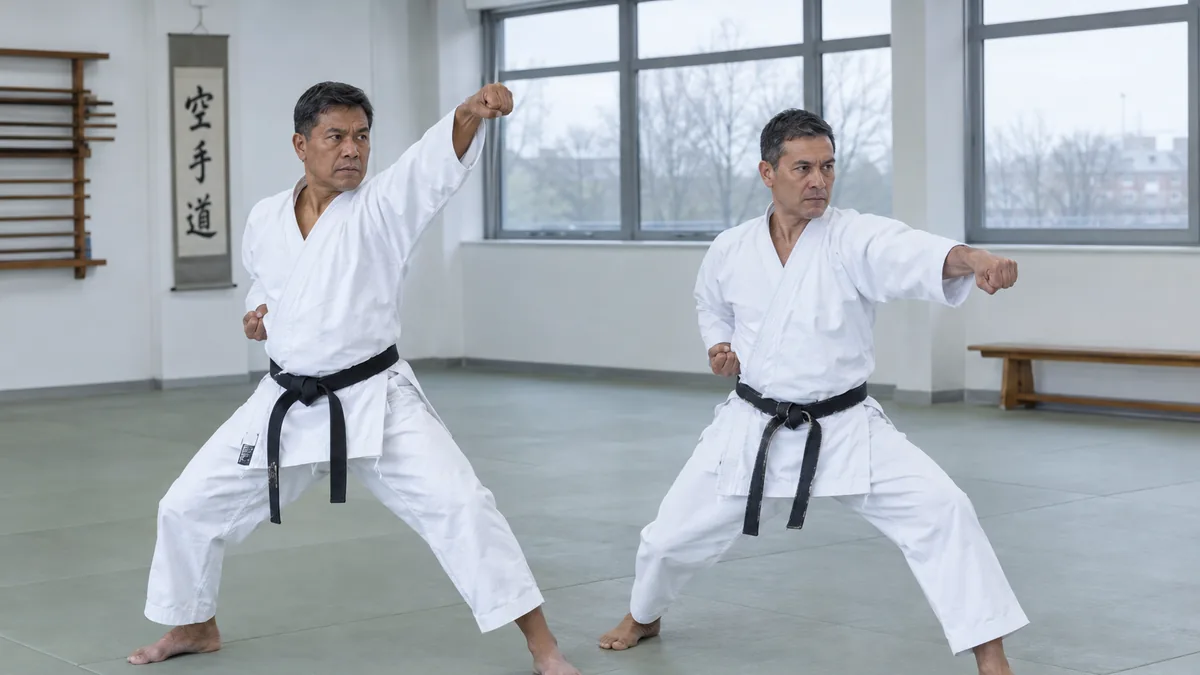
Most kumite competitors already know which level they default to under pressure. The problem is that their opponents know it too, often within the first few exchanges. This guide pulls out the practical core of our full article on jodan versus chudan tactics - what to prioritise, when to switch, and how to check whether your current sparring habits are working against you.
Why Chudan Should Be Your Foundation
The body is a larger target than the head, it sits closer to your natural punching line, and reaching it does not require you to adjust your posture or compromise your structure. When a chudan attack misses or gets blocked, you are still upright and in a position to either continue or disengage. Compare that to a failed jodan attempt, where your guard is temporarily pulled out of position and a sharp opponent can counter before you have recovered.
Under WKF rules, all punches and strikes earn one point regardless of whether they land jodan or chudan. So a clean gyaku-zuki to the body scores exactly the same as a clean gyaku-zuki to the head - and is considerably easier to land with the controlled focus that judges need to see. Build your competition game around chudan and you will score more consistently, give fewer counters away, and be harder to read.
When Jodan Becomes Worth the Risk
The point value difference between jodan and chudan only applies to kicks. A jodan kick scores ippon (3 points) while a chudan kick scores waza-ari (2 points), and all punches stay at yuko (1 point) regardless of level. That means a single clean jodan mawashi-geri is worth three times a reverse punch to either level - enough to decide a close match in one exchange.
The risk is real, though. Jodan kicks take your base leg off the floor, take longer to travel, and expose your centreline on the way in. When competitors struggle with jodan kicks, the problem is almost never the technique itself - it is the setup. As the full article puts it:
"Jodan attacks work best as second-in-combination techniques, as counters off a blocked incoming attack, or when you have already established chudan as your primary threat and the opponent's guard has shifted down to protect it."
Throw jodan as your opening move against a prepared opponent and you are working against the percentages. Use it once you have made the body a genuine concern and the guard has already started to move downward.
The Predictability Problem and How to Fix It
An eight-to-two split between chudan and jodan attacks might not feel lopsided when you are in the middle of a bout. But your opponent's pattern recognition adjusts to it even without them consciously thinking about it, and once they have calibrated to your preferred level, your scoring rate drops regardless of technical quality.
The fix is not to randomise your attacks - incoherent kumite does not solve anything. The fix is to make both levels genuinely threatening so the opponent cannot commit to defending one without opening the other. A chudan-jodan combination only delivers the jodan finish if the chudan entry actually forces a reaction. If it is weak or telegraphed, the guard does not shift and the follow-up kick arrives against a defence that has not moved.
In training, that means doing the uncomfortable work: constrained sparring rounds where only one level is available, reaction drills where your partner sets the target and you respond instinctively, and video review of your own sparring to count where your attacks are actually going.
Checklist for Your Next Class
- Count your attacks by level in at least one sparring round - jodan versus chudan - and see what your actual distribution looks like
- Check your chudan entry in combination work: does it draw a genuine reaction, or does your partner barely move?
- Drill the chudan-jodan combination with a focus on continuity - it should feel like one movement changing direction, not two separate decisions
- Try a constrained round - chudan attacks only, then jodan only - to expose which setups you actually have available at each level
- Review any failed jodan kick attempts with your coach and ask whether the problem was technical or whether the setup was wrong before the kick left the floor
- If you coach juniors, assess whether jodan is being trained as a real tactical option or only as a demonstration technique
For the complete version, with every drill explained, read Jodan vs Chudan Attacks in Kumite: Which Level Should You Favour, What the Data Says About Scoring Rates, and How to Train Both Without Becoming Predictable on Karate Lifestyle.
Join the conversation: Facebook · X · LinkedIn · Pinterest · Threads · Bluesky
More from Karate Lifestyle


Comments
Post a Comment