Choosing a Kyokushin-Lineage Style: What the Training Actually Feels Like
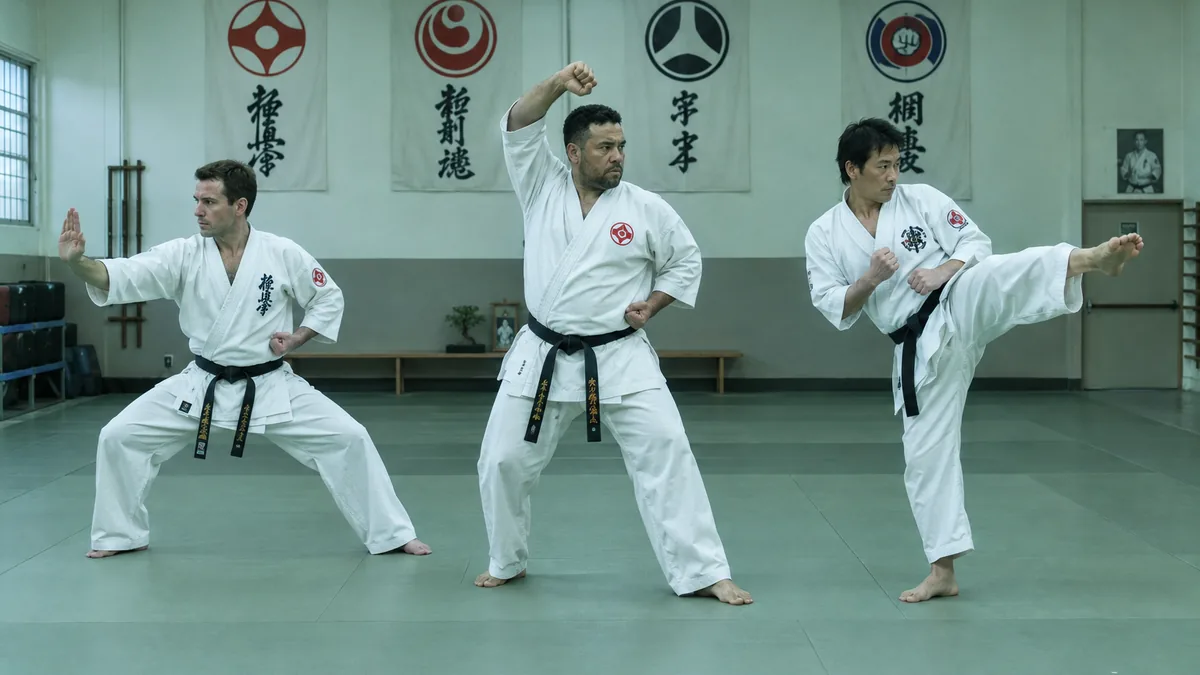
If you have trained in Kyokushin for any length of time and started looking at related styles, you have probably noticed that the differences are described mostly in organisational terms - who split from whom, when, and why. That framing is not very useful if what you actually want to know is how the training will feel and what it will develop in you.
This guide cuts to the practical side. Which style you choose shapes your entire training culture, not just your competition record - so it is worth being clear on what each one actually optimises for.
Shinkyokushin: Same Demands, More Structured Competition
The most persistent misreading of Shinkyokushin is that it represents a dilution of Kyokushin. It does not. The knockdown ruleset remains intact, the physical demands are comparable, and the expectation that you will get hit hard in training is unchanged.
What is different is the competition infrastructure. Shinkyokushin has developed a more consistently organised international calendar, more standardised judging, and weight categories - something Kyokushin tournaments resisted for a long time. In the dojo, that competition focus is felt. Training tends to be calibrated toward what works under knockdown rules, and technical development is framed around competitive outcomes rather than tradition for its own sake.
For most practitioners, the shift between a Kyokushin and a Shinkyokushin dojo is cultural rather than technical. If your goal is knockdown tournament karate at an international level, Shinkyokushin's structure is built to support that in a way that more fragmented Kyokushin organisations may not be.
Ashihara: Learning to Move Before You Have To
Ashihara Karate is built around a movement principle called Sabaki - circular footwork designed to take you off the line of attack and into a dominant position rather than meeting force with force. This is a genuine technical departure from Kyokushin, not a rebranding.
For anyone coming from a Kyokushin background, the adjustment is significant. Kyokushin trains you to absorb and return. Ashihara trains you to avoid the absorption entirely by moving earlier and more decisively. The instinct to stand and trade needs to be actively retrained.
The most common mistake in the early stages is committing halfway to a Sabaki movement - stepping partially offline but not enough to actually clear the attack. As the article puts it:
"Kyokushin builds practitioners who can take punishment and return it with interest. Ashihara and Enshin build practitioners who aim not to be in the position of taking punishment at all."
The correction that matters most is learning to trust the movement sooner than feels comfortable. A full Sabaki step to the outside of a committed body kick leaves you in a strong counter position. A half-step leaves you in the worst of both worlds - neither absorbing cleanly nor evading effectively.
Ashihara also frames its training with broader self-defence application in mind. The circular movement system is designed to remain useful in environments where a one-on-one, stationary exchange is not realistic. Whether that translates in practice depends on the dojo, but the technical vocabulary is at least built with that purpose in mind.
Enshin: Sabaki with Throws in the Mix
Enshin shares the Sabaki foundation with Ashihara, and practitioners moving between the two will find much that is familiar. The meaningful difference is in the competition format.
Enshin's tournament - the Sabaki Challenge - permits sweeps, grabs, and throws alongside striking. That single rule change produces a substantially different training environment. You cannot develop your striking in isolation because the clinch is always a factor. Practitioners who arrive from Kyokushin backgrounds frequently underestimate this range, treating the clinch as something to escape rather than something to use.
Enshin training reframes the clinch as an opportunity - which is consistent with the Sabaki philosophy of seeking positional advantage rather than trading power. The inclusion of throws and takedowns means Enshin practitioners have to account for a broader range of situations than pure knockdown training requires.
The Checklist: Take This to Your Next Class
- If you are in Shinkyokushin: Notice how much of your training is oriented toward competition preparation. Is the structure working for you, or do you want a different emphasis?
- If you are in Ashihara: In your next sparring session, track how often you half-commit to a Sabaki movement. Work on trusting the step fully, earlier than feels natural.
- If you are in Enshin: Spend deliberate time in the clinch range. Treat it as a position to work from, not a problem to exit immediately.
- If you are choosing between styles: Be honest about what the training optimises for - and whether that matches what you actually want to develop.
- Regardless of style: Your dojo's competition ruleset is shaping your training culture even if you never enter a tournament. That is worth being aware of rather than dismissing.
- When evaluating a new dojo: Watch a sparring session before you commit. The ruleset tells you what the training rewards.
For the complete version, with every drill explained, read Kyokushin Branching: Shinkyokushin, Enshin, and Ashihara Explained and How Each Differs From the Original on Karate Lifestyle.
Join the conversation: Facebook · Instagram · X · LinkedIn · Pinterest · Threads · Bluesky
More from Karate Lifestyle


Comments
Post a Comment