Are Your Feints Actually Working? A Kumite Checklist
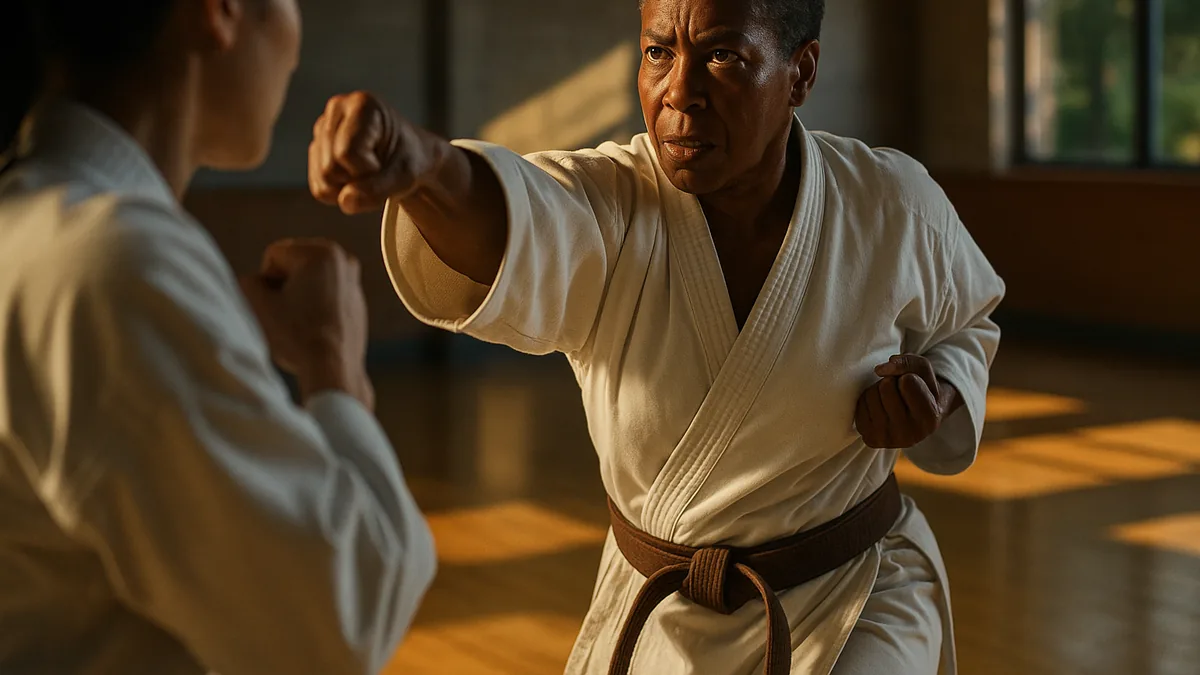
Most karateka who feint in kumite are doing something that looks like a feint but functions as nothing more than a slightly odd opening move. They throw something vague at their opponent's face, pause, and then attack into a guard that never moved. If that sounds familiar, this guide is for you.
The full article on KarateLifestyle.uk goes deep into the theory and evidence. This companion piece pulls out the practical core so you can take it straight to the dojo.
What You Are Actually Trying to Do
A feint is not a fake technique. It is an attempt to force a specific physical commitment from your opponent - to make them move their guard, shift their weight, or redirect their attention in a way that leaves a genuine opening. If they do not react with something committed, the feint accomplished nothing, regardless of how it felt on your end.
"A feint isn't a fake technique. It's a question you ask your opponent's nervous system - and you need to ask it in a way that forces an answer."
The window that opens when a good feint lands is extremely short. That means your follow-up cannot be something you decide on after you see the reaction. The combination - feint and real attack - has to be trained as a single continuous action. You decide in advance. The reaction simply confirms you were right, and your body is already moving.
Why Your Feints Probably Are Not Working
There are three patterns that account for the vast majority of failed feints at brown and black belt level.
The feint looks like a feint. If you know it is a feint, your body knows it is a feint, and experienced opponents will read that immediately through your posture, your hip, your eyes. The feint has to be fully committed for the first 80% of its execution - the same body mechanics you would use if you were actually throwing that technique. Anything less and a seasoned competitor will simply wait you out.
Small and fast does not mean effective. There is a common belief that a quick, tight feint is harder to read. In practice, a small feint against an experienced opponent produces no reaction at all. A bigger, more committed feint that genuinely threatens - one where they would actually get hit if they ignored it - is far more likely to get a real defensive response.
You are feinting from the wrong distance. If you are not close enough to actually land the feint technique, your opponent has no reason to react. They will just stand there and wait. Distance and feinting are completely linked - the feint only becomes threatening when you are already in a range where the technique could score. That also means you are close enough that your real attack arrives quickly once the reaction appears.
Building Feints That Actually Function
Feinting needs to be drilled deliberately in controlled conditions before it will hold up under pressure. Free sparring is not where you build the pattern - it is where you test it once it is already ingrained.
The most practical approach is to pick two or three specific feint-and-follow-up combinations and drill them until the second technique fires automatically. A step feint into gyaku-zuki to chudan, for example, is one of the most consistently effective combinations in WKF point fighting precisely because the step creates a genuine threat and the body is often left open when a high guard response comes. Drill that specific sequence until there is no gap between the feint and the punch.
Also worth noting: if your entire kumite game is built on feinting, a calm and non-reactive opponent will shut you down completely. Feinting works best as one part of a varied approach, not as the only thing in your toolkit.
Checklist for Your Next Session
Bring this to your next kumite practice and work through it honestly.
- Am I committing fully to the feint? It should look identical to the real technique for the first 80% - check whether training partners with experience are reacting or just watching.
- Am I at the right distance? If the feint technique could not actually land, move closer before expecting a reaction.
- Do I have a pre-decided follow-up? Pick one combination before you start. Do not improvise in the gap.
- Am I training the feint and follow-up as a unit? Drill them together, not separately.
- Is my opponent reacting? If not, the feint is not working - adjust commitment, distance, or timing rather than repeating the same thing.
- Am I relying on feints too heavily? Test your game against someone who simply does not react and see whether you have other options.
For the complete version, with every drill explained, read Feinting in Kumite: Why Most Karateka Do It Wrong and How to Make It Work on Karate Lifestyle.
Join the conversation: X · LinkedIn · Pinterest · Bluesky
More from Karate Lifestyle


Comments
Post a Comment