Are Your Combinations a Script or a Conversation?
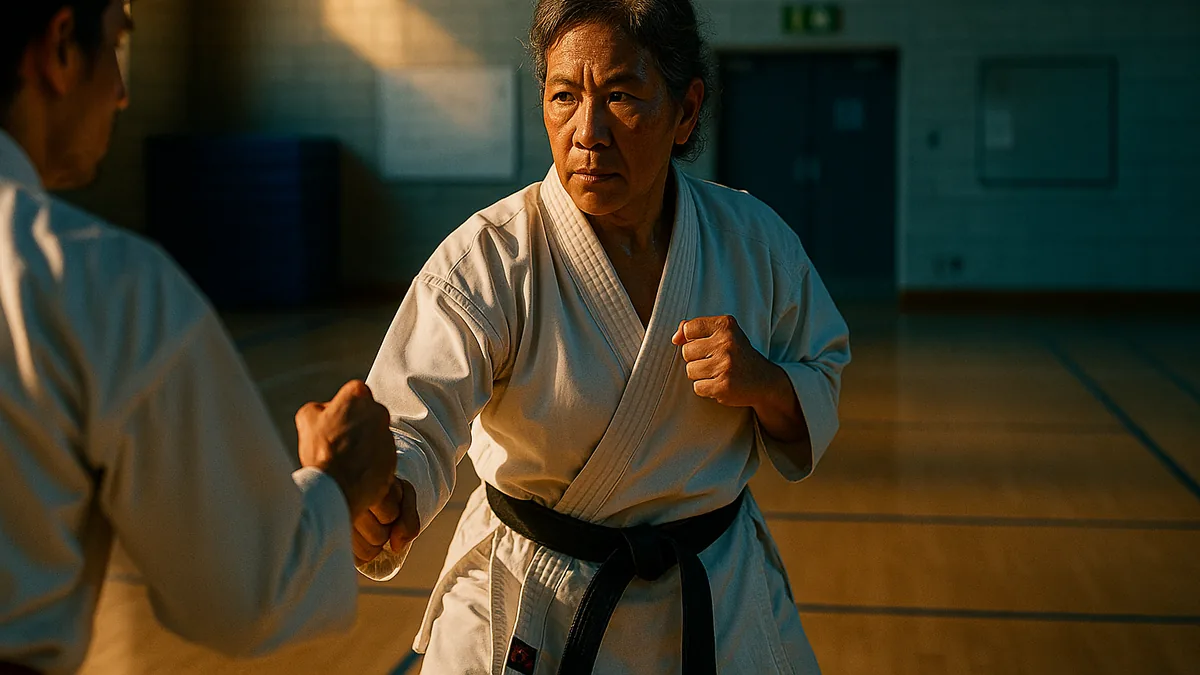
Most karateka who struggle with combinations in jiyu-kumite are not struggling because their technique is poor. They are struggling because of how those combinations were built in training. If you have ever thrown a clean sequence on the bag and then watched it fall apart the moment a live opponent moved, this is for you.
The Core Problem: Committing Before You Know the Answer
When you treat a combination as a single packaged unit - deciding all three techniques before the first one lands - you are essentially writing a script and hoping your opponent agrees to follow it. They will not. Experienced partners read the whole sequence from the first movement and pick it apart, not because they are faster, but because they are further ahead in the story than you are.
The more useful way to think about it: your first technique is a question. It creates a reaction. Your second technique is the answer to whatever that reaction turns out to be. Nothing after the first technique should be decided before it lands.
This is also why throwing everything faster is not the fix most people hope it will be. Speed without adaptability just means committing to the wrong answer more quickly.
Distance Is Doing More Work Than You Think
Every technique in a sequence demands a specific range. A straight punch and a head-height roundhouse kick do not live at the same distance - so if you enter for one, you are already wrong for the other. Most practitioners know this in theory and ignore it in practice.
The footwork between techniques is not transition filler. It is the combination. If the geometry between techniques does not work, the sequence does not work, regardless of how clean each individual technique looks in isolation. Before drilling any combination, it is worth mapping the distance requirements of each technique and asking honestly whether a natural transition exists between them.
Three Drills Worth Putting Into Your Training
Single technique, multiple responses - the one people most want to skip because it looks too simple. Throw one technique against a partner, freeze, and identify what just opened. Discuss it. Do it ten times. Switch. This builds the awareness that makes everything else possible.
Two-technique combinations with conditional branches - agree on a first technique and two possible responses from your partner. They pick one at random; you respond to what you see. The follow-up should feel like it is being pulled out of you by their movement, not pushed out by your prior intention. Keep it to two options until the reactions are clean before adding complexity.
Broken rhythm drilling - drill a three-technique combination at even rhythm, then introduce a deliberate pause after the first technique. Move the pause around. Then let it vary naturally. As the full article puts it:
"The combination is invisible because it is not pre-planned - it is assembled on the fly from trained responses."
The pause should feel like a feint in time, not a hesitation. The critical detail: the tempo of each individual technique stays constant. Only the gap between them changes. If you slow down before the pause and speed up after it, you have just created a new tell.
Fixed Drilling and Variable Drilling Both Have a Role
Traditional kihon-based combination drilling - repeating fixed sequences until they are automatic - has genuine value. Under pressure, you default to what is most deeply grooved, and that automaticity matters. The issue is not that fixed drilling is wrong. It is that most training environments stop there.
Variable, conditional drilling is where you build the ability to actually use that material. Fixed drilling produces the vocabulary. Variable drilling teaches you the grammar so you can construct something in real time rather than recite something memorised. Both are necessary. The first two techniques of any combination should be understood as pressure and reaction-creation. The third technique is where you score. Train with that priority and the whole thing becomes sharper.
Checklist: Take This to Your Next Class
- Before drilling any combination, identify the distance requirement of each technique and map the transition between them
- Drill single techniques against a partner and pause to identify what opened - do this before adding a second technique
- Set up conditional branches - agree on two possible responses and react to what you see, not what you planned
- Add a rhythm break to at least one combination - vary where the pause sits, keep individual technique tempo constant
- In jiyu-kumite, aim for the first two techniques to create a reaction rather than to score - look for what opens
- Check your own training balance - are you spending time on variable, responsive drilling, or only on fixed sequences?
For the complete version, with every drill explained, read Why Combination Attacks Fail in Kumite (And How to Make Them Land) on Karate Lifestyle.
Join the conversation: X · LinkedIn · Pinterest · Bluesky
More from Karate Lifestyle


Comments
Post a Comment