Are You Resting Enough Between Karate Sessions? Here's How to Tell
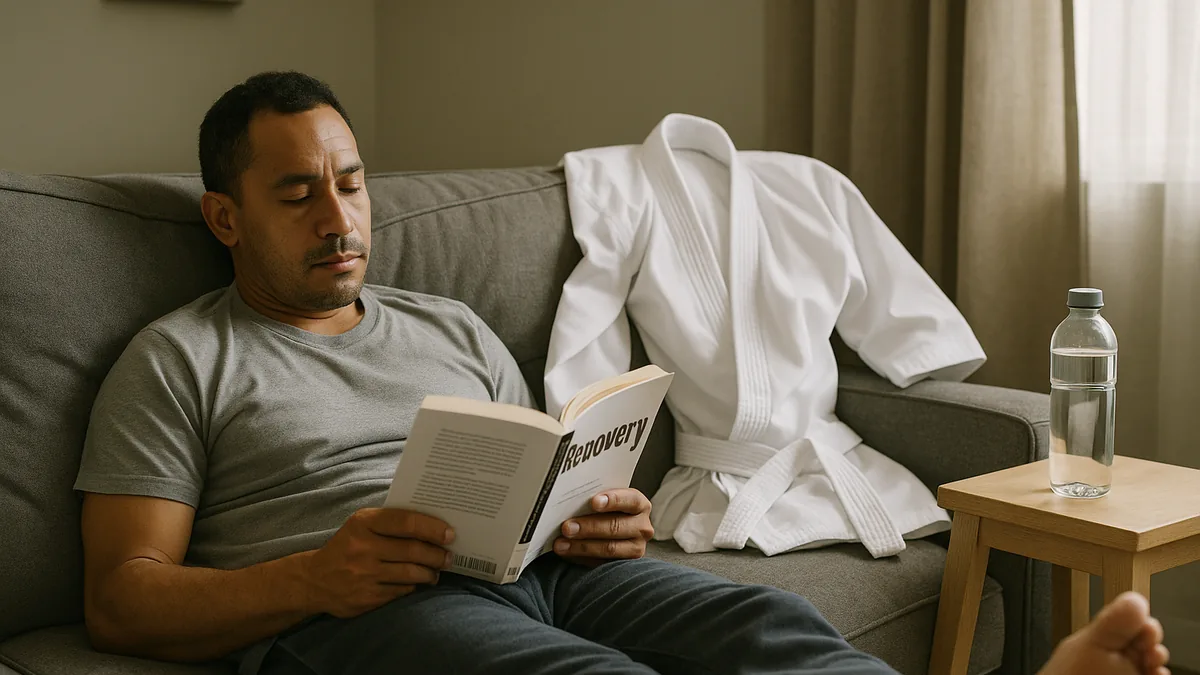
Most karateka who plateau are not lazy. They are not skipping sessions or coasting through class. They are showing up, working hard, and still wondering why their technique is not improving. The answer, more often than not, is that they are confusing being able to train with being ready to train.
This guide pulls out the practical points you can apply straight away. Read the full article for the complete picture.
Recovery Time Is Not the Same for Every Session
The intensity of what you did in the dojo should directly shape how long you rest before the next hard session. A light kihon or kata session at moderate effort is a very different demand on your body and nervous system than two hours of jiyu-kumite followed by conditioning work.
As a starting framework:
- Light technical work (kata, kihon at moderate effort): 12 to 24 hours
- Moderate session (class training, controlled kumite, bag work): 24 to 48 hours
- Hard session (full contact sparring, heavy conditioning, competition prep): 48 to 72 hours
These are not rigid rules. They are a prompt to start paying attention to what you actually did, rather than applying the same recovery window to every session regardless of load.
What Overreaching Looks Like in the Dojo
Most people picture overtraining as total physical breakdown. In karate, it rarely looks that dramatic. It tends to creep in quietly.
"You are not getting better in the dojo. You are getting better while you sleep, eat, and let your nervous system consolidate what you just drilled."
Watch for these signs:
- Combinations that normally flow start feeling mechanical - the technique is there, but it feels effortful rather than automatic
- Slower reactions in kumite - you are reading your opponent a fraction late, and it shows
- A general flatness - not quite tiredness, more like your karate has lost its edge
When your training starts feeling thick and laboured, the instinct is often to drill more. In most cases, several days of genuine rest will do more than extra repetitions.
What to Do on Rest Days
For most people on a standard rest day between normal training sessions, light movement is a reasonable default. It supports circulation and may help the body clear some of the by-products of hard training. The honest caveat is that the evidence comparing active recovery to complete rest is genuinely mixed - some research supports it, at least one well-designed study found no meaningful difference in performance outcomes.
What that means in practice: light activity on rest days is unlikely to hinder your recovery, so it is worth doing if it suits you. What counts:
- Light walking
- Gentle kata at around 40% effort, focusing on breathing and flow rather than precision
- Mobility work
- Swimming at an easy pace
What does not count as active recovery: another bag session because you felt good that morning. If an activity raises your heart rate significantly or creates muscle fatigue, it is training, not rest.
Sleep Is the Recovery Tool Most Karateka Underuse
Dojo culture in many clubs - particularly those with traditional lineage - does not always encourage practitioners to treat sleep as a training variable. That is a problem, because sleep is where motor patterns consolidate, where reaction times reset, and where the nervous system catches up with what you have been asking of it.
Falling consistently short of the 7 to 9 hours recommended for healthy adults means your rest days are not functioning as proper rest days, regardless of what else you do. The effects show up in your karate: slower combinations, reduced sharpness in kumite, and techniques that feel less reliable than they should.
If you are putting in the training hours and not improving, check your sleep before you change anything else about your programme.
Checklist for Your Next Class
- Before training, ask yourself: was my last session light, moderate, or hard? Match your readiness to that, not to the calendar
- After a hard sparring or competition prep session, give yourself 48 to 72 hours before training hard again
- If your combinations feel mechanical or your reactions feel slow, consider rest before more drilling
- On rest days, keep any movement genuinely light - if it creates fatigue, it is training
- Check your sleep. If you are regularly getting less than 7 hours, that is the first thing to fix
- Feeling fine in the morning does not automatically mean you are fully recovered
For the complete version, with every drill explained, read How Long Should You Rest Between Karate Training Sessions? A Practitioner's Guide on Karate Lifestyle.
Join the conversation: X · LinkedIn · Pinterest · Bluesky
More from Karate Lifestyle


Comments
Post a Comment