Are You Foam Rolling the Wrong Muscles After Karate?
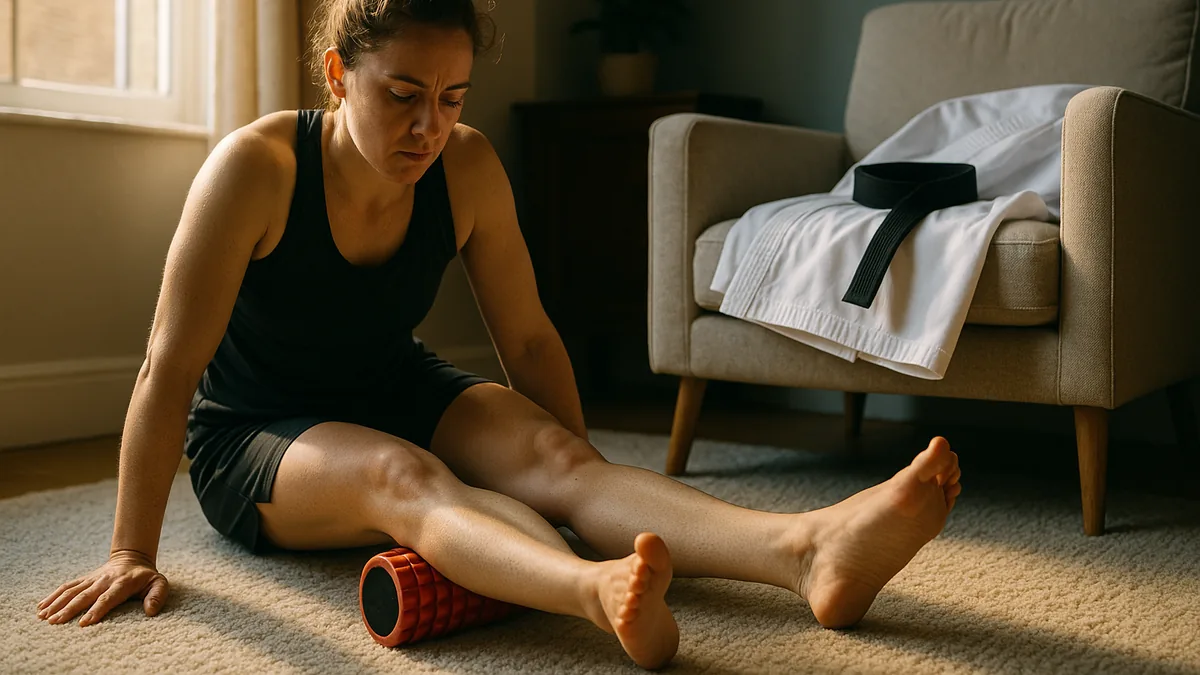
If you own a foam roller, there's a reasonable chance you're using it in exactly the wrong places. Most practitioners roll whatever hurts - the knee, the lower back, the IT band - and skip the muscles that are actually driving those complaints. This guide pulls out the practical essentials so you can take a more deliberate approach to your next post-training roll.
"The problem and the source of the problem are rarely in the same place."
Why Karate Loads the Body in Ways That Mislead You
Karate training distributes fatigue across the body unevenly, and the muscles making the most noise are not always the ones that did the most work. Your lower back aches because your quads and hip flexors are locked up. Your knees feel stiff because your quad or calf hasn't recovered properly. Chasing the symptom with the roller instead of the source is where most practitioners lose time and sometimes make things worse.
Post-training is the right time to roll, not before. Research on pre-session rolling found only a modest flexibility benefit of around 4% and no meaningful effect on strength or jump performance. After training, while the muscles are still warm, is when rolling has the clearest recovery benefit - reducing the muscle tone and stiffness that build up after hard sessions.
The Muscles Worth Your Time
Quads are the single most important target after karate training. Every stance, every kick, every push-off from the back leg loads them. Rolling slowly - genuinely slowly, pausing on tight spots rather than rolling through them - makes the difference between useful work and just friction. If you find nothing uncomfortable, you're moving too fast.
Upper hamstrings, near the sit bone, are the most neglected section. Most people roll the middle third and stop there. The upper portion accumulates tension from all the decelerating work the hamstrings do - braking kicks, stabilising deep stances - and rolling it before you stretch may make your flexibility work considerably more effective. Combining rolling with stretching has been shown to produce greater range of motion gains than either approach on its own.
Calves matter more than most practitioners realise. They're working constantly through every push-off, pivot, and stance. Persistent calf tightness reduces ankle mobility, which then alters movement patterns further up the chain - affecting stance depth, stability, and ultimately loading the knee. Roll the calf actively: find a tight spot, hold pressure there, and flex and point your foot. That movement while under load is significantly more effective than sitting passively on the roller.
Glutes feed directly into lower back tightness. After heavy kicking sessions, sitting on the roller with one ankle crossed over the opposite knee and leaning into the glute on that side will locate tension you probably didn't know was there.
What to Leave Alone
Joints - knees, ankles, the lower back itself - have no muscle tissue to release. Applying roller pressure directly to a joint adds compressive force to structures that gain nothing from it. The IT band is also worth reconsidering: it's dense connective tissue rather than muscle, and rolling directly on an inflamed IT band may worsen symptoms rather than relieve them. What you're actually reaching when you roll the outer thigh is the vastus lateralis and the TFL - the muscles either side of the band - and those are worth working. The band itself, particularly when irritated, is better left alone.
The correction is consistent: if your knees are the problem, roll the quad and the calf. If your lower back is complaining, roll the glutes and upper hamstrings. Follow the source, not the symptom.
Checklist for Your Next Session
- Quads first - lie face down, move slowly, stop and breathe on tight spots
- Upper hamstring - sit on the roller, lean into one side, work from behind the knee toward the sit bone, paying attention to the top third
- Calves actively - flex and point the foot while the roller holds pressure on the muscle belly
- Glutes - cross one ankle over the opposite knee and lean into the working side
- Roll after training, not before a hard session, as your primary use
- Avoid rolling directly on joints - knees, ankles, lower back - and be cautious with the IT band if it's already inflamed
- Pair rolling with stretching to get the most out of your flexibility work
For the complete version, with every drill explained, read Foam Rolling for Karate: Which Muscles Actually Need It and Which Don't on Karate Lifestyle.
Join the conversation: X · LinkedIn · Pinterest · Bluesky
More from Karate Lifestyle


Comments
Post a Comment