Are You Actually Training With Your Partner - Or Just Being Polite?
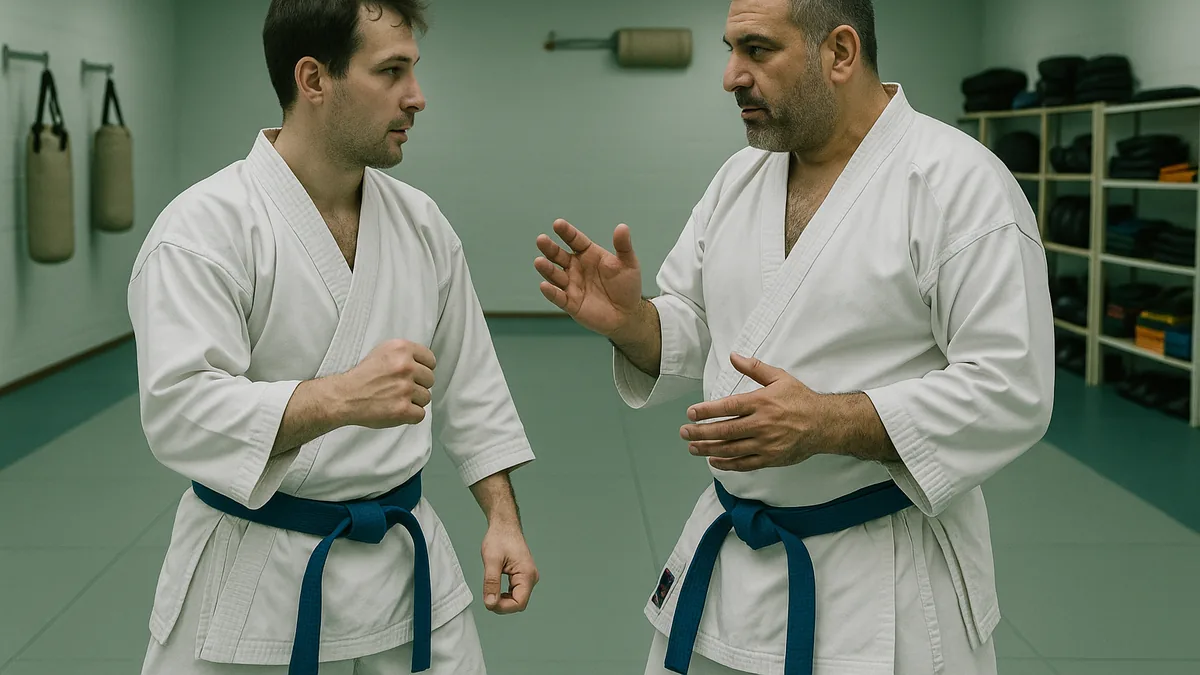
Most of us settle into a training partnership the same way: find someone roughly your size, your grade, your energy level, and stay there. It feels productive. But comfortable and productive are not the same thing, and after a while the difference starts to show.
This companion guide pulls out the practical side of what makes training partnerships actually work - so you can take something concrete to your next session.
The Comfort Trap
There is a pattern that runs through dojo training that is worth naming clearly. You stop pointing out your partner's recurring errors because the session is nearly over and it feels awkward. They do the same for you. Everyone bows, everyone feels fine, nobody improves.
"What you have both done is protect each other from the discomfort that actually drives development."
This is not a character flaw - it is just what happens when politeness gets mistaken for support. Real support sometimes means saying the thing that is slightly uncomfortable to say. Your partner's guard keeps dropping after combinations? That is worth mentioning, even if it is the third week in a row you have noticed it.
The most underrated quality in a training partner is not technical ability or grade - it is consistent honesty. Not relentless criticism, and not hollow encouragement either. Just the willingness to track what your partner is working on and tell them honestly whether they are getting there.
Talk Before You Start
Most karate practitioners default to near-silence in partner work. Bow in, drill, bow out. Verbal communication is minimal, and that is a problem.
Before a sparring round or a session of heavy partner work, take thirty seconds. Tell your partner what you are working on. Something like "I'm trying not to telegraph my combinations tonight" is enough. Now they know what to watch for, what to push, and what useful feedback actually looks like at the end of the round.
This also changes how you receive feedback. When someone points out a recurring flaw, the instinct can be to explain why you disagree. The more useful response is to try the adjustment first - even if you are sceptical. You will either feel it work, or you will have something more concrete to talk about. Either way, you are further along than if you had just defended your current habit.
Receiving feedback well is its own trainable skill. It is worth treating it that way.
Who You Train With Matters More Than You Think
Rotate. If you always pair with the same person, you are limiting what you can learn. A lighter partner teaches you about timing and distance. A stronger one tests your structure. Someone less experienced than you - but genuinely intense and honest - can be more valuable than a senior who is going through the motions.
Grade is not a reliable indicator of partnership quality. Some of the most useful people to train with are a grade or two below you but bring real focus and a willingness to give you straight feedback. That combination is rarer than it sounds.
If you are new to a club, be patient. It takes a few months to work out who trains seriously. Let partnerships form through repeated pairing in class before you start seeking anyone out specifically.
Work on Being the Partner Someone Wants
Everyone wants a good training partner. Fewer people actively work on being one.
Investing in your partner's development has a direct effect on your own. When you try to explain why something in their technique feels off - why a stance seems unstable, why a combination is losing power - you are forced to make explicit something you may only have understood intuitively up to that point. That process sharpens your own grasp of it.
Consistency matters here too. Showing up prepared and focused, week after week, is what separates partnerships that produce real improvement from those that plateau. Your partner needs to know you will bring the same attention to their development that you want them to bring to yours.
Take This to Your Next Session
- Before partner work, say what you are working on - thirty seconds is enough
- When you give feedback, be specific - "your guard drops after the combination" is useful; a mid-session lecture is not
- When you receive a correction, try the adjustment first - disagree after you have felt it, not before
- Rotate partners - different people teach you different things
- Notice what your partner is working on week to week - and whether they are actually getting there
- Match your intensity to what your partner needs, not just what you feel like bringing that session
For the complete version, with every drill explained, read Training Partners: How to Find, Keep, and Be a Good One on Karate Lifestyle.
Join the conversation: X · LinkedIn · Pinterest · Bluesky
More from Karate Lifestyle


Comments
Post a Comment