Alcohol and Karate Training: What the Timing Actually Costs You
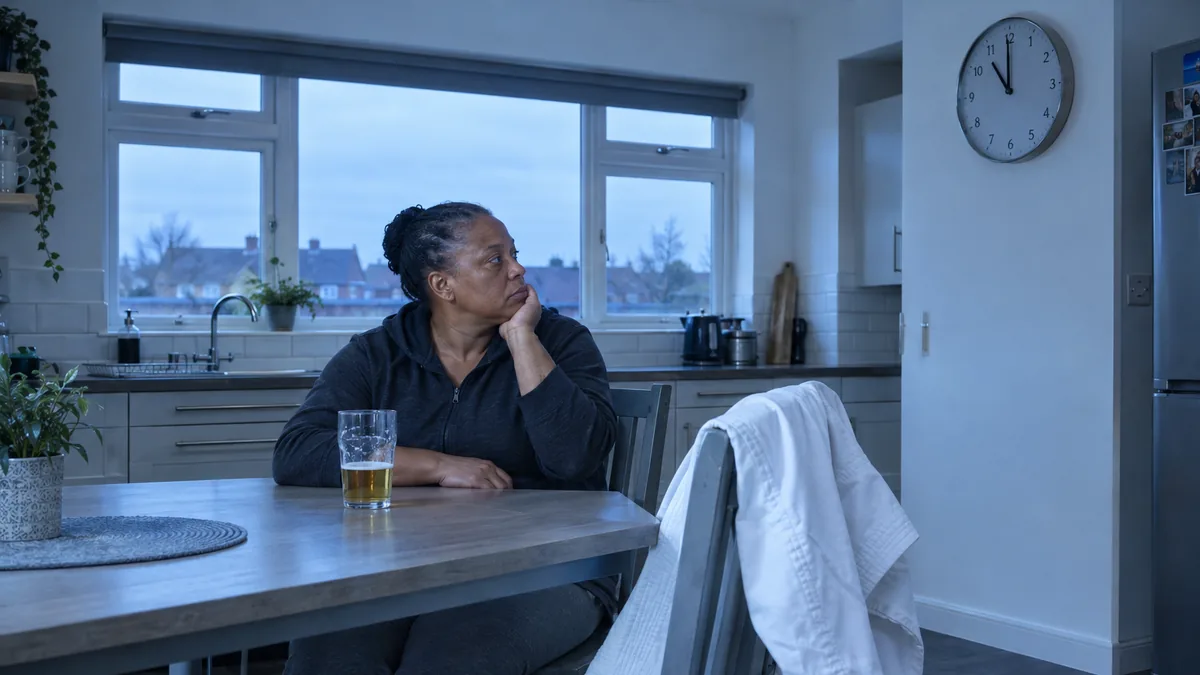
Most karate practitioners have had a drink after training. That is not the issue. The issue is making that call on autopilot - based on habit or what everyone else in the club is doing - rather than understanding what is actually happening in your body over the following 24 to 72 hours.
This is not a sobriety lecture. It is a practical look at what the trade-off involves, so you can decide for yourself whether it is worth making.
What Happens to Your Body After Training
The hours after a hard session are when your body does its most productive repair work. Muscle tissue is rebuilding, energy stores are refilling, and your nervous system is recovering from the coordination demands of kata, kumite, and kihon. Alcohol puts friction into all of that.
Sleep is where the damage is most significant. Alcohol disrupts sleep in a consistent two-phase pattern: it suppresses REM sleep in the first half of the night, then fragments your sleep in the second half as it clears from your system. You may feel like you slept fine. The structure of that sleep - which is what matters for recovery - will not have supported the same quality of restoration as an alcohol-free night.
Motor learning consolidation depends on multiple sleep stages, not just REM sleep. Alcohol disrupts the architecture of all of them. Which brings us to the point that matters most for serious practitioners:
"You spent two hours drilling your gyaku-zuki timing in kumite. Drink enough to disrupt your sleep, and you have paid the physical cost of training without collecting the full recovery reward."
Hard training also leaves you in a dehydrated state. Alcohol increases fluid loss by suppressing the hormone that regulates it, meaning you go into your next session already behind. Dehydration affects reaction time, decision-making under pressure, and sustained concentration - exactly what jiyu-kumite demands.
The Performance Effects You Will Notice in the Dojo
Reaction time slows after drinking, and the effect lasts longer than most people expect - performance impairment from drinking can persist for up to 72 hours. A Friday night out is not separate from your Saturday morning session. It is part of it.
Coordination is affected before gross motor function is. You can still walk in a straight line while your technique has measurably lost its precision. The hip-to-shoulder-to-arm chain that produces clean kime is a fine motor skill, and alcohol degrades fine motor control early. You may not feel impaired. Your timing and snap will tell a different story.
The practical correction here is scheduling rather than willpower. Treating the 48 hours before a technically demanding session as part of the training - not separate from it - is where the real gains are made or lost.
Club Culture: The Honest Conversation
Post-training drinks are a genuine part of many clubs' social fabric, and that is worth acknowledging honestly. The pub after a hard session is where relationships are built, where senior grades become approachable, and where a lot of a club's culture gets transmitted informally. That has real value.
The problem is when the culture makes opting out feel like a social cost. Choosing not to drink after training when you are managing a grading block is a training decision - it is not a rejection of the club or the people in it. Assuming everyone in the group is equally comfortable with the drinking culture, or that abstaining signals a lack of commitment, is a mistake.
The practitioners who tend to navigate this best are not the ones who never drink. They are the ones who are honest with themselves about whether they are opting in by choice or by social pressure. Those are genuinely different situations.
Timing Matters More Than Volume
A volume-based approach - counting units and stopping at two - is less useful than a timing-based one. One drink on a rest day, well away from your next session, is a fundamentally different situation from two drinks the night before a technically demanding class. The question worth asking is not "how much did I drink?" but "when did I drink, relative to training?"
If you are in a serious training block - preparing for a grading, working through a competition cycle, or tackling technically demanding material - treating alcohol the same way you treat poor sleep or skipped nutrition in that window is the practical position. Not a moral one. A practical one.
Checklist for Your Next Class
- Before a technically demanding session: treat the 48 hours prior as part of the training, not separate from it
- After a hard session: ask whether a drink that night is worth disrupting the sleep that consolidates what you just drilled
- Timing check: rest day drinking, well away from training, is a different situation from drinking close to a session - treat them differently
- In club social situations: know whether you are choosing to join in or going along because opting out feels awkward - those are different calls
- Performance feedback: use your kumite timing and kata precision as your honest indicator - you will feel a poorly recovered session there before anywhere else
- In a grading or competition block: apply the same discipline to alcohol timing that you apply to sleep and nutrition
For the complete version, with every drill explained, read Karate and Alcohol: What Serious Practitioners Actually Need to Know About Recovery, Performance, and Club Culture on Karate Lifestyle.
Join the conversation: Facebook · Instagram · X · LinkedIn · Threads · Bluesky
More from Karate Lifestyle


Comments
Post a Comment