Your Back Leg Is Running Your Gyaku-Zuki - Here Is How to Train It
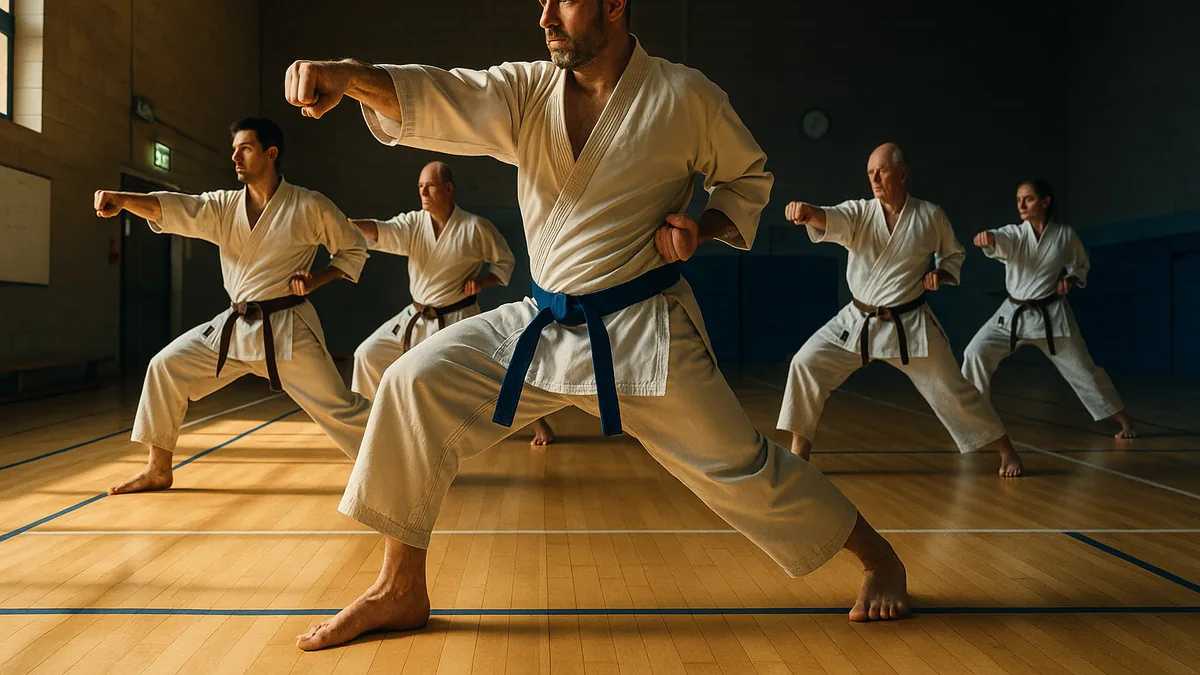
Most karateka pay very little attention to the back leg until something goes wrong. The front leg gets the drills, the coaching cues, the competition focus. The back leg just... sits there. If that sounds familiar, it is worth understanding what that habit is actually costing you in kumite.
The full article at KarateLifestyle.uk goes deep into the mechanics and four progressive drills. This companion piece gives you the core ideas in a format you can read before training and a checklist you can take onto the mat.
Why the Back Leg Matters More Than You Think
The kinetic chain for gyaku-zuki starts at the ankle of the back leg and runs through the knee, hip, shoulder, elbow, and wrist. That is not a coaching metaphor - it is the actual sequence of force transfer. When the back leg pushes correctly into the floor, the hip rotates as a result of that push. When the back leg is passive, the hip still rotates, but it is rotating around nothing. The punch becomes arm-only, regardless of how tidy it looks from the outside.
This is the most common technical error in gyaku-zuki: practitioners rotate the hip first and then push from the back foot, which reverses the correct order entirely. The push must initiate the rotation - not follow it.
The research backing this up is direct. Punching performance in karate can be predicted from lower limb maximal power, with meaningful correlations between back-leg power and punch speed. This is not a peripheral concern. It is measurable, and it matters.
What a Passive Back Leg Actually Costs You
It is tempting to think of a passive back leg as neutral - not helping, but not hurting. That is not accurate. A back leg that is not loaded and ready actively reduces your options in three ways.
Power - Without the back-leg push, gyaku-zuki is generated from the shoulder and arm. The force ceiling is much lower.
Stability - When an opponent attacks, a loaded back leg is what keeps you in position. A passive one means you get shifted off-line and lose the exchange before you have thrown a technique.
Reaction speed - This is the one most practitioners do not expect.
"A loaded back leg means you can respond faster because you are not starting from zero."
Slow reactions in kumite are sometimes a physical problem. Often they are a readiness problem. If the back leg is relaxed between techniques, you have to rebuild that load before you can use it. Experienced karateka keep the back leg coiled throughout an exchange - not tense, but available. That is a trained habit, not a natural one.
How to Build the Habit in Training
The full article covers four drills in detail. The two most important are worth understanding before you try them.
Resistance band gyaku-zuki drive - A band anchored behind you at hip height pulls you backwards while you punch. This is the most direct diagnostic available. With no resistance, you can punch with a passive back leg and not notice. With the band, you cannot fake it. The correction that works for most practitioners is to think "push the floor away" before thinking about the punch at all. Do this slowly until the sequence feels right, then build speed.
Explosive stance jumps - From fighting stance, drive forward using only the back leg. The front foot lands first, the back follows. The drive should come from the hip and glute, not the calf. If you are leaning forward before pushing, you are compensating for poor timing rather than fixing it.
On the question of stance depth: traditional deep zenkutsu-dachi in kihon loads the back leg heavily and builds the strength and awareness needed. A narrower competition stance is more mobile, but if that is all you ever train, the back leg never receives the stimulus it needs to develop. Train deep in kihon, apply the developed strength to your competition stance - not the other way around.
Checklist for Your Next Class
- Before drilling gyaku-zuki, check your back foot: heel flat, knee tracking over the toes, weight ready to push
- Practise the sequence cue: push the floor first, then punch - not simultaneously, not reversed
- During any gyaku-zuki repetition, notice whether you feel effort in your back glute and hamstring - if you feel it only in your shoulder, the chain is broken
- In partner work or sparring, keep the back leg loaded between techniques rather than letting it relax
- If your back heel rises before your punch lands, the drive is misdirected - slow down and reset the sequence
- After drilling, try the same technique from a slightly narrower stance and see whether the connection holds
For the complete version, with every drill explained, read How to Develop a Dominant Back Leg in Kumite: Why Most Karateka Neglect It and What You Are Leaving on the Table on Karate Lifestyle.
Join the conversation: X · Pinterest · Bluesky · TikTok
More from Karate Lifestyle


Comments
Post a Comment