Why Your Kicks Aren't Scoring in WKF Kumite (And What to Fix First)
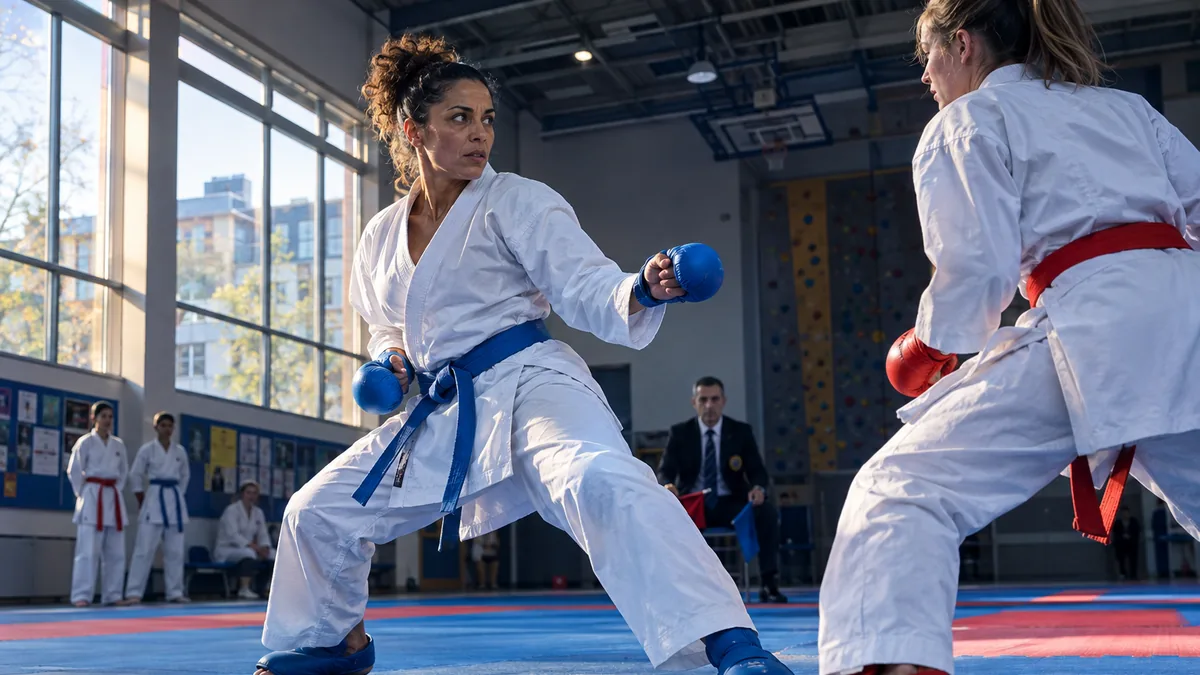
If you compete under WKF rules and your scoring comes almost entirely from hand techniques, you are leaving points on the mat. Not because kicks are too risky - but because you probably haven't drilled them in a way that transfers to competition. There is a difference between being able to kick and having a kicking game. This guide is about building the second thing.
The Scoring Logic You Might Be Ignoring
WKF rules assign different point values depending on what lands and where. A punch or strike earns yuko - one point. A chudan kick earns waza-ari - two points. A jodan kick earns ippon - three points. That means a clean head kick is worth three times a clean punch to the same area.
Once you sit with those numbers, the risk-reward picture shifts. Yes, kicks carry risk. But a competitor who lands one mawashi-geri jodan has matched the value of three successful punches. The question stops being "should I kick?" and becomes "how do I kick in a way that actually scores?"
The answer starts with understanding what judges are looking for. A technique must meet six criteria to be awarded a score: good form, sporting attitude, vigorous application, correct timing, correct distance, and continued awareness of the opponent after the technique lands. That last criterion - zanshin - is where most kicking attempts fall apart.
"Zanshin is the criterion most often missed when a score is assessed."
The kick lands. The competitor immediately retreats, looks away, or loses composure. Judges see a lucky contact, not a controlled technique, and the score is withheld or reduced. Holding your position and your awareness after every kick is not optional - it is part of the technique.
The Entry Is the Technique
The most common reason kicks fail in competition has nothing to do with the kick itself. It is the entry - the footwork and setup that gets you to kicking range without warning your opponent.
Most competitors practise kicks on bags or in kihon lines, from a standing start, at a comfortable distance. None of those conditions exist in kumite. In competition, you have to close distance without telegraphing, arrive at the right range, and chamber the knee without cocking the hip first as a tell.
The correction is to drill entries separately from the kicks. Work with a partner whose only job is to step back the moment they see preparatory movement. Practise the closing step alone - twenty repetitions with no kick attached - until it looks identical to your normal footwork. Only then add the kick. When the entry is working, you will feel like you arrived at the kick rather than reached for it. That distinction is everything.
The most common telegraph is a shoulder drop or head dip before the knee chambers. If your partner is reading you before your leg moves, that is where to look.
Using Kicks Tactically Rather Than Speculatively
Two approaches tend to produce the most reliable results in WKF kumite, and both are worth building into your training.
Counter-kicking off a committed attack is lower risk than kicking into a prepared opponent. When your opponent commits to a gyaku-zuki, their weight is forward and their recovery is momentarily compromised. A mawashi-geri timed to land as they extend - delivered from a small offline step rather than a block-then-kick sequence - uses their momentum against them. The target arrives rather than you chasing it. Train this timing specifically: read the shoulder rotation that precedes the punch, not the hand itself.
Mae-geri as a rhythm disruptor is the other tool worth developing. A sharp chudan mae-geri does not need to score by itself. Its primary function is to interrupt your opponent's forward pressure and create a half-second gap. That gap is where the follow-up lands. The combination that works most consistently in WKF kumite is mae-geri chudan into mawashi-geri jodan - the first kick disrupts posture and draws the guard downward, the second comes over the top to the head. The timing between them must be tight; any pause gives your opponent time to recover.
Focus on snapping the mae-geri back to chamber rather than letting the leg swing down after contact. When the snap-back is working, your balance stays forward and the combination flows. When the leg drops, your weight shifts back and the follow-up dies.
Checklist for Your Next Class
- Check your entry first. Before any kicking drill, ask a partner to watch for telegraphs. Fix those before working on the kick itself.
- Drill entries without kicks. Ten to twenty repetitions of the closing step alone, until it looks neutral.
- Practise zanshin deliberately. After every kick in sparring or pad work, hold your stance and eye contact for a full beat before moving.
- Work counter-kicking timing. Have a partner throw committed attacks and practise the offline step plus kick as a single movement - not block, then kick.
- Use mae-geri to create, not just to score. Follow every mae-geri in pad work with a hand technique or second kick. Make the combination the habit.
- Keep combinations short. Two sharp kicks beat four rushed ones. Do not add the second kick until the first is reliable under pressure.
- If kicks aren't transferring to competition, go back to the entry drill before changing anything else.
For the complete version, with every drill explained, read Scoring With Kicks in WKF Kumite: Why Karateka Underuse Them and How to Build a Kicking Game That Judges Actually Reward on Karate Lifestyle.
Join the conversation: Instagram · X · LinkedIn · Pinterest · Threads · Bluesky
More from Karate Lifestyle


Comments
Post a Comment