Why Your Kata Needs Two Training Speeds (Not One)
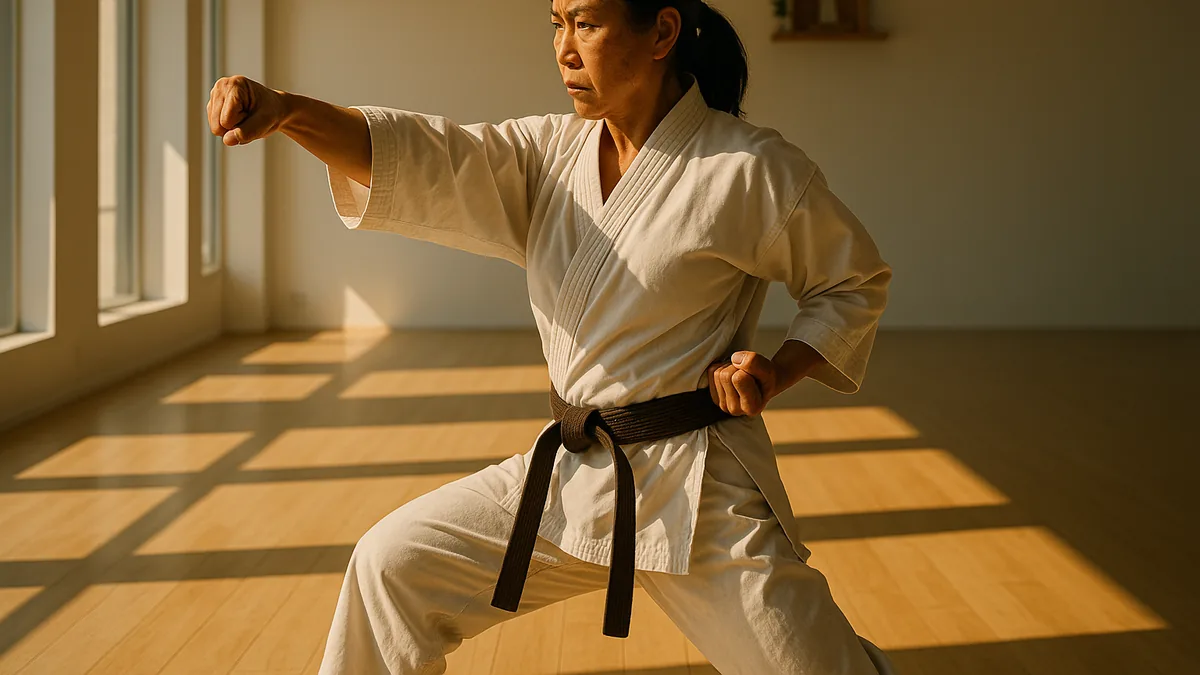
Most karateka train kata at whatever speed feels natural, repeat it until it looks roughly right, and consider that job done. The honest truth is that approach builds familiarity with one speed and not much else. It will not develop power, it will not sharpen your explosive timing, and it will not expose the technical habits that have quietly embedded themselves into your movement.
If your kata feels solid in the dojo but falls apart under grading or competition pressure, this is almost certainly why.
Why Speed and Power Work Against Each Other
There is a physiological reason you cannot train both qualities at the same time, and it is worth understanding rather than just accepting.
At high movement speeds, fewer muscle fibres can bind in time to contribute force. The body compensates by finding shortcuts - dropping the hip rotation slightly, cutting the chamber short, letting the arm lead rather than the hip. These adjustments happen below the level of conscious awareness. The technique still looks like a punch. It does not have the same mechanics as a punch.
The reverse is also true. When you slow down and load the movement properly, you feel where force is genuinely coming from. The hip fires first, the shoulder follows, the fist arrives last as the final link in the chain.
"A punch that feels like it comes from your arm is not yet a karate punch."
Because of this relationship between force and velocity, the two qualities need separate training methods before they can be combined. Trying to go "fast but powerful" from the start means the nervous system will always prioritise speed and shed force to get there.
The Two Drills That Actually Develop Each Quality
Loaded slow kata is the most underused method in most dojo training. Perform your kata at roughly 20% of normal speed, but with full muscular engagement throughout each movement - not just at the finishing position. The hip should visibly initiate before the arm moves. If it does not, stop and reset rather than continuing.
At this speed you cannot hide anything. Weak chambers, disconnected hips, and arm-led techniques become immediately apparent in a way that full speed completely conceals. Hold each finishing position briefly and check your stance depth, weight distribution, and the position of your non-striking hand. The most common error is moving slowly but passively - that teaches nothing. Slow and loaded is the goal.
Burst drills address the speed side without the common mistake of simply rushing the whole kata. Choose a single technique and chamber it deliberately over two full seconds. Pause. Then execute it at absolute maximum speed and hold the finishing position for one second before resetting. Rest briefly and repeat.
A correctly executed burst feels like a release - the tension in the chamber snaps through into the technique. If it feels like effort rather than release, the speed is coming from muscular push rather than elastic recoil. The finishing position collapsing is the most frequent problem: practise holding the endpoint under tension separately so the body knows where it is supposed to stop.
Bringing Them Together With Contrast Training
Once both qualities have been worked separately, pairing them in sequence is an effective integration method. Perform the full kata at 20 to 30% speed with complete muscular engagement. Rest for 90 seconds - do not cut this short. Then perform the full kata at full speed with full intent.
The slow version activates the correct recruitment patterns and reminds the nervous system of the underlying mechanics. The fast version then runs those same patterns at full speed. This is a kata-specific application of post-activation potentiation, the same principle used in contrast training across sport: a high-load bout primes the nervous system and enhances power output in the explosive set that follows.
The test of whether it is working is not how the slow kata looks. It is whether the full-speed kata feels more grounded and weighted afterwards. When the timing is right, a reverse punch should not feel like a fast arm movement - it should feel like something with genuine force behind it.
Checklist for Your Next Class
- Before you start: choose a kata you know well enough that you are not thinking about the sequence
- Loaded slow run: perform the full kata at roughly 20% speed with sustained muscular tension throughout - not passive, not soft
- Hip check: if your arm moves before your hip at slow speed, stop and reset rather than continuing
- Burst drill: pick one technique and repeat it 10 times - two-second chamber, maximum-speed execution, hold the finish
- Contrast pair: slow loaded kata, 90 seconds rest, full-speed kata - note whether the fast version felt heavier than usual
- Honest assessment: if the full-speed kata still feels like rushing rather than power, go back to the slow work before adding more speed
For the complete version, with every drill explained, read Kata Speed vs Kata Power: Why Training Both at the Same Time Is Holding You Back on Karate Lifestyle.
Join the conversation: X · Pinterest · Bluesky
More from Karate Lifestyle


Comments
Post a Comment