Why Your Blocks Keep Breaking Down (And It's Not Your Timing)
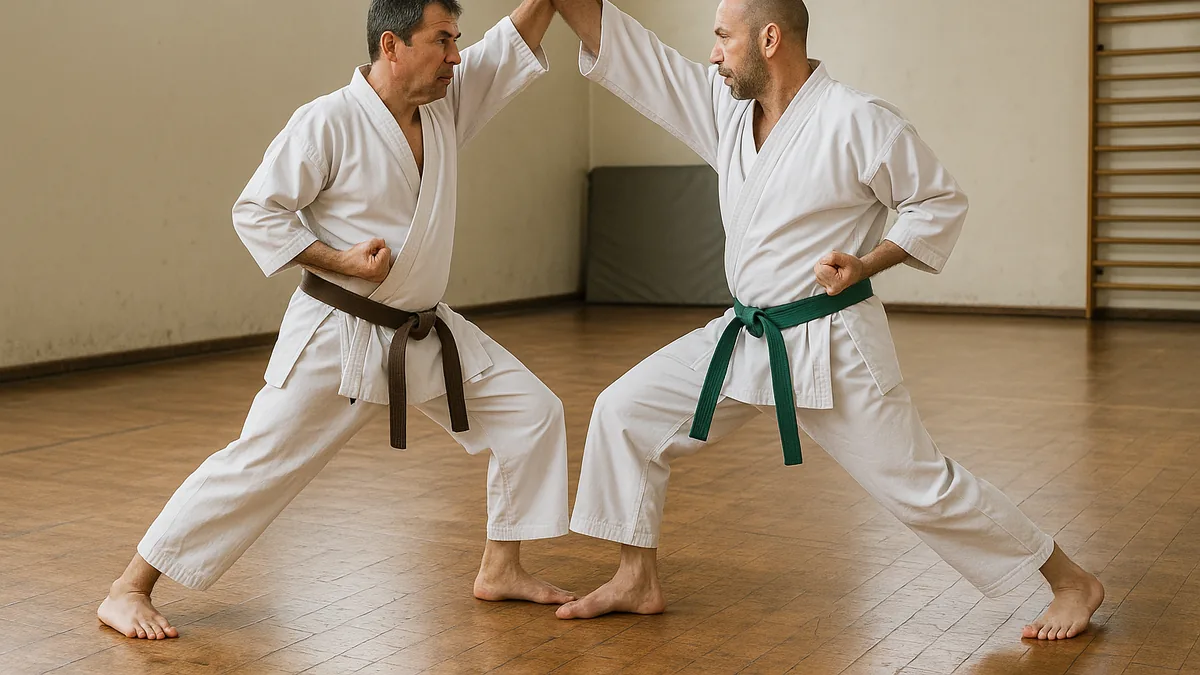
If your blocks feel unconvincing under pressure, you have probably been told to drill them more. That advice is not wrong, exactly - but it is incomplete. Drilling a block that is structurally broken just makes you faster at doing the wrong thing. What actually needs fixing is usually earlier in the movement than you think, and more connected to the rest of your body than the arm alone.
Here is a practical guide to what is actually going wrong and where to start putting it right.
The Block Is a Whole-Body Movement, Not an Arm Action
The single most common error across all experience levels is the arm doing everything while the body does nothing. The forearm comes up, the elbow bends, and the torso stays completely still. What you end up with is a weak, unsupported lever.
When a block is working properly, the hip rotation drives it. The shoulder follows. The forearm arrives last, as the final expression of a movement that began elsewhere. Think of it the same way you think about punching - the arm is just the delivery point, not the engine.
A simple way to feel this: have a training partner hold your forearm lightly and try to block using only your arm. It stalls almost immediately. Now initiate the same movement from the hip instead. The difference is immediate and obvious.
Hikite matters just as much. The pulling hand is responsible for a substantial part of what makes a block work, and it is routinely undertrained. When hikite is slow or passive, the tension that creates snap and rotation through the torso is simply absent. The block and the pull are one mechanism. Drill them that way.
Most Problems Start at the Chamber
If the finish position of your block looks wrong, the instinct is to correct the finish. But in most cases, the problem originated several frames earlier - in the chamber position before the technique executes.
If your chamber is too wide, too low, or at the wrong angle, the forearm cannot travel the correct path. You have already compromised the technique before anything visible has happened. Correcting only the end position through repetition will not fix an error that starts earlier in the movement.
Check your chamber first. Where is your forearm? Where is your elbow? Is the pulling hand already committed and moving? Get those answers right and the rest of the technique often corrects itself without further adjustment.
Common Errors Worth Checking Before Your Next Class
- Blocking too late - waiting until the attack is nearly complete means you are trying to stop momentum rather than redirect it. Intercepting earlier in the attack's path requires a fraction of the effort
- Crossing your centre line - a gedan-barai that sweeps past centre deflects the attack directly into your opposite side rather than away from your body
- Collapsing the elbow on contact - this happens when the shoulder and lat are not engaged to support the structure behind the forearm
- Stepping straight back - moving backwards keeps you on the line of the attack, just further down it. If you move, move off the line
- Staying tense throughout - sustained tension kills speed. The goal is relaxed movement with a sharp, brief tightening at the moment of contact
From Kihon to Something That Actually Works
There is a genuine debate in karate about how much weight to give formal blocks versus more instinctive covering and parrying movements. Both sides of that argument have a point.
Practitioners who never question the formal block end up with technically tidy kihon that falls apart under pressure. Those who dismiss traditional blocks entirely often lack the structural understanding those blocks are designed to build - the hip connection, the forearm alignment, the sense of the body moving as one unit.
The more useful position is that formal blocks are training tools. They teach your body something real. The job is to understand what they are teaching, and then allow the application to be practical rather than rigid.
"The block you drill in kihon is a map, not the territory. But you still need to read the map."
The big, committed kihon block builds the mechanics. Over time, the goal is to produce the same result with less visible movement - shorter, faster, harder to read, and already connected to whatever comes next.
Checklist for Your Next Class
- Before drilling, check your chamber position - is your forearm on the right path before the technique starts?
- Initiate your next block from the hip and feel whether the forearm arrives last
- Make hikite sharp and deliberate on every repetition, not an afterthought
- If you move when blocking, step off the attack line rather than straight back
- Practise relaxing through the movement and tightening only at the moment of contact
- Ask your instructor to watch your chamber, not just your finish position
For the complete version, with every drill explained, read Blocking in Karate: Why Most Blocks Fail on Karate Lifestyle.
Join the conversation: Instagram · X · LinkedIn · Pinterest · Threads · Bluesky · YouTube
More from Karate Lifestyle


Comments
Post a Comment