Why Eight Kata Is Enough: Training Depth in Uechi-Ryu
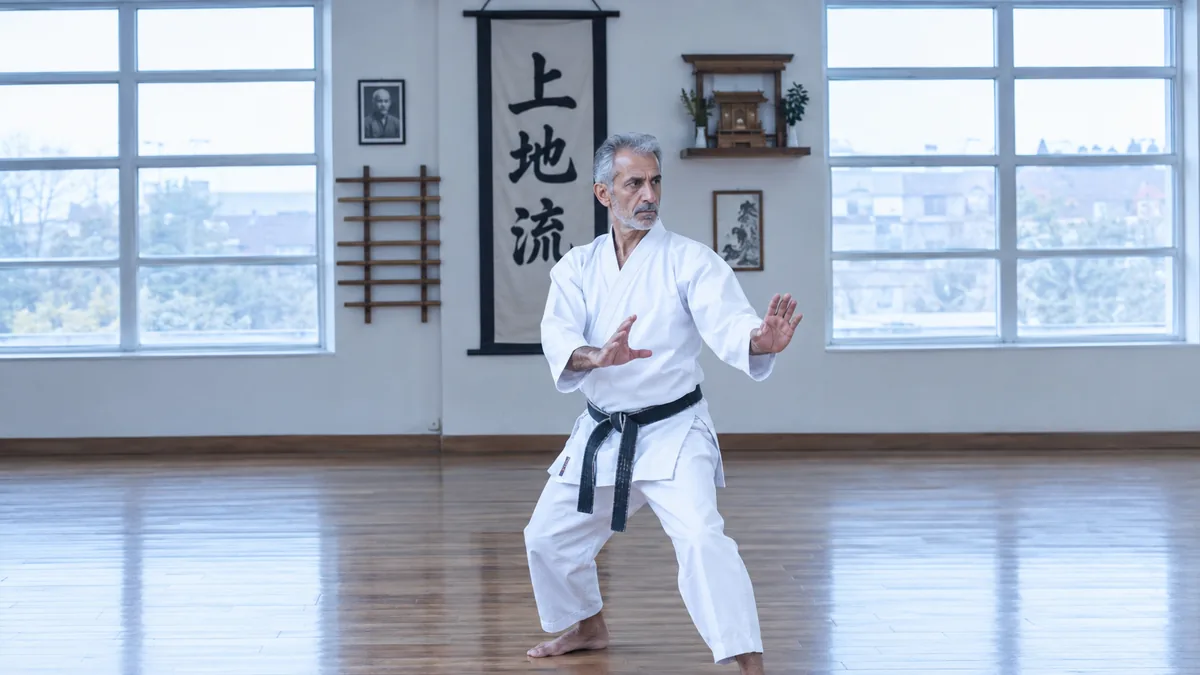
If you train Uechi-Ryu and someone from a style with forty-plus kata has ever given your syllabus a sympathetic look, you will know the feeling. Eight forms sounds thin until you consider what those eight forms actually demand. The full article on KarateLifestyle.uk goes deep on the history and technical detail of every kata in the syllabus - this companion piece pulls out the practical implications for your next session.
The Syllabus Is Small by Design, Not by Accident
Kanbun Uechi spent thirteen years training in Fuzhou under his Chinese teacher, and he came back with three kata: Sanchin, Seisan, and Sanseiryu. Three forms from thirteen years of dedicated study. The remaining five were added later by Kanei Uechi and senior students to create a more complete teaching progression. So the syllabus was never assembled by accumulation - it was built around a core that already existed, with bridging material added deliberately.
That origin matters because it explains the style's attitude toward repetition. In a system where a practitioner might have sixty forms to work through, there is always another kata to move on to. In Uechi-Ryu, you keep returning to the same eight. Senior practitioners perform Sanchin alongside beginners. The difference in quality is visible immediately - not because the senior knows more kata, but because they know this one more completely.
"With eight kata, there is nowhere to hide."
What the Kata Actually Require of You
The technical demands in Uechi-Ryu kata are specific, and getting them wrong is easy because some of the corrections run against instincts you may have built in other training.
Sanchin tension is dynamic, not fixed. The most common misunderstanding is treating Sanchin as an exercise in sustained rigidity. The tension should move with each technique - engaging and releasing like a wave rather than locking the body into a single contracted state. The structural connection you want comes from rooting upward from the floor: feet grounded, hips tucked, abdomen engaged. When that chain is intact, the whole body works as a unit. When it is not, you feel it the moment someone tests your structure.
Circular techniques need the full arc. The circular blocks and deflections in Uechi-Ryu feel slower than the linear techniques many practitioners are used to, and the instinct is to speed them up. This removes exactly what makes them work. The redirecting force comes from completing the path - shorten the arc and you lose the power, regardless of how fast the movement is.
Simultaneous techniques require simultaneous timing. Several sequences in Seichin, in particular, only function if both hands arrive at their targets at the same moment - one intercepting, one striking. Performing them as block-then-strike is not a minor timing error; it makes the application unworkable. If the bunkai feels broken, the timing is usually where to look first.
Conditioning Is Not Optional
The open-hand strikes in Uechi-Ryu - the nukite, the hiraken - are not decorative. They are weapons, and weapons require preparation. The kote kitae conditioning work that Kanbun brought back from Fujian exists specifically because these techniques need conditioned hands and forearms to function as intended.
This is worth being direct about: learning the kata patterns without the conditioning work means learning the shape without the substance. The two are not separate tracks. They are the same curriculum.
The Chinese roots are practically useful, not just historically interesting. The style comes from a half-hard, half-soft Fujian system that combined an offensive, hard-bodied approach with a softer, more defensive one. That origin explains the upright stances, the circular hand movements, the close-range emphasis, and why the conditioning work is weighted as heavily as the kata themselves. Understanding where these choices come from gives you context that improves how you execute them.
Checklist for Your Next Class
- Sanchin: Check that your tension originates from the floor upward rather than gripping with legs in isolation. Does the structure feel connected or compartmentalised?
- Circular techniques: Deliberately slow them down and complete the full arc. Notice whether the redirecting quality changes when you stop rushing.
- Any simultaneous technique: Test whether both hands are genuinely arriving together or whether one is waiting for the other. If it feels sequential, the timing needs work.
- Conditioning: If your session includes kata with open-hand strikes, pair it with kote kitae work. One without the other is incomplete.
- Revisit an earlier kata: Whatever your current grade, spend time on a kata you consider foundational. Note what you notice now that you did not before.
For the complete version, with every drill explained, read Uechi-Ryu Kata List: Every Form in the Syllabus, Its Chinese Origins, and Why the Style Has So Few on Karate Lifestyle.
Join the conversation: Facebook · Instagram · LinkedIn · Pinterest · Threads · Bluesky
More from Karate Lifestyle


Comments
Post a Comment