Where Your Karate Works in Cross-Style Sparring (And Where It Doesn't)
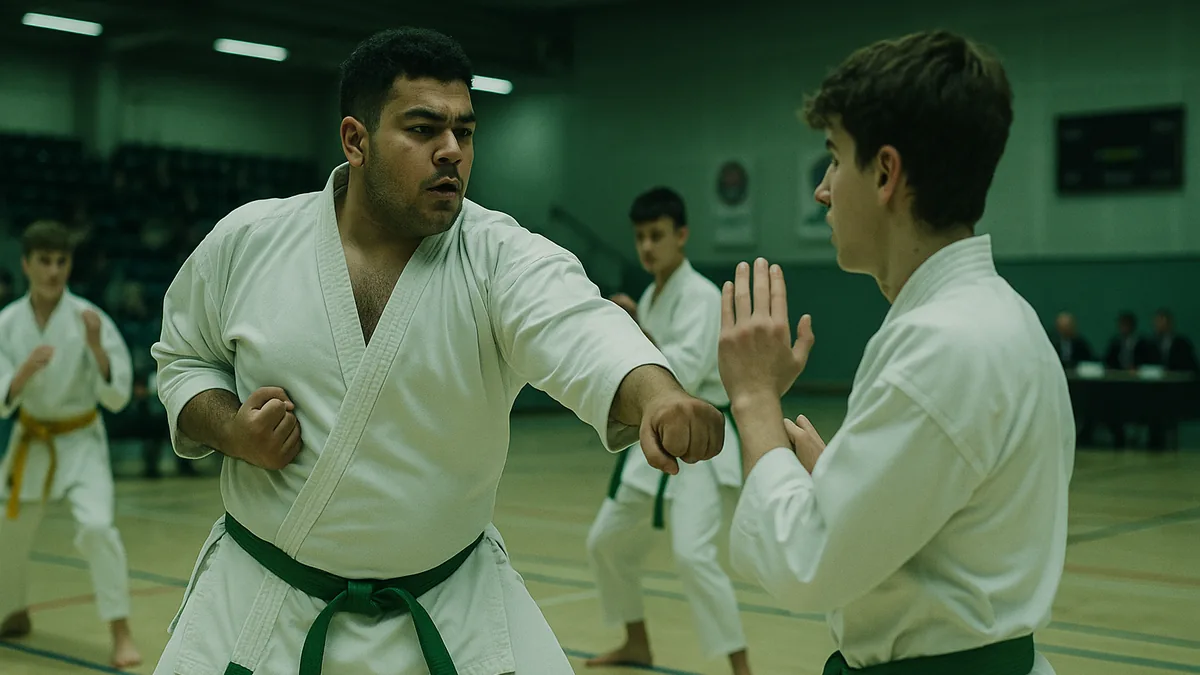
If you have ever stepped onto the mat with someone from a different striking background and felt genuinely unsure of yourself, you are not alone. Cross-style sparring has a way of exposing things that controlled dojo training keeps comfortable. Some of what it exposes will surprise you in a good way. Some of it will not.
This is a companion to our full article on how karate stacks up against other martial arts in sparring. What follows is the practical version: what to understand before you go, and what to take back to your next class.
What Your Karate Training Actually Gives You
Distance management and timing are the two things karate develops that most other striking arts do not train in the same way or to the same depth. Years of kumite - real kumite, not just going through the motions - builds the ability to sit at the edge of range, read when an opponent has committed, and not be there when they arrive. That is a genuine skill, and it does not disappear just because the ruleset changes.
Counter-attacking is the other one. The trained response to an opponent's failed attack - moving into the space they have just opened - becomes automatic after enough repetitions. Kickboxing trains combination work well, but this particular reactive instinct is something karate develops almost as a byproduct of how kumite is structured. Against opponents from other arts, it is often the thing that catches them off guard.
These are worth naming because it is easy to feel defensive when cross-training exposes weaknesses. The strengths are real.
The Two Gaps That Will Be Found
Combinations. Under WKF-style points scoring, a valid technique stops the bout for adjudication. Train that way for long enough and your brain stops looking for what comes next. Against a kickboxer in a continuous format, that single-technique habit gets picked apart quickly. The fix is not complicated, but it requires deliberate work: build combinations as single units of movement rather than technique A followed by technique B. Do it under pressure, not just on the pads.
Low kicks. WKF kumite explicitly prohibits strikes to the legs, which means most practitioners who train primarily under that ruleset have built their footwork and positioning on the assumption that their legs are not targets. Outside that ruleset, that assumption is wrong.
"The first time you spar with someone who knows how to throw a proper leg kick, you feel it through your whole body in a way that is genuinely alarming."
It does not hurt the way a punch hurts. It accumulates. By the third or fourth one, the lead leg starts to feel unreliable. You do not need to become a Muay Thai specialist to address this, but you do need some deliberate exposure - both throwing and defending.
A Note on Taekwondo Specifically
Karate practitioners tend to underestimate taekwondo opponents and then get hurt by them. The kicking speed and range of a serious taekwondo practitioner is genuinely difficult to handle, and the most common mistake is to fight at mid-range - which is exactly where taekwondo is most comfortable.
The answer is to get inside the kick or far enough outside it that it loses power. Neither is instinctive if you have spent most of your sparring time against other karate practitioners. Where karate has a real edge is close-range hand technique, but you have to earn that position first, and most practitioners do not have a clear plan for how to get there.
Checklist for Your Next Class
- Practise your distancing deliberately. Do not let it develop as a side effect of sparring. Focused work on living at the edge of range pays off against any opponent.
- Build one combination as a single movement. Pick two or three techniques and drill them until the second flows from the first without a reset in between.
- Ask your coach about low kick exposure. If your dojo does not address it at all, name it as a gap and find a way to get some controlled exposure.
- If you have a taekwondo session coming up, plan your entry. Decide in advance whether you are going to close distance or stay at long range. Do not drift into mid-range by default.
- When you cross-train, be specific. Identify one gap - combinations, grappling, low kicks - and address that directly rather than just collecting mat time.
For the complete version, with every drill explained, read Karate vs Other Martial Arts in Sparring on Karate Lifestyle.
Join the conversation: X · LinkedIn · Pinterest · Bluesky
More from Karate Lifestyle


Comments
Post a Comment