What to Look For (and Walk Away From) When Choosing a Karate Club
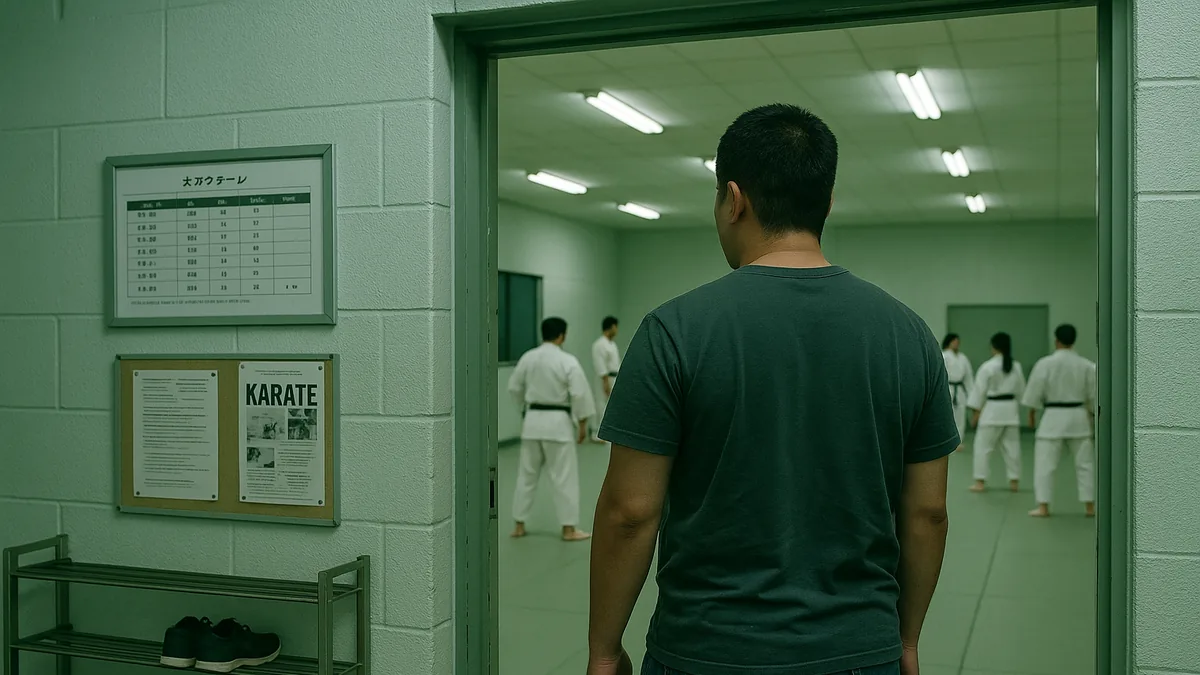
Starting karate - or returning to it after time away - should be an exciting decision. What it should not be is a decision made on the basis of whichever club is closest or has the shiniest website. The quality of instruction, the club's approach to grading, its safety culture and whether it is properly affiliated all vary enormously, and those differences shape your experience far more than the distance from your front door. Here is what to pay attention to before you sign anything.
The Style You Choose Is Not Just a Name
The five major karate styles - Shotokan, Goju-Ryu, Shito-Ryu, Wado-Ryu and Kyokushin - are not interchangeable. They reflect genuinely different philosophies about what karate is for and how it should be trained.
Shotokan is built around long, powerful, linear techniques and places strong emphasis on drilling the fundamentals. Goju-Ryu works closer in, balancing hard and soft movement with a distinctive approach to breathing developed through kata. Wado-Ryu is particularly interesting because it is not purely Okinawan-derived - it blends karate with Japanese jujutsu, which gives it a different character in terms of body movement and evasion. Kyokushin is a full-contact style with a training culture built around being genuinely tested - it is physically demanding and its competition rules allow kicks to the head but not punches.
None of these is objectively the right choice. But if you want regular kata practice and traditional training, a Kyokushin club may frustrate you. If hard sparring and conditioning are what you are after, a club that treats ceremonial kata performance as its main event probably will not satisfy you either. Know what you are walking into.
How to Spot a Club Worth Your Time
When you watch a class - and you should watch before you commit to anything - look past the surface. A few things that signal a club is actually teaching rather than just filling slots:
Individual correction. A good instructor does not just count repetitions at the front of the room. They walk the floor, adjust a stance, explain the reason behind the correction. That is how technique actually transfers from one person to another.
Questions are welcomed. Some instructors treat questions as a challenge to their authority and disguise that defensiveness as tradition. An instructor who wants you to understand what you are doing - not just comply - is a meaningful green flag. How they answer matters as much as what they say.
Sparring has a safety culture. Contact should be controlled, particularly with beginners.
"A dojo where the unspoken rule is that newer students are fair game for senior grades to work out their aggression is not training - it is bullying with a karate uniform on."
If you see that dynamic in a trial class, leave.
Grading and Insurance - the Two Questions You Must Ask
These are not optional due diligence. They matter practically.
On grading: ask how it works. If the answer amounts to "every couple of months," you are looking at a belt factory - a club that grades on a schedule because grading fees are good revenue, not because students have reached a genuine standard. This is one of the more damaging patterns in recreational karate. Students often arrive at new clubs holding grades that do not reflect their actual ability - not because they were idle, but because nobody ever held them to a real standard. A club that will tell a student they are not ready yet, and students who respect that answer, is a club that takes development seriously.
On insurance and affiliation: ask directly which body the club is affiliated with and whether students are covered by insurance during training. The answer should come back immediately, with a name. If there is hesitation, or a vague reassurance without specifics, treat that as a red flag. Style-specific associations and the various governing bodies in the UK each have their own affiliation structures, and that affiliation typically brings student insurance cover, standardised grading criteria and instructor licensing requirements. Unaffiliated clubs are not automatically poor - some experienced instructors run independent dojos - but you need to know what you are getting into and arrange separate cover if necessary.
Checklist for Your Next Club Visit
Take these to your trial class.
- Watch at least one full class before speaking to anyone about joining
- Ask: what style is taught and which association is the club affiliated with?
- Ask: are students covered by insurance, and through which body?
- Ask: how does grading work - what is the standard, and who assesses it?
- Watch how the instructor treats the least experienced person in the room
- Notice whether correction is individual or just counting at the group
- Check whether questions are welcomed or deflected
- If there is sparring, watch whether contact is controlled with newer students
- Ask whether there is a minimum contract or monthly payment option
- Visit two or three clubs before you decide - first impressions improve with comparison
For the complete version, with every drill explained, read How to Choose a Karate Club on Karate Lifestyle.
Join the conversation: X · LinkedIn · Pinterest · Bluesky
More from Karate Lifestyle


Comments
Post a Comment