What Karate Is Actually Training (And Why the Hard Parts Are the Point)
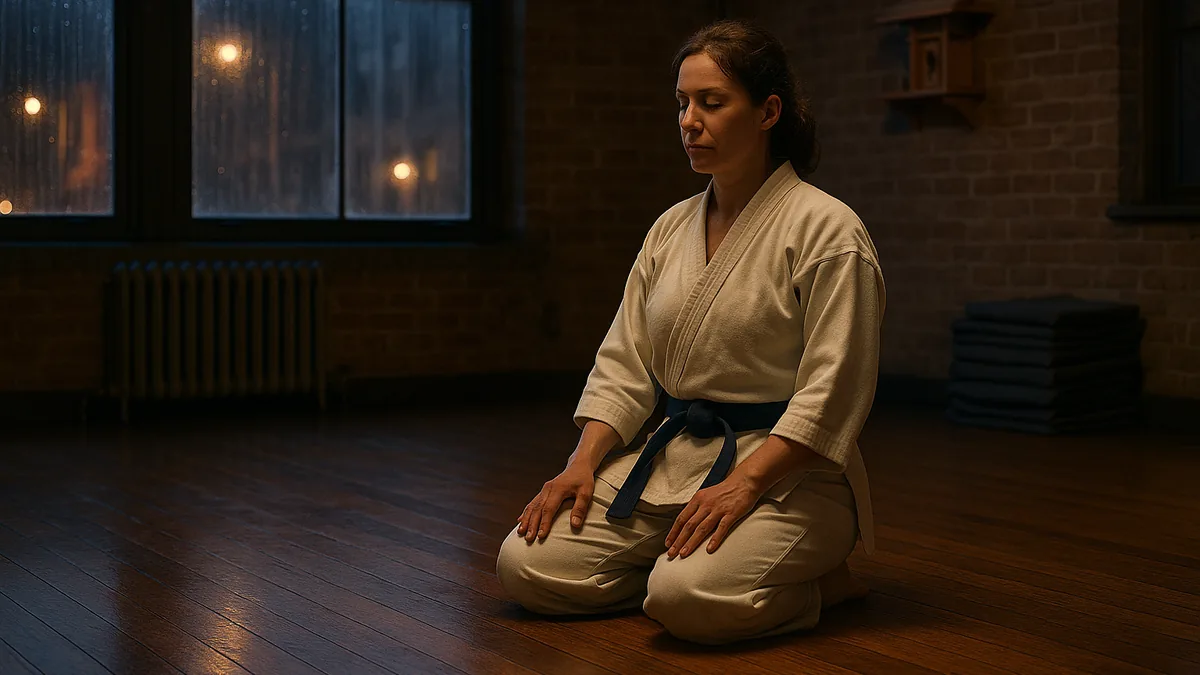
Most people who start karate are thinking about the physical side - fitness, technique, maybe self-defence. The mental dimension tends to sneak up on them. But if you have been training for a few years, you probably already know it is the part that sticks. This guide pulls out the practical implications so you can take them into your next session.
What real focus looks like in the dojo
Focus is probably the most overused word in any dojo, and most beginners misread what it actually means. Narrowing your eyes and looking intense is not it - that is just tension. The focus that karate builds is something more specific: the practised ability to bring your attention back to one thing at a time, repeatedly, until it becomes a habit.
A useful way to think about it during kata is to stop trying to hold the whole sequence in your head. Concentrate only on the next technique. Then the one after that. The form takes care of itself. It sounds straightforward, but actually doing it takes months of deliberate repetition.
Research confirms this is a measurable cognitive skill, not just a mindset. Martial arts practitioners show stronger attentional control and less mind-wandering than non-practitioners - and crucially, the active ingredient is noticing when attention drifts and returning it. That returning is the practice, not the movement itself.
Why stress relief in karate is different from switching off
A lot of people come to karate partly to decompress, and training does deliver on that - but not quite in the way they expect. The mechanism is more precise than simply burning off tension.
Passive activities like watching television do not interrupt the mental background noise. Karate does, because it demands your full attention. Research points to training activating parasympathetic recovery and promoting genuine psychological detachment from daily stressors - something that requires active mental engagement to work.
This matters for how you approach your sessions. If you are using training primarily as a release valve - going through familiar drills on autopilot because it feels good - you are getting some benefit, but not the deeper kind. The stress relief that actually carries over comes from being fully present, which means tolerating the sessions that are uncomfortable, not just the ones that feel satisfying.
Resilience is built in the difficult sessions, not the good ones
This is the part that does not get advertised clearly enough. Karate is hard. There will be gradings where you underperform. There will be a stretch - often around purple or brown belt - where nothing seems to be improving and you genuinely question whether you have reached your limit. Sparring partners will be better than you. Instructors will correct the same thing repeatedly.
That experience is not a problem to be managed. It is the mechanism.
"The resilience does not come from success. It comes from continuing after failure."
Instructors who soften grading standards or steer students away from situations where they might struggle badly are removing the very thing that produces the outcome. The research is consistent here: the psychological gains from karate - self-control, concentration, resilience - correlate with structured exposure to challenge, not with making training feel manageable.
When students hit that difficult middle period, the most useful thing to tell them is that struggling is not a sign something has gone wrong. It is a sign they have reached the edge of what they currently know, which is exactly where progress happens.
The discipline that actually transfers
Discipline in karate sometimes gets confused with obedience - doing what you are told, following the structure, not questioning the instructor. That version does not transfer anywhere useful.
The discipline that does transfer is self-regulation: the ability to act consistently with a longer-term goal even when impulse says otherwise. Showing up when you are tired. Drilling a technique for the hundredth time without mentally switching off. Sitting with frustration and continuing anyway.
Research links this specifically to the mindfulness and focused attention embedded in martial arts training - the suggestion being that practising these cognitive demands builds broader self-regulatory capacity. Students who have trained seriously for a few years often describe a changed relationship with difficulty outside the dojo: more patience, better at breaking problems down, less likely to catastrophise when progress is slow. That is not a personality shift. It is a trained habit.
The condition is that the training has to be real - meaning you have actually worked through tiredness, failure, and frustration, not just the sessions that felt good.
Checklist: take this to your next class
- During kata or basics: focus only on the next technique, not the whole sequence
- When your mind wanders: notice it without frustration, and return - that return is the actual practice
- In a difficult drill or sparring round: stay with the discomfort rather than mentally checking out
- After a correction: treat it as information, not criticism - then apply it immediately
- If training feels too comfortable: consider whether you are avoiding the parts that produce the real gains
- After a poor session: note that continuing through it is more valuable than a session that went well
For the complete version, with every drill explained, read The Mental Benefits of Karate Training on Karate Lifestyle.
Join the conversation: X · LinkedIn · Bluesky
More from Karate Lifestyle


Comments
Post a Comment