What Karate Grades Actually Mean - And Why Your Timeline Matters
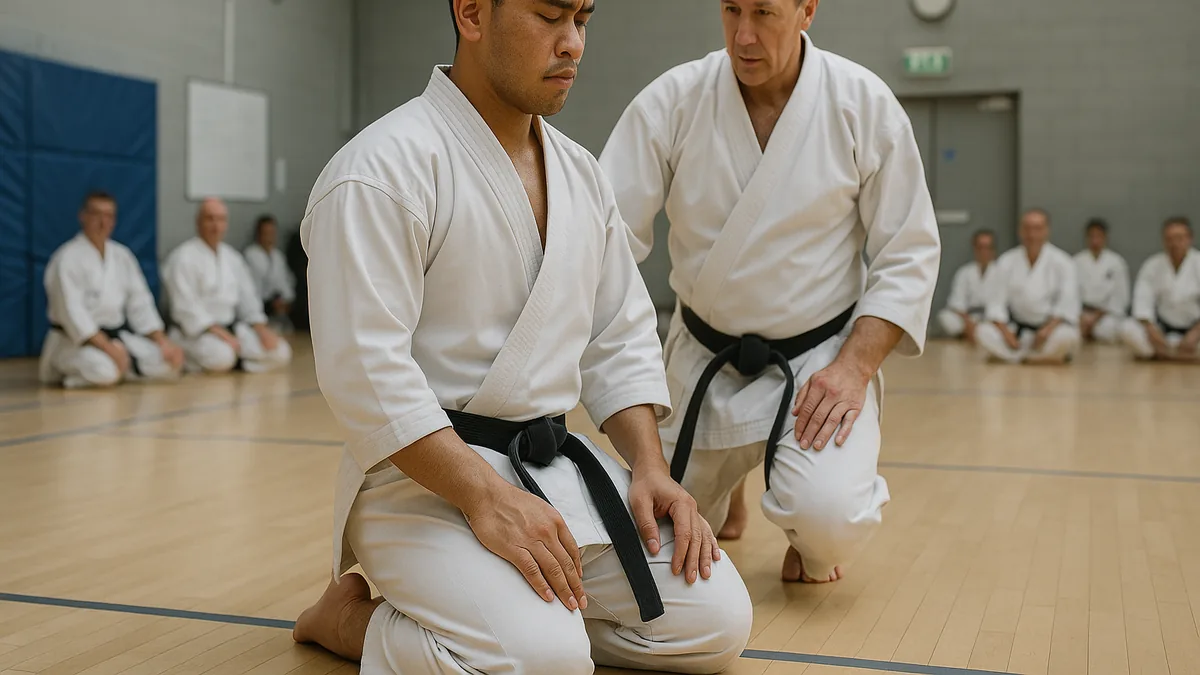
Getting a straight answer about how long a black belt takes is harder than it should be. Ask the wrong club and you might hear two years. Ask a serious JKA instructor and you will get a very different response. Before you commit to a dojo or start counting grading cycles, it helps to understand what the journey actually looks like - not the optimistic version, but the honest one.
Timelines Differ More Than You Think
There is no single answer to how long shodan takes because the standards genuinely vary by style. Shotokan practitioners in serious affiliated clubs typically see five to seven years of consistent training before shodan, even though the minimum time requirements could theoretically produce a result faster. Goju-Ryu often takes longer still, partly because of the conditioning demands and the depth of the upper kyu kata. Kyokushin is its own category - the full-contact sparring requirements before shodan are physically demanding enough that four or five years is realistic only for students who have trained hard and consistently throughout.
The WKF sets a floor of three years' total training before shodan eligibility, with minimum age requirements on top. If a club is offering a black belt faster than that, it is worth asking what they are skipping.
Above shodan, the gaps between grades grow. Nidan requires at least two years after shodan. Sandan requires at least three years after nidan. The structure above black belt is lengthy and deliberate, and the standards at each level are genuinely higher than the one before.
The Kyu Grades Are Where the Real Work Happens
Most beginners think of the coloured belts as a waiting room before the serious training starts. That is the wrong way to read it. The kyu grades - however many your style uses - are where your foundations are built, and foundations built in a hurry tend to crack later.
Motor learning research gives a useful framework here. Early in training, your brain is consciously assembling each movement from its components. That stage is slow, effortful, and frustrating. Over time, with enough correct repetition, control shifts to deeper, more automatic processes and the movement becomes fluent rather than assembled. That transition is real, and it takes the time it takes. There is no shortcut through it.
Brown belt is where many students stall. The technical requirements increase sharply at that stage, and the gap between current ability and required standard becomes hard to ignore. Many students leave during this period. The difficulty is not accidental - it is the point at which you find out what you have genuinely absorbed versus what you have been imitating.
"The students who linger at each grade and consolidate their basics consistently outperform those who grade at every opportunity."
That pattern shows up again and again. Students who treat each grading as an opportunity to race ahead tend to carry gaps in their basics that follow them for years. Students who spend longer at each grade than strictly required tend to arrive at shodan with something solid underneath them.
Choosing the Right Club Matters More Than Your Timeline
Two certificates that both say shodan can represent very different things depending on where they came from. A black belt earned at a rigorous club after five years of honest training is genuinely different from one handed out after three years at a club with low standards, even if they look identical on paper.
This is worth thinking about before you start, not after. The instructor and the dojo culture shape everything - how seriously the syllabus is applied, whether sparring is pressure-tested or performative, and whether students are pushed to consolidate or simply moved through the grades. Time spent choosing the right club is rarely wasted.
A note on expectations above shodan: shodan is not the destination. The word itself translates roughly as first step, and that framing is accurate. The dan grades above it represent real, structured progression with meaningful minimum time requirements at each level. The journey above black belt is longer than most beginners realise when they first ask the question.
Checklist for Your Next Class
- Find out your style's minimum time-in-grade requirements - ask your instructor directly, not just what is typical but what is required before you can grade
- Resist the urge to grade at every opportunity - consolidating your current grade almost always produces better results than advancing quickly
- Pay attention to what you cannot do yet, not just what you can - brown belt difficulty is a feature, not a fault; use it to identify gaps
- Watch how your club handles sparring - pressure testing matters, and the culture around it tells you a lot about the overall standard
- Ask yourself whether your basics are genuinely solid - if your instructor has not signed you off on the fundamentals, more time at your current grade is the right call
- Think long-term from the start - five to seven years of honest training in a good dojo produces something real; shortcuts on the timeline almost always show up later in the technique
For the complete version, with every drill explained, read How Long Does It Take to Get a Black Belt? on Karate Lifestyle.
Join the conversation: X · LinkedIn · Bluesky
More from Karate Lifestyle


Comments
Post a Comment