What Karate Actually Does for Children (And What to Look For in a Class)
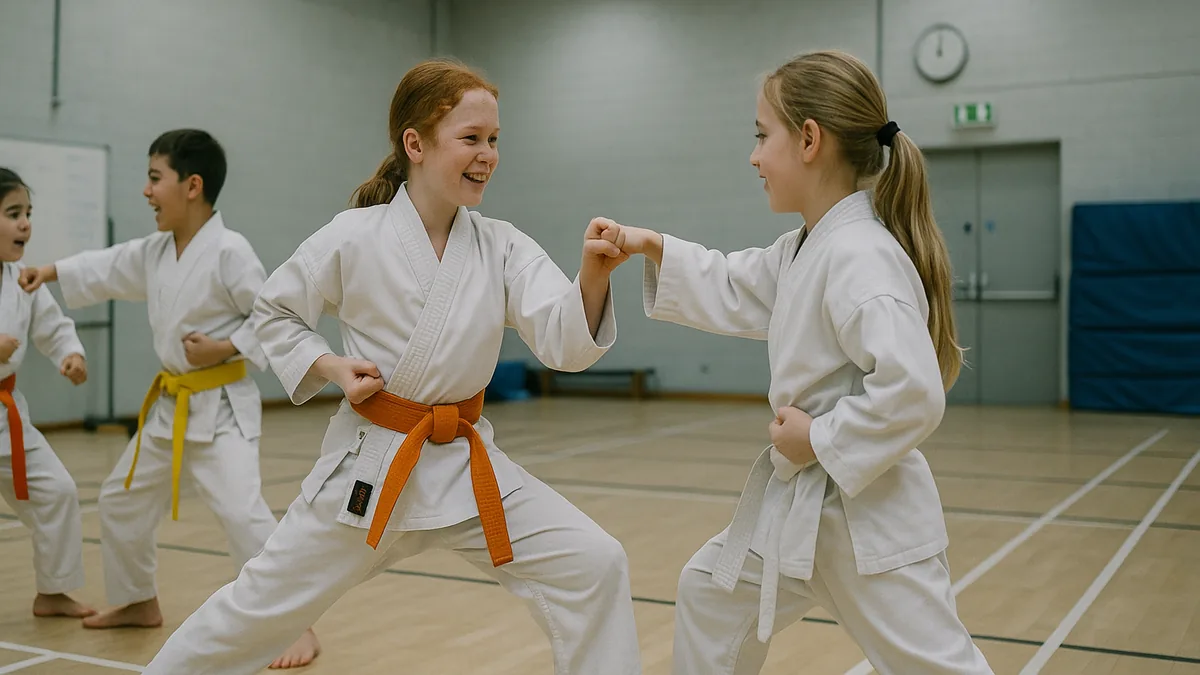
Before you book a trial lesson, it helps to understand what karate is actually doing for your child - because it is probably not what you expect. Most parents walk in thinking about self-defence. What they get, if the club is any good, is something considerably more useful.
What Changes, and Why It Takes Time to Notice
The physical side - coordination, fitness, body awareness - is real, but it is the surface layer. Underneath it, a well-run children's class is doing something almost no other activity does: it puts children in a situation where they fail, in front of others, and then have to keep going.
The kata goes wrong. The instructor corrects it. The child tries again. That cycle, repeated over months, teaches something that cannot be rushed: how to receive correction without shutting down, and how to persist without constant reassurance. A 2024 randomised controlled trial found karate kata training produced significant improvements in attention and concentration, alongside meaningful reductions in aggression and oppositional behaviour in primary school children. A 2026 scoping review across thirteen studies found associations with improvements in resilience, self-efficacy, stress, self-confidence, and academic performance - though the authors were careful to note the evidence base is still limited and mixed.
The children who struggle most at grading time are not always the least coordinated. Often they are the ones who have never been allowed to be bad at something in front of other people.
What "Discipline" Actually Means Here
When parents say they want karate to teach their child discipline, they usually mean compliance - doing what they are told. What karate actually develops is self-regulation: the ability to manage your own attention, energy, and impulse when nobody is forcing you to.
That distinction matters. In a good children's class, the instructor is not just issuing commands. They are creating conditions where the child learns to bring themselves into focus. You can feel it in a well-run room - the attention is genuine, not policed.
"A child who could not sit still for two minutes at the start of term, managing their own breathing and attention by the end of it - that is not obedience. That is something the child built themselves."
The confidence karate builds is equally specific. It is not the kind that comes from being told you are doing well. It comes from attempting something frightening - standing alone in front of an examiner, performing a kata you are not sure you can get right - and not giving up. That experience is worth more than any belt.
When to Start, and What Age Actually Works
Seven or eight is a solid starting age for most children. At that point they can follow instruction, have enough body awareness to feel when a movement is off, and will actually remember what they covered the previous week. That last point matters more than it sounds.
Younger children can attend, and some do fine. But readiness is individual, not age-based. The practical test: can your child follow a two-step instruction, copy a simple movement, and handle being corrected without completely falling apart? If yes, they will get something from a structured beginners' class. If not, starting earlier will not accelerate anything.
Red Flags Worth Knowing Before You Commit
Watching a class before enrolling tells you most of what you need to know. A few things to look out for:
- Belt promotions every six weeks regardless of progress. When grades come around automatically, children learn that what they actually do does not matter. Belts should reflect real improvement.
- Fear as a teaching tool. Firm and demanding is appropriate. Humiliating children in front of the group is not tradition - it is poor instruction. If your child comes home upset about how they were spoken to, take it seriously.
- No visible structure. Energy in a children's class is fine. Organised chaos with no clear purpose is not. The structure is part of what children are there to experience.
- Contact that is inappropriate for the age group. Young children should not be taking uncontrolled strikes. Light, supervised partner work is valuable. Regular injuries in a class of eight-year-olds is a management failure.
Checklist for Your Next Visit or Class
- Watch at least one class before signing up - you are evaluating the instructor, not just the curriculum
- Ask yourself: does the instructor correct children with respect, or with embarrassment?
- Check how often gradings happen and what is required to pass
- Note whether children look engaged or just managed
- After the first few weeks, ask your child not "do you like it?" but "are you proud of something you did in class?"
- Measure progress by how your child handles difficulty and correction - not by what colour belt they are wearing
For the complete version, with every drill explained, read Is Karate Good for Children? on Karate Lifestyle.
Join the conversation: X · LinkedIn · Pinterest · Bluesky
More from Karate Lifestyle


Comments
Post a Comment