Two Traditions, One Syllabus: Training Shitō-ryū Kata the Right Way
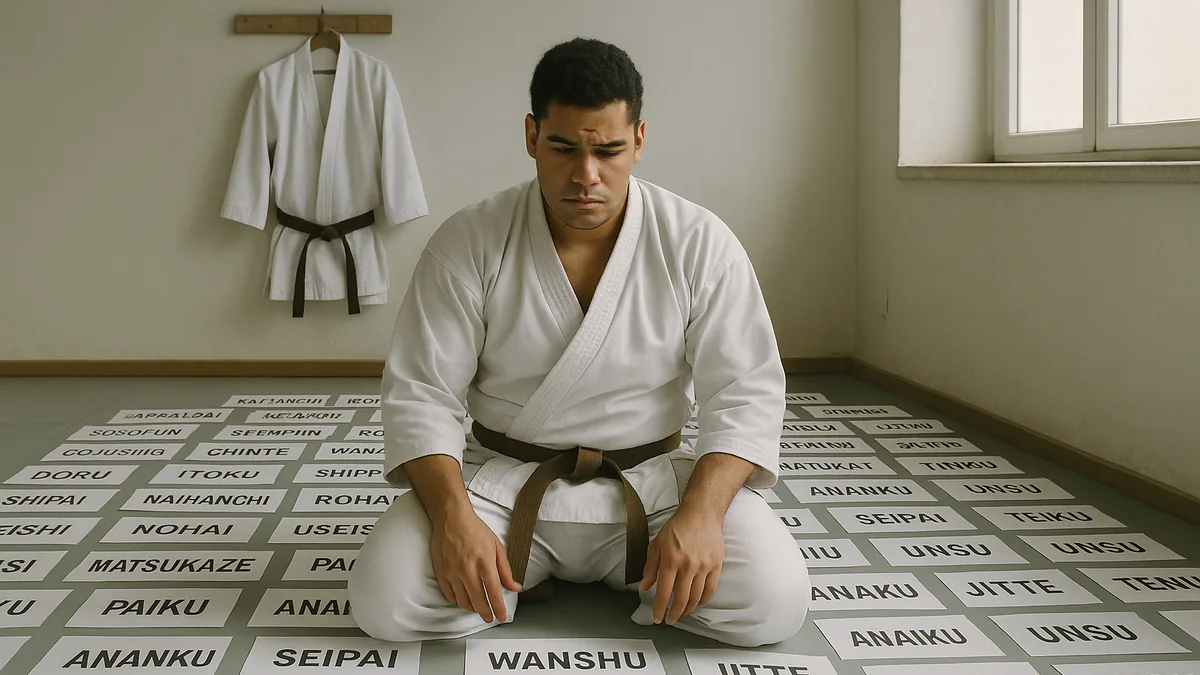
If you have ever looked at a Shitō-ryū kata list and wondered whether anyone actually learns all of it, you are not alone. The syllabus runs anywhere from 50 to well over 100 forms depending on which organisation you train under. That scale can feel overwhelming, or worse, it can tempt you into treating kata like stamps to collect. Neither response serves you well.
The full article on KarateLifestyle.uk goes deep into every kata group, its lineage, and the technical logic behind the syllabus. This companion guide pulls out the practical essentials so you can take something useful to your next class.
Why There Are So Many Kata
The size of the syllabus is not an accident or an act of ambition. It follows directly from the style's origin. Kenwa Mabuni trained under two of Okinawa's most significant karate masters: Anko Itosu of the Shuri-te tradition and Kanryo Higaonna of the Naha-te tradition. The style's name encodes this exactly - 'Shi' from Itosu, 'To' from Higaonna.
Crucially, Mabuni did not blend these two traditions into a single system. He preserved both, largely as they were, and added further kata from other sources. The result is a syllabus that functions as a living archive of pre-war Okinawan karate, including forms that most other styles discarded entirely - all three Rohai versions, Jiin, Kosokun Shiho, and more.
So the question is not how to get through the syllabus. The question is how to understand what you are actually being asked to learn.
Two Different Bodies of Knowledge
This is the point that changes how you train: Shuri-te and Naha-te are not variations on the same theme. They are built on fundamentally different physical principles.
Shuri-te kata - the Pinan series, Bassai, Kosokun, Chinto and the rest - are built around sharp, linear power, clear stances, and a timing pattern that involves generating force and then releasing it. The technique snaps and relaxes.
Naha-te kata ask for something else entirely. Sanchin, Seienchin, Seisan, Suparinpei - these are built on sustained muscular engagement, rooted stability, and a tension-breathing structure that has nothing in common with Shuri-te timing. The body that does Sanchin well is doing something fundamentally different from the body that does Bassai well.
The problem many Shitō-ryū students run into is applying Shuri-te timing to Naha-te kata without realising they have done so. The sequences get learned, the kata looks roughly correct, but the physical content is missing.
"The kata is the vehicle; the body mechanics are the destination."
If you have spent years on Shuri-te forms and you are now approaching your first Naha-te kata, you are not just learning new choreography. You are learning a different way of using your body.
The Practical Fix: Start With Sanchin
Before you attempt any other Naha-te form seriously, spend real time on Sanchin. Not a few sessions - sustained, deliberate practice where you focus on what the kata is actually demanding: the pressure through the floor, the tension across the back and core, the controlled breathing that is inseparable from the movement.
Sanchin is the foundation that makes every other Naha-te kata legible. Without that physical understanding, the other forms in that lineage are just sequences of techniques. With it, you start to feel what the tradition is built on.
The same logic applies across the syllabus. When you encounter any kata from an unfamiliar lineage, the first question worth asking is which tradition it comes from. That single question tells you what physical principles to bring to it before you learn a single movement.
Checklist for Your Next Class
- Identify the lineage of any kata you are currently working on - Shuri-te, Naha-te, or another source. If you are not sure, ask your instructor.
- Check your timing - are you applying snap-and-relax mechanics to a kata that demands sustained tension? If so, slow down and feel the difference.
- If you are beginning Naha-te kata, prioritise Sanchin before anything else. Spend time on it before moving further into that group.
- Stop counting, start questioning - for each kata you know, can you say what physical principle it is built around? If not, that is where your training attention belongs.
- If you are preparing for a grading or competition, confirm which version of each required kata your organisation uses. Variation between bodies is real and can matter practically.
- Treat depth as the goal, not breadth. The syllabus rewards understanding, not accumulation.
For the complete version, with every drill explained, read Shitō-ryū Kata List: Every Form, Its Origin Style, and Why the Syllabus Is So Large on Karate Lifestyle.
Join the conversation: Facebook · Instagram · X · LinkedIn · Pinterest · Threads · Bluesky
More from Karate Lifestyle


Comments
Post a Comment