Making Your Solo Training Count: A Three-Phase Framework
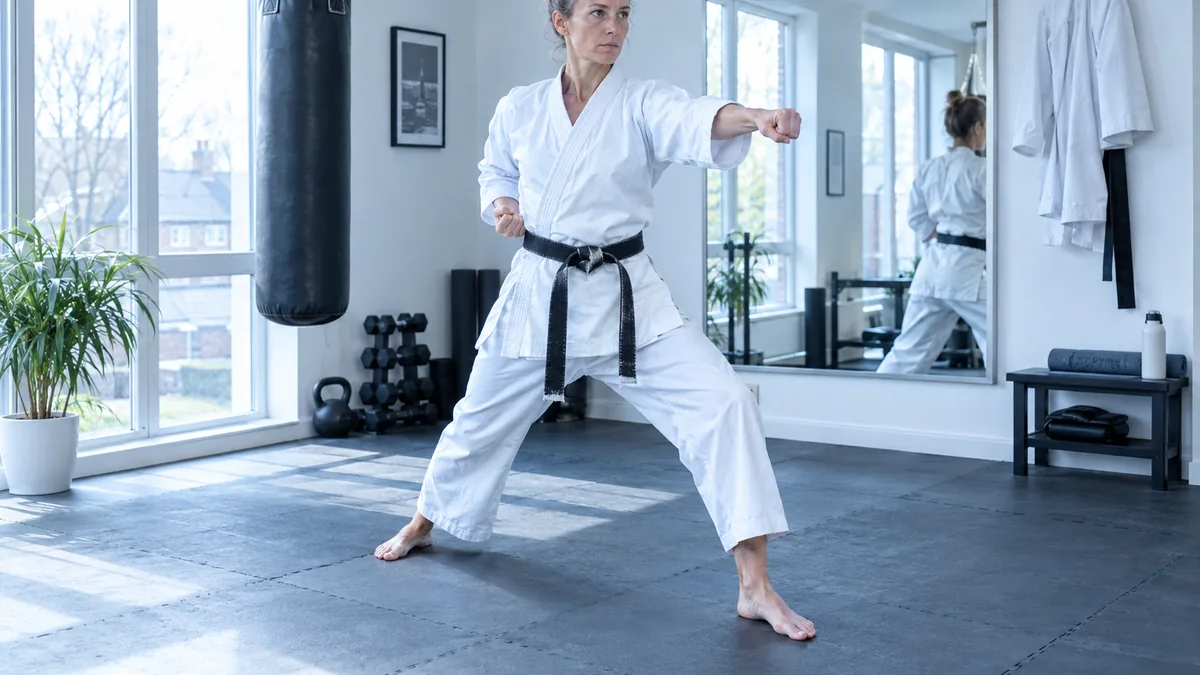
Most karateka who train alone are essentially doing a quieter version of club night. A few kata, some basics, maybe a bit of shadowboxing, then done. It is understandable, but it misses the point. Solo work and group work are not the same kind of training, and treating them as interchangeable wastes what solo sessions are uniquely positioned to do.
The full article on KarateLifestyle.uk sets out a 12-week structured block for practitioners who already attend regular club sessions. Here is a practical summary of what that framework involves and how to get started.
Why Structure Matters More Than Repetition
The instinct when training alone is to fill the time with movement. That is not the same as deliberate practice. Without a clear phase structure, most practitioners drift - spending more time on what they already do well and avoiding the uncomfortable work that would actually move them forward.
The 12-week block solves this by dividing into three four-week phases, each with a different emphasis:
- Weeks 1 to 4 focus on precision over speed. Every repetition is controlled and assessed.
- Weeks 5 to 8 introduce volume and fatigue. The patterns from Phase 1 are tested when you are tired.
- Weeks 9 to 12 apply everything to more complex, pressured scenarios with directional changes and decision-making.
The same four core drills run through all three phases. What changes is the depth, the demand, and the complexity.
The Four Drills and What They Actually Train
Stationary kihon with a deliberate pause sounds straightforward, but most practitioners rush it. The three-second hold at the end position is the drill - it forces you to feel where your structure is rather than assume. If the hold feels pointless, the technique is not landing in a sound position. There is nothing to hold onto.
Slow-motion kata functions as a moving structural audit. At roughly one quarter of normal speed, momentum cannot cover weak transitions or uncomfortable positions. The moments where you want to speed up are exactly the moments to slow down further - that urgency signals a movement your body does not yet know how to do cleanly. Full muscular engagement is required throughout; reduced speed does not mean reduced effort.
Shadowboxing with a specific scenario is what separates decision-making practice from choreography. "Throw some techniques" produces performance. "Your opponent has just overcommitted and is slightly off-balance - what happens in the next two seconds?" produces something closer to real tactical thinking. The physical quality of movement changes when you are responding to a situation rather than demonstrating techniques.
The kamae integrity drill uses an interval alert during continuous movement to catch your guard position before you have a chance to correct it. The point is to see where your kamae actually is under fatigue, not where you think it is. Freeze first, assess second.
"Solo training is not a substitute for club sessions - it is a different kind of work entirely, and when it is structured properly, it targets the gaps that group training almost never addresses."
The Honest Debate About Solo Work
There is a legitimate concern that solo training without external correction simply reinforces existing errors. It is a fair point. The practical mitigation is filming yourself regularly - at least once per phase - and using that footage to bring specific questions to your instructor rather than training in a vacuum. Research on self-controlled video feedback consistently shows that learners who choose when to review their own performance improve skill acquisition and retention compared with those who receive none.
The other ongoing debate is whether kihon or kata should take priority in solo sessions. The article's position is that at kyu grade, kihon drilling tends to produce faster mechanical improvement; at dan grade, the nuance within kata repays deeper solo study in ways that repetitive kihon often does not. That is a generalisation, but a useful one to carry into your planning.
Checklist for Your Next Solo Session
- [ ] Decide which phase you are in and what that phase demands - precision, volume, or integration under pressure
- [ ] Run stationary kihon with a full three-second pause at each end position; do not shorten it
- [ ] Choose one kata and perform it at one quarter speed with full muscular engagement throughout
- [ ] Set a scenario before you begin shadowboxing - a specific tactical situation, not just "move around"
- [ ] Use an interval alert during your kamae drill and freeze before you assess
- [ ] Film at least one drill and note one specific question to take to your next club session
For the complete version, with every drill explained, read How to Build a 12-Week Solo Training Block When Club Sessions Are Your Only Structured Practice: A Framework for Self-Directed Improvement on Karate Lifestyle.
Join the conversation: Facebook · Instagram · X · LinkedIn · Threads · Bluesky
More from Karate Lifestyle


Comments
Post a Comment