Making Cross-Style Sparring Actually Useful: A Practical Guide for Club Night
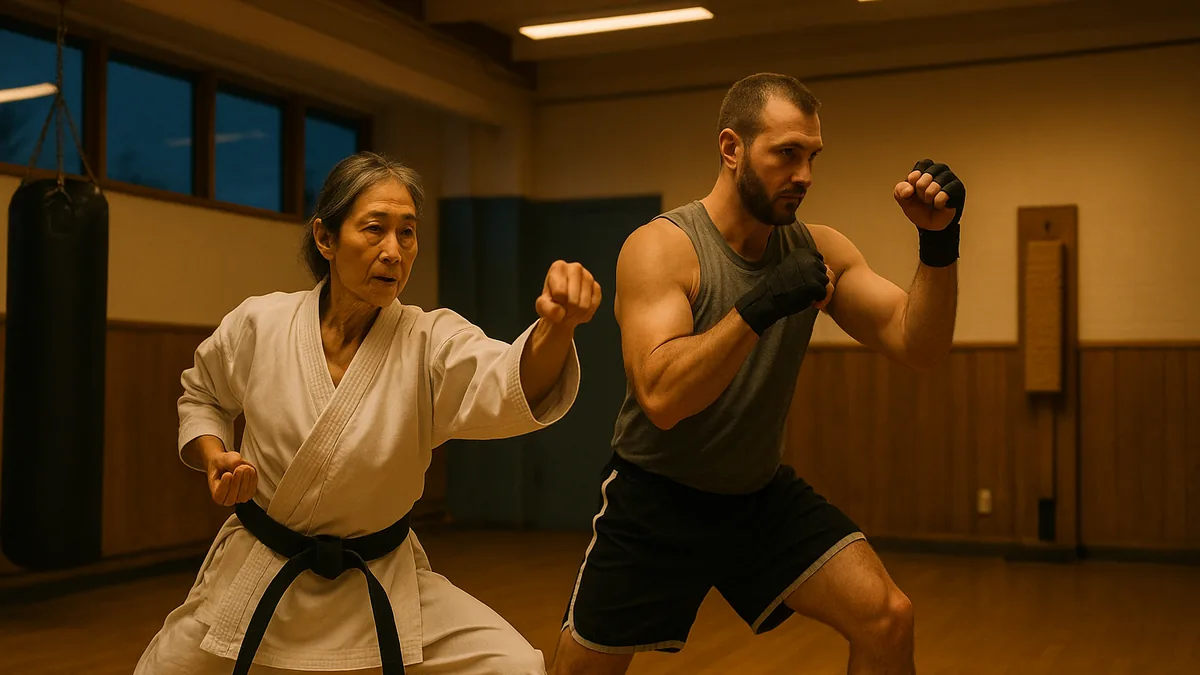
Cross-style partner training sounds like an obvious opportunity. In practice, most sessions drift into either a quiet stand-off or an unspoken competition to prove whose style is superior. Neither produces anything worth having. The sessions that do produce something useful tend to share a few common features - and they are not complicated ones.
This guide pulls out the practical adjustments that make the difference, so you can take them into your next session rather than working it out on the fly.
Before You Start: Have the Conversation
Most of the confusion that makes cross-style training feel chaotic rather than educational is preventable. It just requires two minutes of talking before you begin.
Name the things that differ between your approaches: where each of you considers a safe working distance to be, what level of contact you normally train at, and what you each count as a committed attack worth responding to. These are not small details. A practitioner from a close-range striking background and a traditional karate practitioner can have genuinely incompatible assumptions about all three, and neither is wrong - they are simply optimised for different problems.
Without this conversation, you spend the first twenty minutes of the session discovering these differences through confusion. With it, you can get to the useful part straight away.
Two Adjustments That Matter Most
Drop your contact level by one step. When your partner is unfamiliar with your timing and your preferred attacks, your responsibility to control increases - not decreases. Start one level below your normal working contact, and only move it upward once you are confident their defensive reflexes are reading your attacks accurately. The cost of skipping this step tends to become obvious quickly.
Slow your timing down deliberately. This is not a concession. It is a reset. Your timing is calibrated to the movement patterns of the people you train with regularly - when they attack, how they reset, when a counter becomes available. Against a partner from a different background, those patterns do not apply, and launching a counter at the moment your instincts say is right will often mean throwing into empty space. Slowing down gives your timing a chance to recalibrate from observation rather than habit. You will feel when it starts to work - your counters will begin landing cleanly instead of chasing.
"Your partner's different style is a controlled stress test. It reveals which of your techniques are genuinely robust and which only work because your usual training partners have learned to accommodate your habits."
What to Protect
Two things are worth actively guarding throughout the session.
Your partner's safety. A cross-style session has no winner. What it has is information, and you can only extract that information if both partners stay safe enough to keep training. Treat unfamiliarity as a reason to be more controlled, not less.
Your own structural standards. Spending extended time with a partner who has poor posture, drops their guard, or telegraphs attacks will start to normalise those patterns if you are not actively filtering. You are there to test your karate against a different stimulus - not to absorb someone else's habits. Maintain your own structure even when your partner does not share it. This matters more, not less, if you are at an earlier stage of your training.
What You Can Take Away
The techniques that land cleanly against an unfamiliar partner - someone who has no conditioned response to your style - are your genuinely reliable tools. The ones that fail are telling you something too: either they are mechanically weaker than you thought, or they depend on your usual partners having learned to react in a way that makes them work. Both are worth knowing.
Beyond technique, you also get a clearer view of where your game has gaps. If a close-range partner makes your preferred combinations unavailable, that is not a problem with the session - it is the session doing its job.
Checklist for Your Next Cross-Style Session
- Name your distancing conventions, contact level and rules of engagement before you begin
- Drop contact by one step at the start; calibrate upward only when your partner is tracking your attacks
- Slow your timing deliberately - reset from observation, not from habit
- Maintain your own posture and guard throughout, regardless of what your partner does
- Note which techniques land cleanly and which fail - both results are useful data
- Approach what your partner does differently with curiosity about the problem they are solving, not scepticism about whether their answer is better than yours
For the complete version, with every drill explained, read How to Train With a Partner Who Trains in a Different Style: What to Adjust, What to Protect, and What You Can Actually Learn on Karate Lifestyle.
Join the conversation: X · LinkedIn · Pinterest · Threads · Bluesky · TikTok
More from Karate Lifestyle


Comments
Post a Comment