Kihon Is Not a Warm-Up - Here Is What It Actually Demands
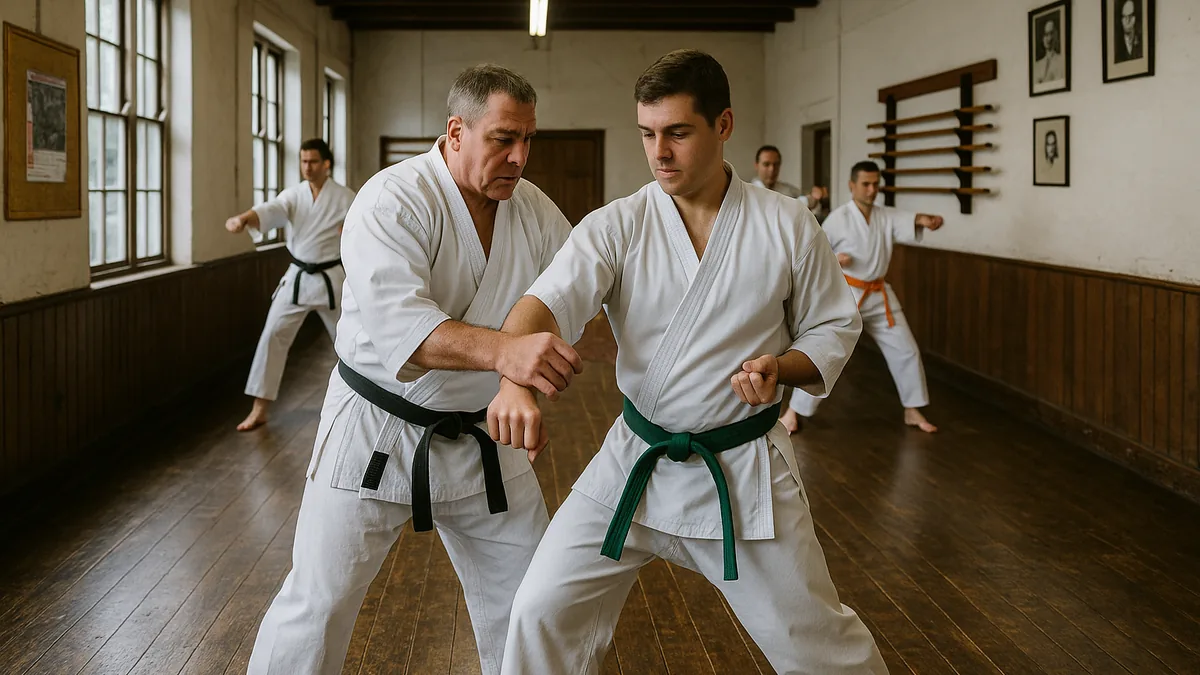
Most karateka have sat through a kihon session feeling like they were waiting for training to actually begin. If that sounds familiar, this guide is worth reading before your next class.
Kihon is not a preamble. It is not beginner content you graduate from. It is where technique is built, and if you are not approaching it with genuine attention, you are not just wasting time - you are actively reinforcing the habits you should be fixing.
What You Are Really Doing During Kihon
Stripped back, kihon is the deliberate practice of technique in isolation. No opponent to react to, no chaos to hide in. Just you and the movement, and nowhere to park a bad habit except on full display.
The difficulty is that this exposure is exactly what most practitioners avoid. When the count starts and the repetitions pile up, it is easy to let the mind wander and let the body go through familiar motions. The technique looks roughly right, the feet are moving, the arms are doing something. But looking roughly right and actually training the movement are two very different things.
Hikite is a good example of where this breaks down. The withdrawing hand is the most consistently neglected element in kihon. Students pull it back loosely, park it near the hip, and forget about it. The problem is that a lazy withdrawing hand does not just look sloppy - it mechanically prevents the striking hand from generating proper power through hip rotation. The pull and the punch are one movement. Treat them separately and neither works properly.
Kime is another concept that takes time to genuinely understand. It is not tensing up at the end of a technique. It is a brief, explosive contraction that must relax immediately afterwards. Holding tension after a technique is bracing, not focusing - and it compromises everything that follows. The difference between real kime and bracing is something most practitioners feel for the first time by accident, when something clicks during pad work and the technique suddenly sounds different on impact.
Why Volume Without Attention Makes Things Worse
This is the part that most dojo cultures get backwards.
High-volume kihon feels productive. Fifty repetitions of oi-zuki, sixty of mae-geri, the count going on and the class moving together - it has the shape of serious training. But if the attention is not there, every repetition is reinforcing whatever pattern the body is already running, including the bad ones.
"Volume without quality does not build skill - it builds permanence."
That is the honest reality of how motor patterns work. A technique repeated thousands of times with a dropped hikite, a collapsing front knee, or a rushed hip rotation does not gradually correct itself. It becomes more fixed. The practitioner who has trained for five years in a high-volume, low-attention environment can be harder to correct than a beginner, precisely because the wrong pattern is so deeply grooved.
Twenty repetitions with full attention - feeling the weight transfer, the hip rotation initiating before the arm is halfway extended, the kime arriving and releasing - will do more for your technique than two hundred mechanical ones. Shorter, deliberate practice beats longer, habitual practice every time.
How What You Are Training For Changes With Grade
One thing worth understanding early is that the goal of kihon shifts significantly as you progress, and adjusting your focus accordingly makes a real difference.
At white and yellow belt, the work is learning shapes. Building a mental map of what the technique is supposed to look like and starting to train the body to approximate it. That is legitimate and it takes longer than most beginners expect.
At green to brown belt - where most practitioners plateau - the shapes should be familiar enough that you can start working on the quality underneath them. This is the stage where improvement comes fastest to those who treat every kihon session as a search for something wrong, not a confirmation that they already know the technique.
At senior grades, kihon becomes something closer to a diagnostic tool. The technique is ingrained enough that the focus shifts entirely to sensation - where the energy is moving, what is connecting cleanly, what subtle fault is still hiding somewhere in the movement.
Knowing which of those stages you are in helps you decide what to pay attention to during the count, rather than just going through the motions.
Take This to Your Next Class
- Check your hikite first when a technique feels weak. The withdrawing hand is almost always the answer.
- Slow down until you can feel the stages separately - weight transfer, hip rotation, kime. If you cannot isolate them, you are moving too fast to learn anything.
- Set a focus before the session starts. One specific element: the back heel pressing into the floor, the hip firing before the arm extends, the kime releasing immediately. One thing, properly attended to.
- Count your attentive repetitions, not your total repetitions. If your mind drifted for ten of them, those ten do not count.
- Test it in sparring. If a technique does not fire cleanly under pressure, the kihon version needs more work - not more free sparring.
- Resist the urge to rush the count. Rushing means you want the technique done. Slowing down means you are actually training it.
For the complete version, with every drill explained, read What Is Kihon? A Guide to Karate Basics on Karate Lifestyle.
Join the conversation: Instagram · X · Pinterest · Threads · Bluesky · YouTube
More from Karate Lifestyle


Comments
Post a Comment