Is Your Club the Problem, Not the Art? A Practical Guide for Karateka
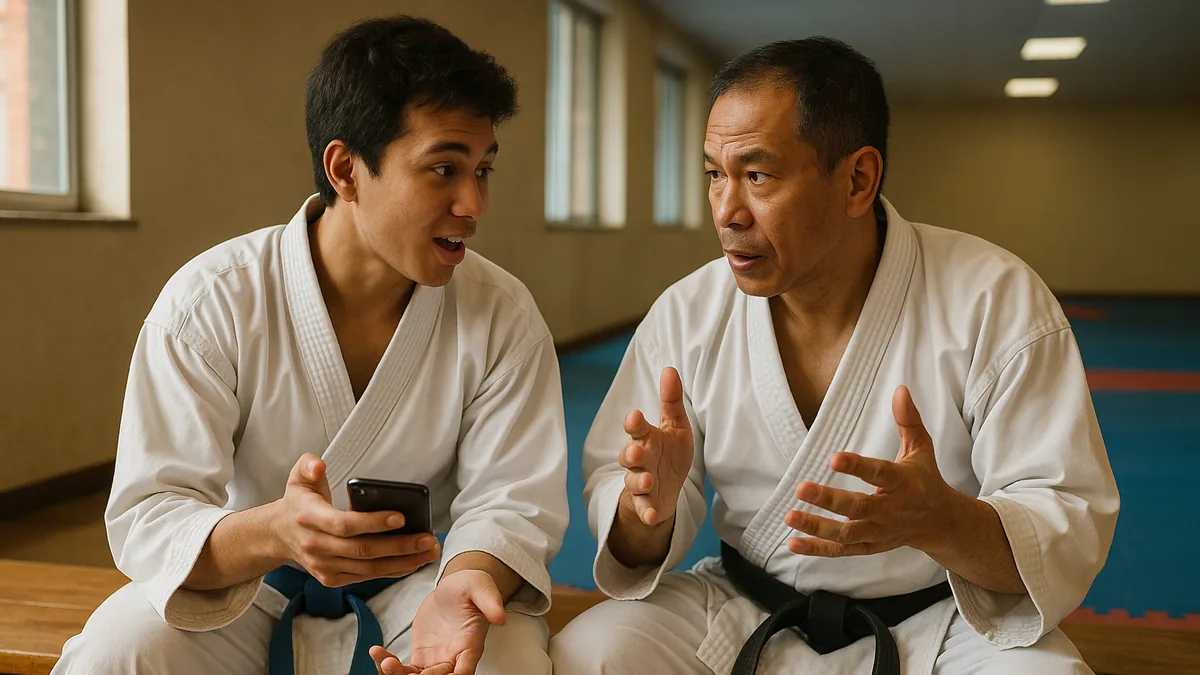
Most of the arguments you will find online about whether traditional karate works are not really about the art at all. They are about specific clubs, specific instructors, and specific standards - or the lack of them. If you train seriously, you have probably felt the frustration of trying to explain this to someone who has already made up their mind. This guide gives you something practical to work with instead.
When "It Doesn't Work" Means "It Wasn't Taught Properly"
The version of traditional karate that genuinely does not work follows a recognisable pattern: kata treated as a grading performance, kihon repeated in isolation without any pressure, and kumite either absent or so controlled it bears no relationship to actual contact. That is a real failure - but it is a failure of teaching, not of the art itself.
The distinction matters because it changes what you do about it. If the art is broken, you leave. If the teaching is poor, you find better teaching.
"The thing that shifts understanding is working the same techniques you already have - but applied with genuine spatial awareness and a live partner who is trying to make them fail."
That shift does not happen by drilling alone. It requires a training environment where someone is actually trying to make your technique fail. A club that never creates that environment is not preparing you - it is rehearsing you.
What Kata Is Actually For
The "kata is just dancing" criticism is almost always made by people who have never drilled bunkai seriously. Bunkai means dissection or analysis - working out what each movement in a kata does to another person's body and practising that against a partner.
A straightforward test: pick three sequences from a kata you know well and demonstrate what they mean against a training partner. If you cannot do that, you have been taught the shape of the kata rather than its content. Those are genuinely different things, and it is worth being honest with yourself about which one you have.
It is also worth knowing that the Pinan forms most practitioners learn today were already a simplified adaptation designed for schoolchildren rather than adults training for self-defence. The debate about whether kata contains real combative content is, in large part, a debate about how faithfully that content survived the transition into mass physical education. The content was there. Whether it was passed on is the question.
Belt Structure Is Not the Same as a Belt Factory
Some traditional clubs hand out grades without applying any real standard. That happens and it is worth being critical of. But assuming that any club using kihon, kata, and kumite in a structured sequence with a formal grading system is automatically producing meaningless belts is a different claim, and it does not hold up.
The real test is not the syllabus. It is the standard applied to that syllabus. A club where the senior students are genuinely difficult to hit - where you can feel the difference between training with them and training with someone who has simply been around longer - is a club where the standard is real, whatever the belt structure looks like. A club where technically clean performances are passed regardless of whether the student understands what they are doing is a belt factory, however traditional the etiquette.
Judge the standard. Not the structure.
Checklist for Your Next Class
- Kata bunkai test: Can you take three sequences from your current kata and demonstrate them against a partner? If not, ask your instructor to work through applications with you.
- Pressure check: Does your kihon drilling ever involve a partner who is actively trying to make the technique fail? If not, ask when that element comes in.
- Senior student test: When you train with the senior grades, do you feel a genuine difference - in timing, distance management, and how hard they are to reach? That difference is the clearest sign of a real standard.
- Kumite presence: Is kumite a regular, structured part of training - or an occasional add-on? Consistent kumite practice is not optional if the techniques are going to mean anything under pressure.
- Your own honesty: Are you training to develop real ability, or to accumulate grades? The answer to that question should shape what you ask of your club and of yourself.
For the complete version, with every drill explained, read What r/karate Gets Wrong About Traditional Karate on Karate Lifestyle.
Join the conversation: X · LinkedIn · Bluesky
More from Karate Lifestyle


Comments
Post a Comment