Injured at Karate? How to Train Smarter, Not Just Harder
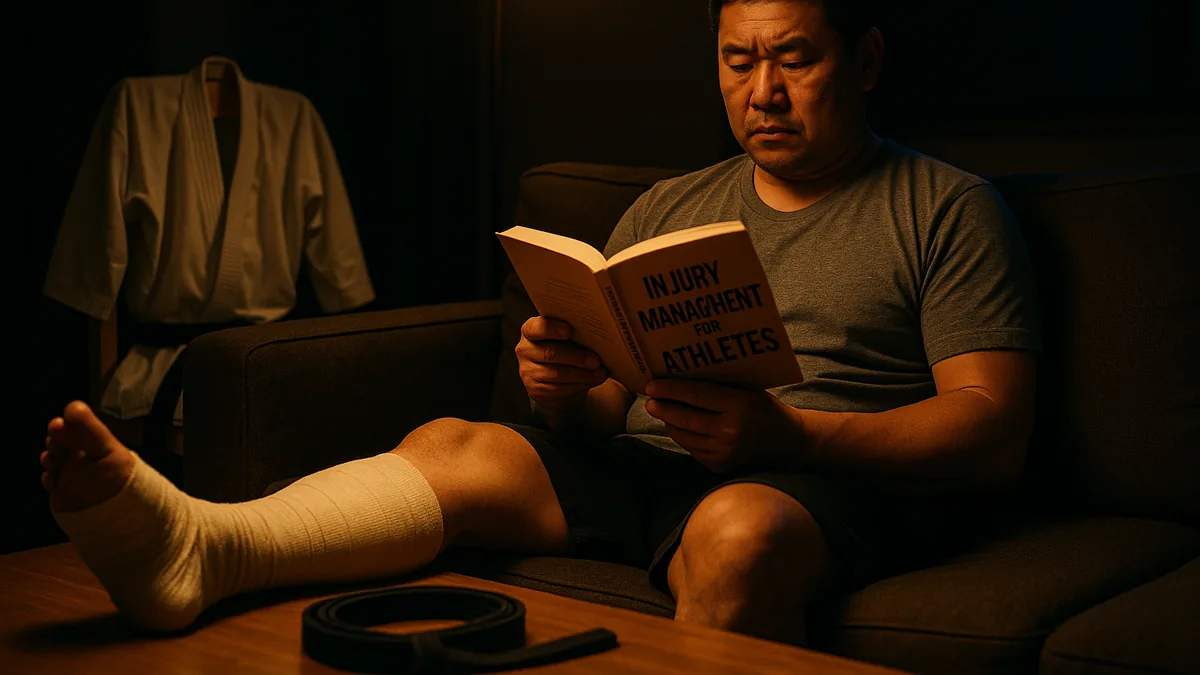
Most karateka will, at some point, stand outside the dojo with something that hurts and no clear idea whether going in is sensible or reckless. The temptation is to frame it as a question of toughness. It isn't. It's a question of assessment - and getting it wrong in either direction costs you training time.
This companion guide pulls out the practical essentials to take with you to your next session.
Know What You're Actually Dealing With
Before you decide anything, you need an honest read of what type of problem you have. There are three categories, and the right response to each is completely different.
Acute injury - something that happened at a specific moment. A rolled ankle, a pulled muscle mid-kick, a forearm that swelled after a block. There's a clear incident behind it.
Chronic issue - something that has been quietly building. A shoulder that aches after every session, a knee that's stiff every morning. No single cause, just accumulated stress over time.
Training soreness - normal delayed onset muscle soreness, which typically peaks somewhere between 24 and 72 hours after hard training and clears within about a week. It feels general and diffuse, not sharp or specific. This does not require modification.
The mistake most practitioners make is treating these the same way. They aren't.
When There Is No Grey Area
Some situations require complete rest, full stop. If any of the following apply, you do not train:
- Joint instability - the joint gives way, locks, or moves in ways it shouldn't
- Suspected fracture - point tenderness on bone, visible deformity, inability to bear weight
- Concussion symptoms - headache, dizziness, confusion, visual disturbance, or nausea following a head impact
- Acute swelling that appeared quickly after an incident
- Nerve symptoms - numbness or tingling anywhere
- Pain that gets progressively worse with movement rather than settling after a warm-up
On concussion in particular: UK grassroots sport guidance is clear that a confirmed concussion means no return to contact activity for a minimum of 21 days, regardless of how fast symptoms seem to improve. Continuing with a concussion roughly multiplies your risk of a further muscle or joint injury by seven. The 21-day minimum is not a suggestion based on how you feel - it applies either way.
Modify, Don't Stop
For everything outside those non-negotiable situations, the right question is not whether to train but what to train. As the full article puts it:
"The practitioners who are still training well in their fifties and sixties are not the ones who were toughest in their twenties."
A problem with one part of your body does not make the rest of it redundant. An injured wrist does not stop you working kicks, footwork, stances, hip mechanics, or distance and timing. A lower body problem does not stop you working hand techniques from a static position. The session looks different - but you are still training, still developing, still in the room.
Tell your instructor before class, not after. Good instructors will help you adapt the session. If yours dismisses a genuine injury or makes you feel weak for modifying, that says something about their coaching, not about you.
Returning Gradually - And Meaning It
Rushing back is the single most common cause of re-injury. A five-stage return works well in practice:
- Pain-free in daily life - if it hurts to walk, it will hurt to train
- Modified training at reduced intensity - roughly half effort, no pressure testing
- Progressive loading - increase intensity across sessions only if the area responds well
- Full intensity, no contact on the affected area - test your own force production before adding external impact
- Full return - but stay attentive; newly formed tissue continues remodelling for months and re-injury risk stays elevated even after apparent recovery
Hamstring strains deserve particular mention here. They feel minor, they seem to clear up quickly, and then they recur - nearly a third do so within the first year, and re-injury rates in the first two weeks back can reach 30%. Return to kicking later than seems necessary, start low and slow, and resist the pull of a session that feels fine until it doesn't.
Checklist for Your Next Class
- Identify which category your problem falls into: acute, chronic, or normal soreness
- Check against the non-negotiable rest list before you even get changed
- If concussion is a possibility, apply the 21-day minimum regardless of how you feel
- Tell your instructor what's affected and what you can't do before class starts
- Plan what you can train rather than focusing on what's off the table
- After returning, increase intensity one step at a time and drop back a stage if the area flares up
- Think in decades - two weeks off is nothing across a thirty-year training career
For the complete version, with every drill explained, read Training With Injuries: When to Push, When to Rest on Karate Lifestyle.
Join the conversation: X · LinkedIn · Pinterest · Bluesky
More from Karate Lifestyle


Comments
Post a Comment