How to Judge a Karate Instructor (And Why Grade Isn't the Answer)
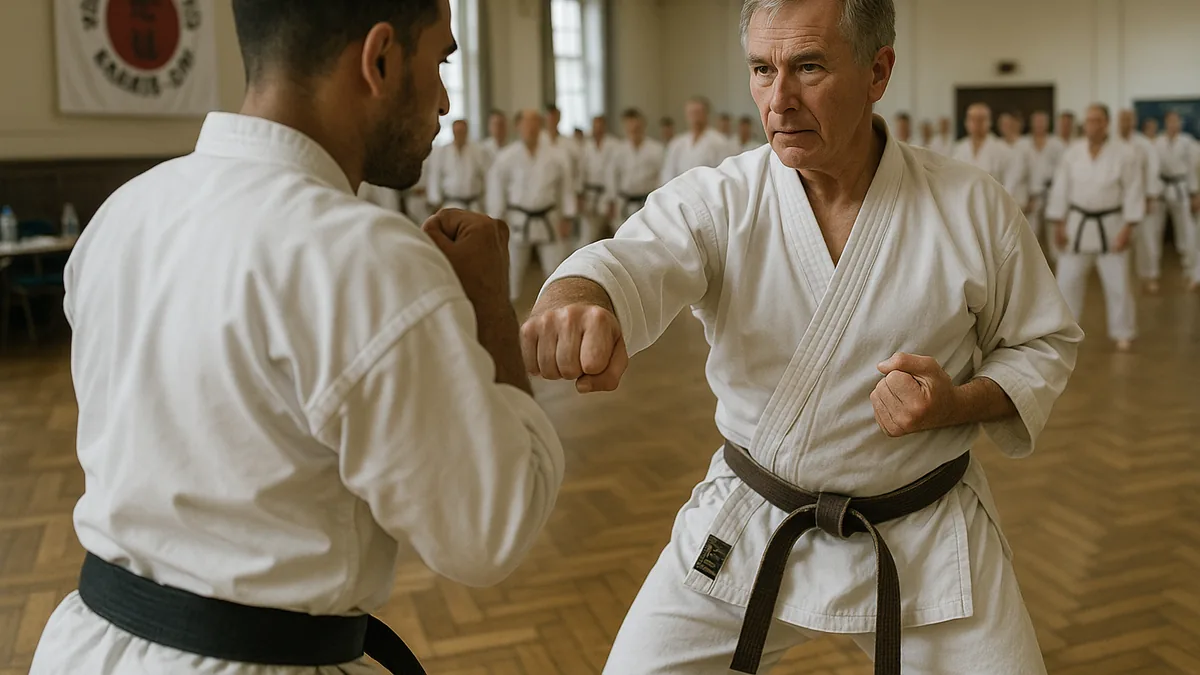
Choosing a karate club is one of the most consequential decisions you will make as a practitioner. Get it right and you have years of genuine development ahead of you. Get it wrong and you will spend months - possibly years - either stagnating or picking up habits that take twice as long to correct later. The problem is that most people evaluate instructors using the wrong criteria entirely. This guide distils what actually matters.
Why a Competition Record Tells You Less Than You Think
It is understandable that a shelf of trophies or a well-known competition pedigree feels reassuring. But consider what that record actually represents:
"A competition record tells you that this person was an effective performer under specific rule sets at a specific point in their life. It tells you nothing about their ability to teach."
Performing at a high level demands years of inward focus - refining your own mechanics, competing under pressure, developing your own timing. Teaching demands the opposite. It requires you to observe someone else's movement, diagnose what is going wrong beneath the surface, and find a way to explain the fix that this particular person, at this particular stage, can actually use.
There is a well-documented pattern in educational psychology where advanced expertise leads instructors to underestimate how difficult the basics genuinely are - and to overestimate what learners are ready to absorb. The effect tends to worsen the more expert the person is. Some naturally gifted karateka never had to consciously analyse their own movement because it came easily. That makes it genuinely harder for them to reconstruct the experience of being a beginner.
A grade tells you someone met a standard on a given day. It does not tell you whether they can bring someone else up to that standard.
What Good Instruction Actually Looks Like
Once you are watching a class with fresh eyes, here is what separates solid teaching from someone simply running people through drills:
Root cause correction, not symptom correction. A weak instructor watches you get something wrong and tells you to do it again correctly, perhaps with a demonstration. A good instructor traces the problem back - a slow punch caused by a rising shoulder, which is itself caused by an off-level pulling hand. Fix the actual cause and the symptom resolves. This distinction matters enormously over a long training career.
Differentiated feedback. A nervous beginner and a lazy senior grade making the same technical error need completely different responses. The beginner needs encouragement alongside the correction; the senior grade needs directness. An instructor who delivers identical feedback regardless of who is standing in front of them is not really reading the room.
Knowing when to say nothing. This is underappreciated. When a student is working through repetitions and beginning to find the movement, piling on additional corrections competes with the processing they need to do. The restraint to observe and wait is a genuine instructional skill, not passivity.
Explaining the reasoning. Students who understand why a technique works the way it does can self-correct over time. Students who only know "sensei said so" remain dependent indefinitely.
Red Flags Worth Taking Seriously
Some differences between instructors are just style. These are not:
- Questions are discouraged or treated as challenges. There is a reasonable "we will come back to that" and there is an instructor who cannot tolerate scrutiny. These are very different things.
- Physical adjustment without explanation or consent. Appropriate hands-on correction exists, but it should be explained beforehand and the student's agreement assumed rather than overridden.
- One speed for the entire class. If beginners and senior grades are receiving identical instruction with identical expectations, the instructor is not differentiating. Someone in that room is being failed.
- No continuing personal development. An instructor who stopped learning when they received their teaching grade is working from an increasingly dated knowledge base. Good instructors still train, still attend courses, still have their own coaches.
- Actively discouraging outside training. Confident instructors want their students to attend seminars, train at other clubs, and bring back broader experience. An instructor who discourages this is prioritising control over your development.
What to Check Before You Commit
Attend several sessions before joining and use this as your checklist:
- [ ] Watch how the instructor handles the student who is clearly struggling - not the talented one
- [ ] Look at the average students, not the stars: are they technically sound and progressing?
- [ ] Notice whether beginners are still present after a few months (high turnover is a teaching signal, not a student one)
- [ ] Ask yourself whether you understood something better at the end of class than at the start
- [ ] Check that corrections are specific and explained, not just repeated demonstrations
- [ ] Observe whether the instructor adapts their approach when something is not landing
- [ ] Notice whether questions are welcomed or deflected
A great facility with poor instruction will develop you less than a basic hall with a genuinely good teacher. Trust what you observe over what you are told about someone's record.
For the complete version, with every drill explained, read What Makes a Good Karate Instructor? on Karate Lifestyle.
Join the conversation: X · LinkedIn · Pinterest · Bluesky
More from Karate Lifestyle


Comments
Post a Comment